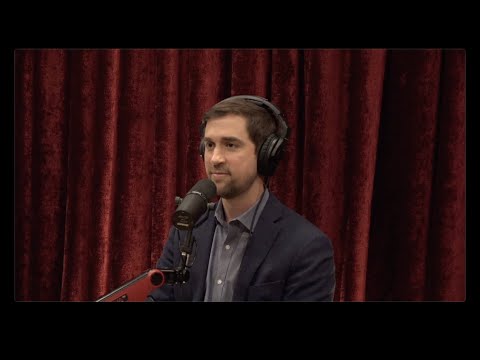
Joe Rogan Experience #2113 - Christopher Rufo
Christopher Rufo (guest), Narrator, Joe Rogan (host), Narrator, Narrator
In this episode of The Joe Rogan Experience, featuring Christopher Rufo and Narrator, Joe Rogan Experience #2113 - Christopher Rufo explores rogan and Rufo Warn of Ideological Capture Reshaping American Institutions Joe Rogan and Christopher Rufo argue that progressive criminal justice, drug, and homelessness policies have produced social disorder, prompting public backlash and policy reversals in places like Oregon and Seattle.
Rogan and Rufo Warn of Ideological Capture Reshaping American Institutions
Joe Rogan and Christopher Rufo argue that progressive criminal justice, drug, and homelessness policies have produced social disorder, prompting public backlash and policy reversals in places like Oregon and Seattle.
They contend that a broader ideological project—rooted in Marxist and critical theories—has captured universities, K–12 schools, bureaucracies, media, and even the military, undermining traditional norms, merit, and democratic accountability.
The conversation criticizes DEI, gender ideology in schools, drag queen story hours, lenient prosecutors, and politicized prosecutions of Trump as evidence that a small activist class is imposing values against the will of the majority.
Rufo calls for building a counter-elite willing to endure reputational attacks, change laws, and recapture institutions, while Rogan emphasizes free speech, hard work, parental responsibility, and resisting top‑down ideological control.
Key Takeaways
Policy experiments without clear limits can rapidly destabilize cities.
Rogan and Rufo argue that Oregon’s broad drug decriminalization and permissive approaches to street camping and open-air drug use visibly worsened crime and disorder, forcing even Democratic lawmakers to reverse course.
Get the full analysis with uListen AI
Societies and individuals need structure, not limitless freedom, to flourish.
Using parenting, artists’ routines, and community life as examples, they claim that boundaries, routines, and expectations reduce anxiety and create meaning, while the ideology of ‘no limits’ produces chaos and unhappiness.
Get the full analysis with uListen AI
Institutional capture by a small ideological elite is out of step with public opinion.
They highlight cases like Harvard’s leadership, school curricula, and university pronoun rules to argue that bureaucrats and academics enforce DEI and gender frameworks the majority neither voted for nor supports.
Get the full analysis with uListen AI
Language is being weaponized to soften or normalize controversial ideas.
Terms such as ‘houseless’ and ‘minor-attracted persons’ are cited as euphemisms that obscure harsh realities (vagrancy, pedophilia) and lower public resistance to expanding protections or legitimacy for harmful behavior.
Get the full analysis with uListen AI
Criminal justice should focus on a small core of repeat violent offenders.
Rufo points to El Salvador’s crackdown on gangs and research on crime concentration to argue that incapacitating a small percentage of habitual violent criminals can dramatically reduce overall crime, in contrast to current leniency and no-cash-bail experiments.
Get the full analysis with uListen AI
Free speech and open debate are essential safeguards against institutional overreach.
Rogan warns that deplatforming figures like Alex Jones, Milo Yiannopoulos, and Andrew Tate, while tolerating extremists on the other side, creates a lopsided information environment and erodes the public’s ability to sort truth from falsehood.
Get the full analysis with uListen AI
A ‘counter-elite’ must be willing to endure attacks to reform institutions.
Rufo argues that wealthy, tenured, or otherwise secure figures must accept reputational and legal risks, speak publicly as they do privately, and take leadership roles in politics, education, and media to reverse ideological capture.
Get the full analysis with uListen AI
Transcript Preview
(drumming music plays) Joe Rogan podcast. Check it out.
The Joe Rogan Experience.
Train by day, Joe Rogan podcast by night. All day. (rock music plays)
Yo. You were just telling me that, uh, Washington State, uh, recriminalized, or is it Oregon? Recriminalized drugs?
Yeah, that's right. Um, this just came out the last week, but, um, Washington State, uh, rather Oregon State, had pursued the defund the police policy, the-
Yeah.
... decriminalize drugs policy, and there's now this dramatic reversal, because guess what? When you let people shoot up heroin on the side of the road, snort meth, uh, in tents, uh, downtown Portland, um, it actually is not good for society. And there's such this dramatic pushback, and I was actually shocked to see it, that Oregon lawmakers, all Democrats of course, um, said, "You know what? We've gone too far. Let's bring it back to the center." And I think that's something that's very good.
It's definitely very good. It is a little shocking that they figured it out. It just doesn't seem like... Like when you go and drive through Oakland, for example, it doesn't seem like anybody's trying to put a cork on that. They're just, like, letting it be insanely chaotic, like the areas where they have the shantytown set up and people have tents everywhere in these makeshift structures. How? At what point in time do you stop letting these open air drug dens exist where people are just cooking meth in front of everybody? That just seems so insane. So it's nice to see that Oregon's like, "Hey, let's hit the brakes."
Yeah.
Is it all drugs now? Did they just put everything in the same category? Which is also quite insane.
Yeah, I mean, no, it's not all drugs obviously.
It just says it right here.
Yeah.
It says, "The measure makes the possession of a small amount of drugs such as heroin or methamphetamine a misdemeanor punishable by up to six months in jail and enables police to confiscate the drugs and crack down on their use on sidewalks and in parks." But what about... What are the other... See, the thing is, it, it basically, what Oregon did is decriminalize almost everything. The weird thing about drugs is you throw them all under one blanket. You know, you throw, you cover them all with one blanket. Drugs. Because caffeine's a drug, alcohol is a drug, there's a lot of drugs that we're accustomed to, to using. And I'm not necessarily in favor of those being illegal. And when you, um, you add in heroin and methamphetamine to something that we're already accustomed to, like alcohol or caffeine, it's like what, what are we, you know? Why are these the same things? Like why not just individually say-
Yeah.
... fentanyl is unbelievably bad for you. Marijuana not so much. Let's like figure out which ones are okay and which ones are not instead of just saying drugs.
Install uListen to search the full transcript and get AI-powered insights
Get Full TranscriptGet more from every podcast
AI summaries, searchable transcripts, and fact-checking. Free forever.
Add to Chrome