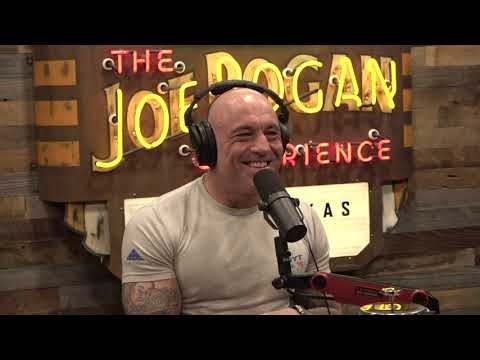
JRE MMA Show #143 with Sean Strickland
Joe Rogan (host), Sean Strickland (guest), Narrator, Narrator
In this episode of The Joe Rogan Experience, featuring Joe Rogan and Sean Strickland, JRE MMA Show #143 with Sean Strickland explores sean Strickland Shares Violent Past, Training Obsession, And Cultural Rants Sean Strickland joins Joe Rogan to unpack his chaotic childhood, his transformation through MMA, and his unconventional approach to training and fighting. He describes growing up with extreme abuse, violence, and drugs, and how discovering an MMA gym as a teenager gave him his first sense of happiness and purpose. They dive into Strickland’s sparring-heavy training style, fighter pay, and the business side of combat sports, while also veering into hot‑button cultural issues like parenting, porn, social media, trans ideology, inner cities, and geopolitics. The conversation swings between dark humor, disturbing personal anecdotes, and candid reflections on trauma, masculinity, and what it means to become a “better” person after a brutal upbringing.
Sean Strickland Shares Violent Past, Training Obsession, And Cultural Rants
Sean Strickland joins Joe Rogan to unpack his chaotic childhood, his transformation through MMA, and his unconventional approach to training and fighting. He describes growing up with extreme abuse, violence, and drugs, and how discovering an MMA gym as a teenager gave him his first sense of happiness and purpose. They dive into Strickland’s sparring-heavy training style, fighter pay, and the business side of combat sports, while also veering into hot‑button cultural issues like parenting, porn, social media, trans ideology, inner cities, and geopolitics. The conversation swings between dark humor, disturbing personal anecdotes, and candid reflections on trauma, masculinity, and what it means to become a “better” person after a brutal upbringing.
Key Takeaways
Intense physical training can channel extreme trauma into structure and identity.
Strickland describes finding his first real happiness getting beaten up at 14 in an MMA gym, using fighting and endless sparring as an outlet for rage, PTSD-like symptoms, and violent impulses that otherwise might have led to crime or worse.
Get the full analysis with uListen AI
A sparring-heavy approach can sharpen timing and distance—if you avoid damage.
He spars far more than most UFC fighters and claims he takes very little clean damage in training, arguing that constant live rounds built his unique pressure style, cardio management, and defensive awareness—but he notes this only works because his style minimizes getting hit.
Get the full analysis with uListen AI
Most fighters should treat MMA as a financial risk, not a golden ticket.
Strickland repeatedly warns young fighters that the sport leaves most athletes broke, injured, and regretful, calling fighters “prostitutes” in business terms and urging realistic expectations about UFC pay scales, win bonuses, and how much foreign fighters can stretch relatively low purses compared to Americans.
Get the full analysis with uListen AI
Childhood environment and family structure deeply shape moral wiring—and can be hard to reprogram.
He details being normalized to violence, addiction, porn, and even neo‑Nazi aesthetics as a kid, arguing that once your brain forms around constant danger and abuse, you can improve behavior but never fully erase those foundational patterns.
Get the full analysis with uListen AI
Martial arts communities can give “lost” people a tribe and values schools fail to provide.
Both he and Rogan argue that rough, isolated kids and veterans with PTSD often do best when immersed in combat sports gyms, where other damaged people impose discipline, camaraderie, and a sense of belonging that public institutions rarely offer.
Get the full analysis with uListen AI
Social media, easy porn, and absent parenting are accelerating moral and psychological decay.
Strickland links hypersexualized content on phones, two parents working, and broken school systems to rising anxiety, warped views of sex, and kids being “raised by TikTok,” arguing that mitigating kids’ exposure to sex and screens would materially improve outcomes.
Get the full analysis with uListen AI
Online virtue signaling often replaces real help for struggling people.
He calls out fighters and media who post tributes after deaths (e. ...
Get the full analysis with uListen AI
Notable Quotes
“The first day I trained, I got the shit kicked out of me… and I remember walking out like, 'Wow, this is what it feels like to be happy.'”
— Sean Strickland
“If it wasn’t for fighting, I’d probably be a serial killer or a fuckhead in jail with a swastika on my arm.”
— Sean Strickland
“You use this 'I’m a piece of shit' thing as a shield. I don’t think you are a piece of shit.”
— Joe Rogan
“UFC is the common man’s sport. Any person on this planet could wake up one day and be like, ‘I wanna be a UFC champion,’ and they could make it.”
— Sean Strickland
“If we have less losers, we have a better America. And if you give people more opportunity, you have less losers.”
— Joe Rogan
Questions Answered in This Episode
How much credit should MMA and combat sports get for rehabilitating people with deeply traumatic backgrounds like Strickland’s?
Sean Strickland joins Joe Rogan to unpack his chaotic childhood, his transformation through MMA, and his unconventional approach to training and fighting. ...
Get the full analysis with uListen AI
Is Strickland’s ultra‑high‑volume sparring model sustainable long term, or is he an outlier who happens to tolerate damage better than most?
Get the full analysis with uListen AI
What specific policy changes—beyond “more money”—would meaningfully improve fighter safety, pay equity, and post‑career outcomes in MMA?
Get the full analysis with uListen AI
To what extent are social media and ubiquitous porn genuinely reshaping kids’ brains versus amplifying problems that were already there?
Get the full analysis with uListen AI
Where is the ethical line between accepting that trauma shaped you and using it as a perpetual justification for dark thoughts or harmful behavior?
Get the full analysis with uListen AI
Transcript Preview
(drumbeats) Joe Rogan podcast, check it out.
The Joe Rogan Experience.
Train by day, Joe Rogan podcast by night, all day. (rock music) What's up, John Strickland? What's happening? We made it happen.
We made it, bro.
What's up?
I'm finally pseudo-famous enough to be on-
(laughs)
... the Rogan podcast. Fuckin' let's go.
Oh, you're pretty famous after Saturday night. Hey, how's your eye?
Oh, man, the guy was try-
It's still pretty red.
The guy was trying to fucking salute his fuhrer, bro, fucking straight to the eye. (laughs)
(laughs)
He's, he's Russian, he can't say that.
(laughs) Let's see-
He only moved to Germany when he was 15. Oh, fuck, I dunno, man. Fucking life's weird, dude. It's fucking, is he Muslim? We all know how that goes. Oh, fuck, I'm ready to get canceled.
Well, it's, it's-
All right, guys, I'm joking.
... he's just joking.
I'm just joking.
He's just joking.
You guys.
Can't we just joke around, folks?
(laughs)
Isn't this America? Um, that was a great fight.
Yeah.
Oh, it was a good one. It was a really, really good fight. And it was really interesting too because, um, that guy is so used to blowing people out in the first round.
Yeah.
You know? And he came out so hard in that first round.
Yeah.
And it was very interesting. You have a very interesting style. There's no one like you. Stand straight up-
Yeah.
... y- even the way you hold your hands is different than everybody else.
It's more of a, like boxing. I like to box, you know? Yeah, no, it's funny, like, when he was throwing kicks he was kinda like giggling and laughing a couple of times when he hit me in the teeth, and once or twice knocked the wind out of me, but in my mind, I'm like, "You fucking pussy."
Oh.
Are you, like, you've ever been in a 25-minute fight before, sir? Like, we'll see how this, we'll see how this adds up.
Yeah, that's the thing, right? It's like people need to understand that, that like that if you're sprinting in the beginning, you can't do that for very long.
Well, he broke quick. I mean, he, like I-
Three minutes in.
I was shocked how fast he broke, and I'll tell you when I knew he broke. After he took me down, there was a moment where he was on my back, I'm like, "Fuck, this kinda sucks." (laughs) You know? I was thinking like, there was a moment I'm like, "Oh, this kinda sucks." Well, we know what to do, get to a hip, get your way up, break the hands. But whenever I broke his grip and he let go, it was like soft. It was like delicate-
Install uListen to search the full transcript and get AI-powered insights
Get Full TranscriptGet more from every podcast
AI summaries, searchable transcripts, and fact-checking. Free forever.
Add to Chrome