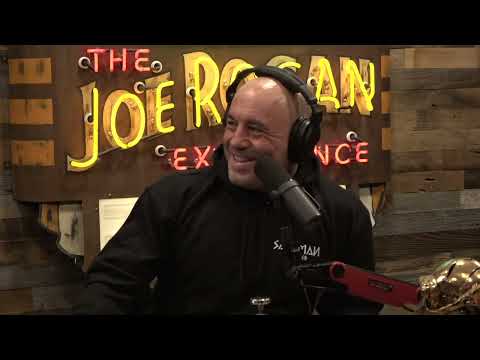
Joe Rogan Experience #1981 - Pauly Shore
Narrator, Narrator, Joe Rogan (host), Pauly Shore (guest), Narrator, Narrator
In this episode of The Joe Rogan Experience, featuring Narrator and Narrator, Joe Rogan Experience #1981 - Pauly Shore explores pauly Shore and Joe Rogan Revisit Comedy, Trauma, Tech, and Legacy Joe Rogan and Pauly Shore spend the episode reminiscing about their decades in stand-up, the Comedy Store, and the evolution of comedy communities from Los Angeles to Austin’s Mothership. Shore speaks candidly about therapy, family trauma, Mitzi Shore’s illness, and what it was like growing up as the Comedy Store kid among legends like Sam Kinison, Pryor, and Eddie Murphy.
Pauly Shore and Joe Rogan Revisit Comedy, Trauma, Tech, and Legacy
Joe Rogan and Pauly Shore spend the episode reminiscing about their decades in stand-up, the Comedy Store, and the evolution of comedy communities from Los Angeles to Austin’s Mothership. Shore speaks candidly about therapy, family trauma, Mitzi Shore’s illness, and what it was like growing up as the Comedy Store kid among legends like Sam Kinison, Pryor, and Eddie Murphy.
Rogan details building the Comedy Mothership, creating a new comedy ecosystem in Austin, and how constant stage time with “killers” sharpens comics compared to isolated touring. They also dive into broader topics: phone addiction, mental health, homelessness, psychedelic-assisted therapy, war and politics, AI, quantum computing, and how media and fame have transformed with the internet.
Both reflect on aging as comics, the joy and relief stand-up still gives them, and how Mitzi’s philosophy of ruthless development and artistic focus shaped modern American comedy. The conversation remains loose and comedic, moving rapidly between heartfelt reflection, graphic medical stories, industry history, and big-picture cultural anxiety.
Key Takeaways
Comedy communities accelerate growth far more than isolated touring.
Rogan contrasts being on the road with having a home club like the Comedy Store or Mothership; constantly working alongside ‘killers’ and seeing multiple sets a night forces you to level up in a way that bringing two openers on the road never can.
Get the full analysis with uListen AI
Mitzi Shore’s developmental model still defines how comics are made.
Her ruthless taste, structured stages (door guy → spots → brutal lineups), and willingness to push comics after huge acts created a template: one central gatekeeper, a true ‘artists’ workshop,’ and a culture where comics strive for that one person’s approval.
Get the full analysis with uListen AI
Phone-free shows improve both performance and audience engagement.
Using Yondr pouches at the Mothership frees comics to experiment without fear of being recorded and forces audiences off their phones, which Rogan argues makes the show better and the experience more immersive for everyone.
Get the full analysis with uListen AI
Unresolved trauma isn’t identity; working on it changes how you live.
Pauly describes decades of intensive group therapy helping him process his parents’ deaths and career disappointments, reframing depression and anger as responses to events—not core identity—and letting him focus on gratitude and a “glass half full” future.
Get the full analysis with uListen AI
Mental health and addiction responses need more tools, including psychedelics.
They trace modern street homelessness back to deinstitutionalization and argue that some people truly need structured care; Rogan suggests legal, supervised ibogaine centers and broader psychedelic-assisted therapies as serious options for addiction and trauma.
Get the full analysis with uListen AI
Traditional TV talk shows and news formats are structurally obsolete.
Rogan points out that 5‑minute, ad-broken segments can’t handle complex topics or authentic conversation; long-form, on-demand formats (podcasts, streaming) let scientists, artists, or controversial figures actually explain themselves and build stronger audience trust.
Get the full analysis with uListen AI
AI and quantum computing will radically disrupt security and creativity.
They touch on AI resurrecting dead comedians’ voices and Michio Kaku’s description of quantum computers that could crack all current encryption, raising questions about who controls these tools and how they might reshape war, privacy, and entertainment.
Get the full analysis with uListen AI
Notable Quotes
“When I walk in the Store, even if I’m not performing there, it’s uncomfortable. I’m walking into my mother, my father, all that history.”
— Pauly Shore
“We’re all disciples of your mom. Mitzi was the number one most important person in comedy that wasn’t a comedian.”
— Joe Rogan
“I tell people, ‘Don’t do stand-up unless it gets you out of bed.’ Don’t do it as a hobby.”
— Pauly Shore
“Most people don’t really get to do what they truly love. When you’re on stage killing, you never think, ‘I wish I was doing something else.’”
— Joe Rogan
“I’m not red. I’ve never voted Republican in my life. What I’m pushing back against is the crazy ideologies.”
— Joe Rogan
Questions Answered in This Episode
How different would American stand-up look today if Mitzi Shore had never taken over the Comedy Store from Pauly’s father?
Joe Rogan and Pauly Shore spend the episode reminiscing about their decades in stand-up, the Comedy Store, and the evolution of comedy communities from Los Angeles to Austin’s Mothership. ...
Get the full analysis with uListen AI
What are the ethical lines around using AI to recreate dead comedians’ voices and writing ‘new’ material for them?
Rogan details building the Comedy Mothership, creating a new comedy ecosystem in Austin, and how constant stage time with “killers” sharpens comics compared to isolated touring. ...
Get the full analysis with uListen AI
If you could design a modern national mental health system from scratch, what balance would you strike between institutional care, psychedelics, and personal freedom?
Both reflect on aging as comics, the joy and relief stand-up still gives them, and how Mitzi’s philosophy of ruthless development and artistic focus shaped modern American comedy. ...
Get the full analysis with uListen AI
How has growing up literally inside the Comedy Store shaped Pauly Shore’s sense of self, beyond the ‘weasel’ MTV persona?
Get the full analysis with uListen AI
In an era where everyone can be famous on their phone, what does ‘making it’ as a comedian really mean now compared to the 1980s and 1990s?
Get the full analysis with uListen AI
Transcript Preview
(drum roll) Joe Rogan podcast, check it out.
The Joe Rogan Experience.
Train by day, Joe Rogan podcast by night, all day. (energetic music) No, you're fine, dude.
It's okay. (laughs)
Come on, man. You don't have a tie... Burke crashes heads twice the size of yours-
Oh, my God.
... he wears them.
Okay.
He can adjust it too, you poor little thing.
I feel like I'm going o- up to the mothership with these things.
(singing)
Dude, you fucking killed at the mo- mothership.
Oh, yeah.
That was the funniest I've ever seen. You were so loose-
Mm.
... and so silly.
Mm.
It was fun to see, man. It was... First of all, you could tell you were... you've been doing standup.
Mm.
You looked super comfortable.
Mm.
But you were, you were so loose.
Mm. It's, you know, it's... Standup, as you know, is a rhythm, you know? And you just kind of figure it out when you're on stage, and you never know what the fuck's gonna happen.
Yeah.
Yeah. You just, you... That night was just, um, you know, uh, David was nice enough to let me on his show. And, um, after I s- you know, put my finger under his boob sweat-
(laughs)
... I went like this. I like to do that a lot.
(laughs)
And then he's got sweaty brows and I did like that, and it got me excited.
Pheromones.
Yeah, yeah. And then I, and then I went, and then I saw Montgomery and I f- he had his flip f- his hair over, and then I punched Hans in the stomach, and then I got on stage. It was all happening.
Perfect-
Yeah, yeah.
... sequence of events.
Yeah. So, no, it's... You know, what you said up there, uh, it's, you know, it's in my veins. It's really in my veins. Like, just the second I walked in that room, I just felt this focus. And that's what I said to you, I just really feel like there's a focus there. And-
Well, that club was a rock and roll club.
Yeah.
I mean, that, that... You see the picture that's, uh, in the tunnel when you m- walk onto the stage?
Yeah.
When you see the big picture of Stevie Ray Vaughan?
Yes.
That's him performing-
Wow.
... on that stage in 1983.
Yeah.
That's where it comes from.
That's the Ala- old Alamo Drafthouse.
It was only the Alamo Drafthouse from the two-
Ah.
I think it was like 2007 on.
Okay.
Before that it had been a bunch of things. It was a pool hall at one point in time.
Mm-hmm.
Install uListen to search the full transcript and get AI-powered insights
Get Full TranscriptGet more from every podcast
AI summaries, searchable transcripts, and fact-checking. Free forever.
Add to Chrome