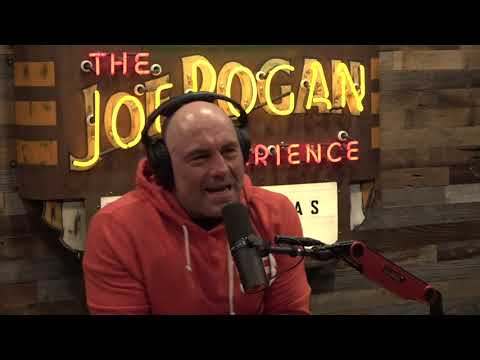
Joe Rogan Experience #1737 - Tim Pool
Joe Rogan (host), Narrator, Tim Pool (guest), Guest (guest), Narrator, Narrator
In this episode of The Joe Rogan Experience, featuring Joe Rogan and Narrator, Joe Rogan Experience #1737 - Tim Pool explores tim Pool, Joe Rogan Slam Media, Mandates, And Narrative Warfare Joe Rogan and Tim Pool discuss how corporate media, especially outlets like CNN and MSNBC, misreported major stories such as the Kyle Rittenhouse trial, ivermectin, and COVID treatments, and how this erodes public trust.
Tim Pool, Joe Rogan Slam Media, Mandates, And Narrative Warfare
Joe Rogan and Tim Pool discuss how corporate media, especially outlets like CNN and MSNBC, misreported major stories such as the Kyle Rittenhouse trial, ivermectin, and COVID treatments, and how this erodes public trust.
They argue that news organizations increasingly “side with their audience” for profit, shaping narratives around race, politics, and the pandemic rather than providing balanced fact-based coverage.
The conversation dives deep into COVID policy: monoclonal antibodies, ivermectin, vaccine mandates, natural immunity, and the role of Big Pharma and federal agencies like NIH, FDA, and CDC in steering public messaging.
They also explore broader political issues—censorship of the Hunter Biden laptop story, Project Veritas FBI raids, election mechanics, gun rights, and lifestyle changes like leaving big cities and altering diet—as symptoms of a system many feel is broken.
Key Takeaways
Media outlets increasingly prioritize narrative over accuracy.
Examples like MSNBC and NPR mischaracterizing Rittenhouse testimony, repeatedly calling ivermectin a ‘horse dewormer,’ and suppressing the Hunter Biden laptop story demonstrate that many legacy outlets filter facts through ideological and business incentives.
Get the full analysis with uListen AI
Viewers must verify primary sources, not just headlines.
Pool describes watching full trial livestreams and reading legal filings, then seeing the coverage distorted on TV; the practical lesson is to watch testimony, read court documents, and compare multiple outlets before forming opinions.
Get the full analysis with uListen AI
COVID risk, treatment, and policy are highly individualized.
Their personal COVID stories show that combining early treatment (e. ...
Get the full analysis with uListen AI
Mandates without acknowledging natural immunity and liability issues deepen distrust.
They argue government vaccine mandates that ignore prior infection and shield manufacturers from liability, while pressuring employers to enforce the rules, feel coercive and legally vulnerable—fuelling resistance rather than compliance.
Get the full analysis with uListen AI
Censorship and selective enforcement by platforms are shaping politics.
Twitter blocking the New York Post’s Hunter Biden story, YouTube rules around ivermectin, and alleged FBI leaks about Project Veritas suggest that control of information—what can be said and amplified—is now a central political battleground.
Get the full analysis with uListen AI
Mail-in voting and demographic concentration structurally advantage Democrats.
Pool outlines how high-density urban areas make door-to-door ballot chasing more efficient for Democrats, and how including non-citizens in population counts boosts electoral votes—arguing these systemic features matter more than isolated fraud claims.
Get the full analysis with uListen AI
Personal lifestyle choices can be a form of “exit” from failing systems.
Both men frame moving to lower-regulation states, changing diet (e. ...
Get the full analysis with uListen AI
Notable Quotes
““We are here to side with the audience.””
— Tim Pool (quoting a former TV news executive on how their newsroom was instructed to operate)
““Somehow or another, me telling you what to take and it working is controversial, which is fucking crazy.””
— Joe Rogan
““I’m not a doctor, I’m not a scientist, I can’t tell you the nitty-gritty details… but I am an expert on being free.””
— Tim Pool
““When you’re attacking Anthony Fauci, you’re really attacking science… that’s what he said.””
— Joe Rogan
““I live in a world of facts and news stories and verifying. But I love the UFOs. I love the unknown.””
— Tim Pool
Questions Answered in This Episode
How can an average viewer reliably distinguish between honest reporting and narrative-driven coverage in real time?
Joe Rogan and Tim Pool discuss how corporate media, especially outlets like CNN and MSNBC, misreported major stories such as the Kyle Rittenhouse trial, ivermectin, and COVID treatments, and how this erodes public trust.
Get the full analysis with uListen AI
What guardrails, if any, should exist on social media platforms to balance misinformation concerns with political speech during elections?
They argue that news organizations increasingly “side with their audience” for profit, shaping narratives around race, politics, and the pandemic rather than providing balanced fact-based coverage.
Get the full analysis with uListen AI
If vaccine mandates ignore natural immunity and treatment options, what alternative public health strategies would be both effective and perceived as legitimate?
The conversation dives deep into COVID policy: monoclonal antibodies, ivermectin, vaccine mandates, natural immunity, and the role of Big Pharma and federal agencies like NIH, FDA, and CDC in steering public messaging.
Get the full analysis with uListen AI
To what extent has legacy media’s handling of cases like Rittenhouse and COVID permanently damaged public trust, and can that trust be rebuilt?
They also explore broader political issues—censorship of the Hunter Biden laptop story, Project Veritas FBI raids, election mechanics, gun rights, and lifestyle changes like leaving big cities and altering diet—as symptoms of a system many feel is broken.
Get the full analysis with uListen AI
How should society weigh the trade-offs between medical research benefits (including animal testing and risky virology work) and the ethical or existential risks they create?
Get the full analysis with uListen AI
Transcript Preview
(drumming) Joe Rogan podcast, check it out.
The Joe Rogan Experience.
Train by day, Joe Rogan podcast by night, all day. (rock music) Hello, Joe Rogan.
How's it going, man?
What's goin' on, buddy?
I'm so excited. It's been like a year and a half.
It's nice to see you. L- last night was fuckin' chaos.
(laughs)
Uh, you, you can't have like 10 people with microphones in a room in a trailer. (laughs)
It was good, though, because Alex would just start screaming, "Ah!" if too many people talked at once.
(laughs)
So he was acting like, you know, that buffer. Uh, thanks for coming, man.
It was fun.
It ended up being huge. We had like over a million people watch, and it was-
Really?
... it was a cacophony of crazy voices, and I don't know-
Yeah.
... if anyone learned anything, but you know, it was, it was fun.
Just seeing Alex sitting next to Blaire White and-
(laughs)
... and then you and me and Luke, and it was just, it was wild.
Yeah, man.
Very fun.
Yeah.
It was very silly.
But, but seriously, thanks for coming, dog. W- when, when, uh, uh, it, it came together accidentally because one by one everyone wanted to come on the show on the same day. I felt bad for Blaire White because we had originally booked her, and then at the last minute, some ... I can't remember who it was, probably Luke, he was like, "Have you, have you asked Joe?" And I was like, "He's got a comedy show. He's too busy, but you know if you don't ask, the answer's always no." And then Joe's like, "Yeah, I'll come by. This will be great."
Yeah, I worked it in. We got in. We, I had the podcast before then, so we were with my friend Ben, and we were hammered. So we-
(laughs)
We had been drinking and smoking weed-
I can explain this.
... and we went straight over to there. So it was, uh, it was silly.
Right on, man.
It was quite silly.
So what's, uh, what's going on?
Well, we're s- we're sitting here waiting for this, uh, Rittenhouse, um, verdict, right, which is, uh, apparently gonna happen today maybe. And, uh, it, what's, what's interesting to me is that people are framing this as a race thing.
From the beginning.
Well, and then m- many people are realizing now because they're paying attention to the trial that he actually shot white people. (laughs)
Yeah.
Like, there's many people that thought that this Kyle Rittenhouse kid had shot Black protesters when in fact it was white Antifa rioters, and then if you look at their record, they were all criminals, like the people he shot.
Install uListen to search the full transcript and get AI-powered insights
Get Full TranscriptGet more from every podcast
AI summaries, searchable transcripts, and fact-checking. Free forever.
Add to Chrome