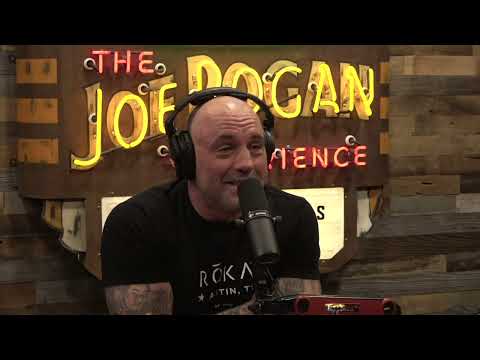
Joe Rogan Experience #1845 - Zachary Levi
Narrator, Zachary Levi (guest), Joe Rogan (host), Guest (guest), Guest (guest), Guest (guest), Guest (guest)
In this episode of The Joe Rogan Experience, featuring Narrator and Zachary Levi, Joe Rogan Experience #1845 - Zachary Levi explores zachary Levi on self-love, psychedelics, greed, and healing culture Joe Rogan and Zachary Levi range from light banter about Austin, fashion, and dogs into a long, candid exploration of capitalism, greed, mental health, and spirituality. They criticize runaway corporate profit-seeking, the pharmaceutical and energy industries, and the broken incentives in politics and media. Levi opens up about severe depression, suicidal ideation, and the intensive therapy that helped him reframe his life, self-worth, and career—experiences that led to his book "Radical Love." Throughout, they discuss psychedelics, prayer, meditation, love as a transformative force, and the need for more empathy in a hyper-judgmental, divided culture.
Zachary Levi on self-love, psychedelics, greed, and healing culture
Joe Rogan and Zachary Levi range from light banter about Austin, fashion, and dogs into a long, candid exploration of capitalism, greed, mental health, and spirituality. They criticize runaway corporate profit-seeking, the pharmaceutical and energy industries, and the broken incentives in politics and media. Levi opens up about severe depression, suicidal ideation, and the intensive therapy that helped him reframe his life, self-worth, and career—experiences that led to his book "Radical Love." Throughout, they discuss psychedelics, prayer, meditation, love as a transformative force, and the need for more empathy in a hyper-judgmental, divided culture.
Key Takeaways
Runaway profit-seeking often trumps human and planetary well-being.
They argue that many industries—fossil fuels, pharmaceuticals, finance—accept environmental damage and human harm as acceptable tradeoffs for quarterly gains and shareholder satisfaction, when these companies could remain profitable without “killing everything.”
Get the full analysis with uListen AI
Status culture and social media incentivize empty performative living.
Rogan and Levi mock the obsession with Lamborghinis, luxury brands, and curated images; they note how young people chase likes and appearances instead of real fulfillment, and how even owners posing with their cars aren’t really living, just posing.
Get the full analysis with uListen AI
Extraordinary comedic or creative talent often exists outside entertainment.
They discuss how some of the funniest people Rogan knows—like an old PI boss—never pursued stand-up, and how an audience member he invited onstage became a “real-life Mrs. ...
Get the full analysis with uListen AI
Public trials and scandal content erode empathy and turn trauma into entertainment.
Using the Depp–Heard trial as an example, Levi warns that mass reaction videos and courtroom streaming train us to consume others’ pain as content, making it harder to see both sides as flawed, traumatized humans rather than caricatures to judge.
Get the full analysis with uListen AI
Self-hatred and inherited psychological abuse can quietly drive success and self-destruction.
Levi explains that abusive parental voices often become our inner monologue; despite career success, he felt like a failure, self-medicated with alcohol, drugs, and sex, and approached suicide before intensive therapy helped him recognize and change his “garbage” self-talk.
Get the full analysis with uListen AI
Therapy, prayer, and psychedelic-style introspection can rewire destructive mental grooves.
They discuss neuroplasticity and how repeating trauma-based thoughts deepens mental “ruts,” while modalities like CBT/DBT, meditation, prayer, psilocybin, float tanks, and even cold plunges can interrupt patterns, quiet ego, and help people reframe their stories.
Get the full analysis with uListen AI
Love—starting with self-love—is framed as a practical, not sentimental, solution.
Levi argues that we can’t “hate our way” to a better society; genuine self-love enables people to invest in themselves, set boundaries, reduce fear-driven reactions, and see even difficult others as wounded rather than purely evil, which he sees as the only path away from escalating division.
Get the full analysis with uListen AI
Notable Quotes
“We can only love our way to a better future. We can’t hate our way there.”
— Zachary Levi
“If you don’t value yourself, you’re not going to invest in yourself.”
— Zachary Levi
“You’re not the voice of your mind; you’re the one who hears it.”
— Zachary Levi (citing *The Untethered Soul*)
“If you could measure love like vitamin D, most people would show a massive deficiency.”
— Joe Rogan (paraphrased concept in their discussion)
“Everybody wants more. Nobody wants to say, ‘We make a hundred million a year, we’re good.’”
— Joe Rogan
Questions Answered in This Episode
How do you distinguish between healthy ambition and the kind of greed that harms people and the planet?
Joe Rogan and Zachary Levi range from light banter about Austin, fashion, and dogs into a long, candid exploration of capitalism, greed, mental health, and spirituality. ...
Get the full analysis with uListen AI
In practical terms, what does it look like to start developing genuine self-love if your inner voice has been abusive for decades?
Get the full analysis with uListen AI
Where is the line between necessary public accountability and exploitative “trauma entertainment” in high-profile trials and scandals?
Get the full analysis with uListen AI
How should societies responsibly integrate psychedelics like psilocybin or ibogaine for healing trauma while protecting those for whom they may be unsafe?
Get the full analysis with uListen AI
If love and empathy are the only real way out of our cultural polarization, what structural changes—beyond individual kindness—are needed to reinforce that shift?
Get the full analysis with uListen AI
Transcript Preview
(drum roll) Joe Rogan podcast, check it out. The Joe Rogan Experience.
Train by day, Joe Rogan podcast by night, all day. (rock music) How are you, uh, uh, acclimatizing to Austin?
I love it.
It's great, isn't it?
Yeah, I've been here now ... Like, we're going? Yeah, so I've been here now for two years and just totally feels like home. I love it.
It's such a great town.
It's the best. The people are so nice.
Yeah.
It's such a great place to live.
Yeah. And it's, one of the things I love about it is how well nature is protected here.
Mm-hmm.
Like Barton Springs, for example. Or even like, I can't think of another s- major city I've been to, anywhere in the world, that has a river that goes through the middle of the city-
Yeah.
... that anyone is playing on. Austin is the only place I've ever been to where there's a river in the middle of the city and there's people kayaking and paddle boarding and doing all of the things. You're like, "That's what we should be doing in all of our rivers."
And it's clean.
It's so clean.
Yeah, that's what's crazy.
Yeah.
You know, one of the comedy clubs that I was going to buy, there was a problem with it, and the problem was there was a parking lot, and the parking lot was at the bottom of a long hill. And if it rained, the rainwater would come down and get all the oil and all the bullshit from people's cars-
Yeah.
... from the parking lot and then take it over the hill into the creek.
Oh.
And so they, they were supposed to have installed this big-
Grape or something?
... bio containment pond.
Oh.
Yeah, it's a really wild thing. They had to like literally build a pond and then, then they had to surround the pond with very specific plants that filter out shit-
To kind of suck it up. Yeah. Mm-hmm. Yeah.
... and suck everything up. I was like, "I'm out." (laughs) I was like-
(laughs) That's more than I want. Thanks.
But it wasn't even that. It was just like, I could see the headlines, "Joe Rogan kills fish with his shitty comedy club." (laughs)
(laughs)
I was like, "No."
With the comedy club.
Yeah. Totally. I am not-
That was the tool.
... doing anything that is ever going to be an environmental concern. I'm not ... If it, if it's up for deb- I'm fucking ... I'm out.
Yeah. No.
I'm out.
Well, to the extent that we should never be doing anything that's fucking up the planet-
Right. Exactly.
... would be great if we could all agree on, on that. That would be great. (laughs)
Install uListen to search the full transcript and get AI-powered insights
Get Full TranscriptGet more from every podcast
AI summaries, searchable transcripts, and fact-checking. Free forever.
Add to Chrome