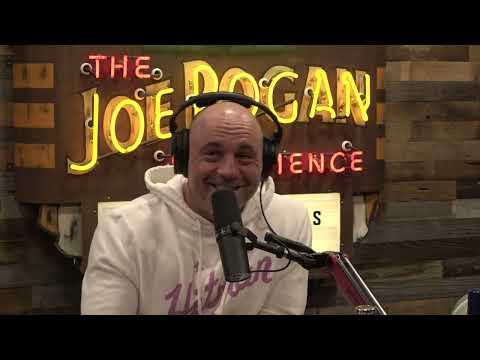
Joe Rogan Experience #1803 - Greg Fitzsimmons
Narrator, Narrator, Joe Rogan (host), Narrator, Greg Fitzsimmons (guest), Narrator, Narrator, Narrator, Narrator, Narrator, Narrator, Narrator, Narrator, Narrator, Narrator
In this episode of The Joe Rogan Experience, featuring Narrator and Narrator, Joe Rogan Experience #1803 - Greg Fitzsimmons explores joe Rogan and Greg Fitzsimmons riff on culture, history, and chaos Joe Rogan and Greg Fitzsimmons have a long, freewheeling conversation that jumps from personal stories and stand-up comedy to religion, history, politics, and conspiracy investigations.
Joe Rogan and Greg Fitzsimmons riff on culture, history, and chaos
Joe Rogan and Greg Fitzsimmons have a long, freewheeling conversation that jumps from personal stories and stand-up comedy to religion, history, politics, and conspiracy investigations.
They trade memories about brutal childhood jobs, drinking culture, parenting, Catholic school trauma, and the evolution of attitudes toward abuse, sex, and relationships.
A big portion unpacks how culture changes through film, television, and stand-up, with examples from Lenny Bruce to Eddie Murphy to modern streaming series, and how ‘wokeness’ has altered comedy movies.
Later, they dive into heavier territory: the Catholic Church and abuse, CIA-era conspiracies like Manson (via Tom O’Neill’s book), war, political corruption, social media manipulation, and the difficulty of free speech in the age of Twitter and bots.
Key Takeaways
Physical resilience and tolerance are built, not innate—and often come with hidden costs.
Stories about caddying with 80-pound bags and drinking 25 beers in a day highlight how people normalize extreme physical or substance use loads, but both men acknowledge they couldn’t or wouldn’t maintain those behaviors now.
Get the full analysis with uListen AI
Most people cannot function like high-performing stoners or drinkers, despite celebrity examples.
Rogan pushes back on teens emulating Snoop or himself, stressing that extreme tolerance and productivity while high are outliers, not templates, and that most users’ lives deteriorate rather than improve.
Get the full analysis with uListen AI
A lot of a child’s personality is nature, but parenting still matters—and generational trauma lingers.
They cite twin studies, wildly different kids in the same home, and grandparents raised by ‘savages’ to argue that temperament is heavily genetic, yet abusive or neglectful environments (like Rogan’s father hitting his mother) can permanently distort a child’s worldview.
Get the full analysis with uListen AI
Institutions can be both formative and deeply corrupt, and you have to separate the two.
Fitzsimmons credits Catholicism with giving him an early sense of being loved and forgiven while both men condemn the Church’s molestation coverups, misogyny, and Vatican wealth hoarding, suggesting you can keep a spiritual framework while rejecting a rotten institution.
Get the full analysis with uListen AI
Culture’s ‘normal’ shifts dramatically—old comedy and film are powerful time capsules of values.
Watching John Wayne beat and spank Maureen O’Hara for laughs underlines how domestic violence and public humiliation were once played as romantic comedy; similarly, much of Lenny Bruce’s groundbreaking material doesn’t land today because society moved far beyond that baseline.
Get the full analysis with uListen AI
Power and status repeatedly shield abusers and distort moral judgment in industries like Hollywood.
They connect Weinstein, casting couches, Jerry Lewis, Anna Nicole Smith’s marriage, and Harvey being thanked at the Oscars to a system where access, awards, and prestige outrank ethics—and where even comedians taking Will Smith’s side are effectively endorsing attacking comics at work.
Get the full analysis with uListen AI
Online speech is structurally vulnerable to manipulation, and ‘free speech’ platforms can become toxic ghettos.
Between Russian troll farms, bot-driven amplification, QAnon’s engineered narratives, and banned extremists migrating to smaller platforms and dominating them, Rogan argues the real challenge is balancing open expression with preventing harassment swarms and information war.
Get the full analysis with uListen AI
Notable Quotes
““I don’t understand why my father was not more interested in us as kids. There is nothing I am more curious about than watching every second of my kids’ development.””
— Greg Fitzsimmons
““By the time first grade was over, I was like, ‘There’s no way these people know God.’””
— Joe Rogan
““In a workplace, somebody physically assaulted somebody and then got employee of the year.””
— Greg Fitzsimmons (on Will Smith winning the Oscar after slapping Chris Rock)
““We joked about priests and altar boys, but we all know somebody who got it. And their lives are miserable because of it.””
— Greg Fitzsimmons
““When the government starts having transparency about UFOs, that’s where I’m like, ‘Huh… really?’””
— Joe Rogan
Questions Answered in This Episode
How much weight should we give to ‘nature’ versus ‘nurture’ in explaining why some children thrive despite trauma while others are broken by it?
Joe Rogan and Greg Fitzsimmons have a long, freewheeling conversation that jumps from personal stories and stand-up comedy to religion, history, politics, and conspiracy investigations.
Get the full analysis with uListen AI
Is there any ethically acceptable way to regulate social media that protects free speech but also prevents coordinated harassment and foreign influence campaigns?
They trade memories about brutal childhood jobs, drinking culture, parenting, Catholic school trauma, and the evolution of attitudes toward abuse, sex, and relationships.
Get the full analysis with uListen AI
How do we reconcile the spiritual or emotional benefits some people derive from institutions like the Catholic Church with the clear evidence of systemic abuse and cover-ups?
A big portion unpacks how culture changes through film, television, and stand-up, with examples from Lenny Bruce to Eddie Murphy to modern streaming series, and how ‘wokeness’ has altered comedy movies.
Get the full analysis with uListen AI
If culture has shifted so drastically on issues like domestic violence, racism, and homophobia, what current ‘normal’ behaviors might future generations look back on as barbaric?
Later, they dive into heavier territory: the Catholic Church and abuse, CIA-era conspiracies like Manson (via Tom O’Neill’s book), war, political corruption, social media manipulation, and the difficulty of free speech in the age of Twitter and bots.
Get the full analysis with uListen AI
Given the pattern of government deception around war, covert operations, and surveillance, how should we approach new official narratives about UFOs and national security threats?
Get the full analysis with uListen AI
Transcript Preview
(drumming music) Joe Rogan podcast, check it out.
The Joe Rogan Experience.
Train by day, Joe Rogan podcast by night, all day. (rock music) And we're rolling, Gregory.
Rolling, rolling, rolling.
We were just talking about how they kicked Mike ... uh, Jamie was telling us how they kicked Michael Jordan off a course because he was wearing cargo shorts while he was playing golf.
Yeah. Silly rules. And I mean ...
That's crazy. That you-
It... yeah.
Wouldn't you be happy Michael Jordan's on your fucking golf course?
I mean, I don't know if he's not paying extra to be there, you know, or bringing-
It doesn't matter. It's Michael Jordan.
More people show up, but ... Tennis states-
For sure people will show up if they find out he's there.
Yeah.
We don't want him to, I mean. That's like, you don't want him to come ruin it.
I, I don't mean that. I mean like more people will go to that course.
Oh. Eh, maybe.
Like, people will f- be excited.
Yeah.
The greatest basketball player of all time plays golf on your golf course.
Oh, yeah, yeah, for sure, if it was b- his ... if he was gonna be a regular. That would suck.
Was he just dropping in?
I think it was one of those kind of places, you know. He was probably playing with somebody at a really prestigious course, and they're like, "Get outta here." (laughs)
Yeah.
He's like, "Why?" If you got cargo shorts on.
So you ... You were telling me the rules.
You gotta, you gotta, uh ... You can't wear short- ... The good course is you can't wear shorts.
Ever. 110 degrees outside. Pants.
And the caddies, the, the poor caddies are out there s- slugging these, you know, two ... I used to caddy growing up. That was my first job as a caddy, and I weighed like maybe 100 pounds, and they would send me out there with these ... Remember Rodney Dangerfield's baggy caddy shirt?
Yes. (laughs)
(laughs) With the tap in it, and these guys would have like 17 clubs. They'd have like 20 extra balls in the bag. They'd have an umbrella, a raincoat.
Ugh. Oh.
Fucking ball retriever, and uh-
Oh.
... and, and I'd be out there, and, and I, I caddied on a really hilly course in New York, and it was like straight up and down, and, uh ...
And you're carrying the bags the entire time. There's no golf carts.
Two bags. Yeah.
Two-
There was no, no golf cart.
How much do you think they weighed?
Um, probably 60 pounds, 70 pounds.
Fuck.
Yeah.
Together?
Y- yeah. No, I, I would say each bag ... I don't, I don't know weight that much. How much, how much-
Install uListen to search the full transcript and get AI-powered insights
Get Full TranscriptGet more from every podcast
AI summaries, searchable transcripts, and fact-checking. Free forever.
Add to Chrome