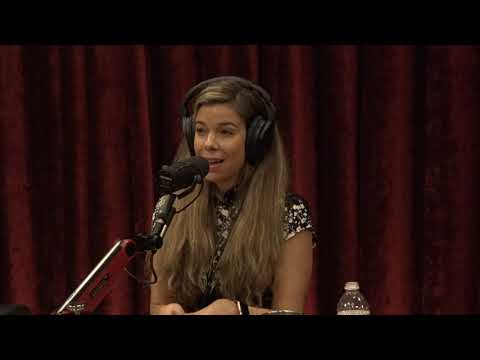
Joe Rogan Experience #1701 - Rhonda Patrick
Joe Rogan (host), Narrator, Rhonda Patrick (guest), Joe Rogan (host), Joe Rogan (host), Joe Rogan (host)
In this episode of The Joe Rogan Experience, featuring Joe Rogan and Narrator, Joe Rogan Experience #1701 - Rhonda Patrick explores rhonda Patrick Dissects Keto, Saunas, Supplements, and COVID Vaccines Rhonda Patrick discusses her personal experience transitioning into a strict ketogenic diet, detailing the metabolic mechanics of ketosis, why most 'keto' attempts fail, and how she measures blood ketone levels to verify results.
Rhonda Patrick Dissects Keto, Saunas, Supplements, and COVID Vaccines
Rhonda Patrick discusses her personal experience transitioning into a strict ketogenic diet, detailing the metabolic mechanics of ketosis, why most 'keto' attempts fail, and how she measures blood ketone levels to verify results.
She and Joe Rogan spend substantial time on sauna and cold exposure, reviewing cardiovascular, mood, and longevity data, and how heat and cold stress compare and interact with exercise and immune function.
Patrick explains why she views omega-3s, vitamin D, and other micronutrients as critical for healthspan, touching on fish oil quality, heavy metals in fish, muscle preservation, and the limitations of nutrition research.
In the final hour, she addresses COVID-19 vaccines, risks versus infection, common misinformation themes, neutralizing antibodies, variants, ivermectin data quality, and why she still recommends vaccination despite acknowledged uncertainties.
Key Takeaways
Most self-described ‘keto’ diets are not achieving true nutritional ketosis.
Patrick finds it extremely difficult to sustain blood beta‑hydroxybutyrate above ~0. ...
Get the full analysis with uListen AI
Measure, don’t guess, if you’re serious about ketosis.
She stresses using blood ketone meters (not just urine strips or ‘keto’ marketing) to validate ketone levels, because tiny amounts of carbohydrate or excess protein can drop ketones sharply, especially before you are fat‑adapted.
Get the full analysis with uListen AI
Sauna can mimic moderate cardio and may extend healthspan, especially for the inactive.
Regular sauna use elevates heart rate, lowers blood pressure afterward, improves cardiorespiratory fitness markers, and is linked in Finnish cohort data to lower cardiovascular disease, pneumonia, and overall mortality—making it particularly valuable for sedentary or disabled people.
Get the full analysis with uListen AI
Use cold exposure strategically—avoid right after heavy strength training.
Cold (especially ice baths) blunts inflammation and causes vasoconstriction; done immediately after lifting, it may reduce the inflammatory signaling and local IGF‑1 response that drive muscle hypertrophy, so Patrick suggests waiting at least an hour or more before serious cold.
Get the full analysis with uListen AI
High omega‑3 index is strongly associated with longer life and lower cardiovascular risk.
Citing Bill Harris’s work, she notes that an omega‑3 index above ~7% (vs <4%) correlates with ~17–21% lower premature and cardiovascular mortality and roughly five extra years of life expectancy, while typical Americans sit around 5%.
Get the full analysis with uListen AI
Nutrition trials are often too weak to justify dismissing supplements outright.
Patrick criticizes many ‘vitamins do nothing’ headlines as based on poorly designed studies with low doses, no blood measurements, and heavy reliance on food-frequency questionnaires, arguing this makes it arrogant to claim a balanced diet alone is always sufficient.
Get the full analysis with uListen AI
COVID infection risk still outweighs vaccine risk for most people, but uncertainty remains.
She acknowledges rare vaccine side effects (myocarditis with mRNA, clotting with adenoviral vectors) but argues that SARS‑CoV‑2 itself causes myocarditis, strokes, and long‑COVID at much higher rates, that vaccines still significantly reduce severe disease and overall transmission, and that current ivermectin data are too heterogeneous and overstated to be a reliable replacement.
Get the full analysis with uListen AI
Notable Quotes
“I think 90 to 98 percent of people who think they’re doing a ketogenic diet are not.”
— Rhonda Patrick
“Not eating was good for my brain… it was noticeable, like a nootropic effect.”
— Rhonda Patrick
“Sauna use should be up there with exercise, sleep, and diet as a lifestyle to increase healthspan.”
— Rhonda Patrick
“It’s kind of arrogant to say, ‘You don’t need to take a vitamin, just eat a balanced diet.’”
— Rhonda Patrick
“You’re either going to be exposed to this virus vaccinated, or not. Those are really your options.”
— Rhonda Patrick
Questions Answered in This Episode
How can someone practically design, shop for, and sustain a truly ketogenic diet that reliably maintains nutritional ketosis without constant blood testing?
Rhonda Patrick discusses her personal experience transitioning into a strict ketogenic diet, detailing the metabolic mechanics of ketosis, why most 'keto' attempts fail, and how she measures blood ketone levels to verify results.
Get the full analysis with uListen AI
What is the safest and most effective way for a beginner to incorporate sauna and cold exposure into their routine, given age, health status, and training goals?
She and Joe Rogan spend substantial time on sauna and cold exposure, reviewing cardiovascular, mood, and longevity data, and how heat and cold stress compare and interact with exercise and immune function.
Get the full analysis with uListen AI
If the omega‑3 index is so predictive of mortality, what dose and form of omega‑3 (fish, fish oil, algae oil) are realistically needed for most people to reach and maintain >7%?
Patrick explains why she views omega-3s, vitamin D, and other micronutrients as critical for healthspan, touching on fish oil quality, heavy metals in fish, muscle preservation, and the limitations of nutrition research.
Get the full analysis with uListen AI
Given the limitations of current vitamin and nutrition studies, how should an informed person decide which supplements are worth taking and which are hype?
In the final hour, she addresses COVID-19 vaccines, risks versus infection, common misinformation themes, neutralizing antibodies, variants, ivermectin data quality, and why she still recommends vaccination despite acknowledged uncertainties.
Get the full analysis with uListen AI
As SARS‑CoV‑2 variants emerge and vaccine effectiveness wanes over time, what metrics (e.g., neutralizing antibody levels, age, comorbidities) should drive decisions about boosters versus relying on prior infection or hybrid immunity?
Get the full analysis with uListen AI
Transcript Preview
(drum music plays) Joe Rogan podcast. Check it out.
The Joe Rogan Experience.
Train by day, Joe Rogan podcast by night. All day. (rock music plays) All right, we're up. What's happening, Rhonda?
Hey.
Very good to see you.
Good to see you. It's been a year.
It has been. It's been quite a while.
Really. Yeah.
And, uh, you were just telling me that you're 13 days into keto.
I am. (laughs)
How you feeling?
Well, let's start off with like why do I even wanna do keto? Why now?
Right.
I mean, like this has been how many years that it's been trendy, it's been like there's lots of benefits, and it's like why did I start trying it out now? (laughs) Well, um, I've noticed that when I am in a fasted state, so when I'm in ketosis, when I'm, you know, burning fatty acids and making ketone bodies and using them as energy, I'm like on top of my mental game. So, I've been doing ... Like when I have any sort of like podcast interviews I'm doing, or whatever, you know, I'm always trying to do them fast. Like I'm fasted right now. Um, and so I thought to myself like is this something that could be mimicked by a ketogenic diet? Like it's very noticeable for me, where I can stay focused. Um, I have more endurance. So like I don't like, you know, crap out like, like a couple hours-
More mental- mental endurance.
Mental endurance, sorry.
Yeah.
Yeah. More- more ment- mental endurance. So um, so I decided to try it out and I- I recently had a, uh, neuroscientist on the podcast, Dr. Mark Matsen. Have you heard of him?
No.
He's like legendary. I mean, he's probably one of the most cited neuroscientists, but he's most well known for his intermittent fasting studies, like the 5:2 intermin- intermittent fasting stuff came out of his lab. Um, he's also sort of the father of hormesis and like, like why, you know, humans sort of adapted to be in a stressful environment and how, you know, all these stress response pathways that happen, you know, as a response that are beneficial. But anyways, so he was, um, talking about like when you're in a fasted state, when you haven't eaten, how your nervous system has sort of evolved to become like more focused, more alert.
Mm.
And that's adaptive because if you can't find food, you have to be like alert in order to like eat or else you'll die. So um, so he's talking about like one of the main things that happens is this metabolic switch, wh- is what he calls but ... Um, so you- you do switch from burning glucose, you know, as a source of energy to basically f- you know, fatty acids are mobilized from your adipose tissue and go to your liver and you start to like oxidize them, use them for energy, and then you make something called ketone bodies as- as a byproduct, beta-hydroxybutyrate, acetoacetate. And um, most people think about these, well, this is an alternative source of energy, across the blood-brain barrier. It, you know, is easily used by, um, you know, neurons and- and other cells as well, but it's- it's actually an energetically favorable source of energy. So it actually requires energy to use glucose as energy. (laughs) To make energy from glucose requires energy. But beta-hydroxybutyrate, that doesn't happen. Like it goes into the mitochondrion and it's used without that energy requirement. So you can imagine-
Install uListen to search the full transcript and get AI-powered insights
Get Full TranscriptGet more from every podcast
AI summaries, searchable transcripts, and fact-checking. Free forever.
Add to Chrome