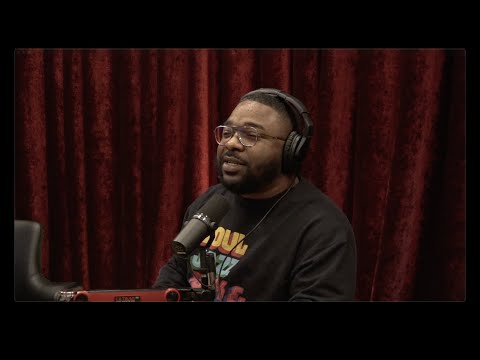
Joe Rogan Experience #2266 - Brian Simpson
Narrator, Brian Simpson (guest), Narrator, Joe Rogan (host), Narrator, Narrator, Narrator, Narrator, Narrator, Narrator
In this episode of The Joe Rogan Experience, featuring Narrator and Brian Simpson, Joe Rogan Experience #2266 - Brian Simpson explores rogan and Brian Simpson Tackle Politics, Health, Conspiracies, and Horror Joe Rogan and comedian Brian Simpson range from U.S. politics and presidential power to healthcare profiteering, obesity, and national fitness ideas. They discuss conspiracy-tinged stories such as the Cybertruck bombing, the New Orleans car attack, UFOs, hacked helicopters, and suspicious wildfires, emphasizing how hard it is to know what’s true. A long segment examines the corruption and perverse incentives of health insurance and pharma, contrasting profit-driven systems with socialized models and arguing for mass lifestyle change via diet and exercise. They also dive into pop culture—vampire and werewolf films, classic action movies, MMA history, and the bleak state of global conflict—while Simpson maintains a deeply cynical, “no-hope” view of systemic change.
Rogan and Brian Simpson Tackle Politics, Health, Conspiracies, and Horror
Joe Rogan and comedian Brian Simpson range from U.S. politics and presidential power to healthcare profiteering, obesity, and national fitness ideas. They discuss conspiracy-tinged stories such as the Cybertruck bombing, the New Orleans car attack, UFOs, hacked helicopters, and suspicious wildfires, emphasizing how hard it is to know what’s true. A long segment examines the corruption and perverse incentives of health insurance and pharma, contrasting profit-driven systems with socialized models and arguing for mass lifestyle change via diet and exercise. They also dive into pop culture—vampire and werewolf films, classic action movies, MMA history, and the bleak state of global conflict—while Simpson maintains a deeply cynical, “no-hope” view of systemic change.
Key Takeaways
Profit-driven healthcare structurally undermines patient welfare.
They argue that corporate healthcare and insurance are designed to maximize shareholder returns, not health outcomes—rewarding denial of care, deploying AI to optimize claim rejections, and creating a culture where executives chase yachts instead of patient results.
Get the full analysis with uListen AI
Mass health improvement hinges on lifestyle, not more medicine.
Rogan insists 70% of U. ...
Get the full analysis with uListen AI
Government could, in theory, lead a cultural shift toward fitness—but polarization blocks it.
They note that any national health or fitness campaign would be instantly politicized, with half the country rejecting it purely because of which party or figure proposed it, as seen with reactions to Michelle Obama’s school lunch reforms and the branding of ‘Obamacare.’
Get the full analysis with uListen AI
Modern information chaos makes truth extremely hard to discern.
From the Cybertruck bombing email discrepancies to search results that seem manipulated, remote-controlled Black Hawks, UFO claims, and wildfire footage, they stress how easily narratives are buried, flooded, or distorted—feeding conspiratorial thinking and paralysis.
Get the full analysis with uListen AI
American consumer habits and offshoring weaken manufacturing resilience.
They connect tariffs, the lack of U. ...
Get the full analysis with uListen AI
Drug use is often a response to despair, not just moral failure.
Discussing fentanyl, meth, Adderall, homelessness, and failed decriminalization in Oregon, they emphasize that many people self-medicate because their lives are miserable, and that simply legalizing or banning substances doesn’t address underlying hopelessness or mental illness.
Get the full analysis with uListen AI
Spectacle and violence shape how we emotionally process real-world atrocities.
From Gaza drone footage and cartel massacres to public cheering when a hated insurance CEO was assassinated, they highlight how desensitized and tribal reactions mirror our appetite for violent movies, MMA knockouts, and true crime—blurring empathy and entertainment.
Get the full analysis with uListen AI
Notable Quotes
“The game it’s playing isn’t healthcare—it’s making the most money.”
— Joe Rogan
“Some shit just can’t be for profit if we want it to be for the best.”
— Brian Simpson
“Ignorance is bliss. If you notice too much, you can’t be happy.”
— Brian Simpson
“Why not try to pump everybody the fuck up with health the way they scared everybody with COVID?”
— Joe Rogan
“I’m cynical as a motherfucker. I see the asteroid coming and there’s nothing we gonna be able to do about that.”
— Brian Simpson
Questions Answered in This Episode
If healthcare profit incentives are so misaligned, what concrete structural changes—short of full nationalization—could realistically improve outcomes without collapsing the system?
Joe Rogan and comedian Brian Simpson range from U. ...
Get the full analysis with uListen AI
How can individuals critically navigate conspiratorial-sounding stories (like the Cybertruck bombing or remote-controlled helicopters) in a media environment where both governments and grifters distort information?
Get the full analysis with uListen AI
Could a charismatic political leader truly trigger a national fitness and diet movement, or is polarization now too deep for any large-scale, government-led health campaign to succeed?
Get the full analysis with uListen AI
At what point does consuming violent news, true crime, and horror as entertainment start to numb public empathy for real-world suffering, like Gaza or cartel massacres?
Get the full analysis with uListen AI
Is there a viable middle ground between punitive drug prohibition and the poorly executed ‘legalize everything’ experiments in places like Oregon—and what would that model actually look like on the street?
Get the full analysis with uListen AI
Transcript Preview
(drumbeats) Joe Rogan podcast, check it out.
The Joe Rogan Experience.
Train by day, Joe Rogan podcast by night, all day.
(instrumental music) Little things you say. L- like, imagine having to be that measured in, in everything you say all the time. Just stick to the talking points.
Bro, that's my whole life.
Ugh. God, that's stressful.
Yeah, it's super stressful, especially if you're a little intoxicated.
(laughs)
You know, you get a couple of whiskeys in you, and you start talking shit. You gotta (laughs) be responsible for every word that comes out of your mouth, even if it's stupid. But, you know, I think people get it. They get what, that people are human beings and they can stumble. Like people w- they forgave a lot of Biden stumbles until they were like, "What the fuck?" You know, a lot of people like in 2020 were like, "There's no way. There's no way he's gonna do it." He was too old to run when it was 2016.
Yeah, but you know, he, he's kind of always been known for the gaffes, like ev- 'cause I remember when (clears throat) when Obama was, picked him, that was like the number one concern was like, "Oh, but he be sometimes-"
Right.
"He be saying shit."
Didn't Obama always, he was famous and quoted as, "Joe, don't worry."
(laughs)
"Joe will find a way to fuck things up." (laughs)
(laughs) Oh, I never heard that bit.
There's supposedly, well, it's hard to know what the quote was, but supposedly-
But he got, but he got out, he got out of all of it. I mean, i-
Yeah. Well, that's because the machine was behind him, right? So he gets into office, and you saw the, the, the Mike Johnson guy, the Speaker of the House? He said that he had talked to him... A- it took a year to have a meeting, and he finally had this meeting with him, and he just want- wanted to talk to him about something, and he said, "Why did you sign this executive order?" And it had something to do with liquid natural gas, and he said, "I didn't sign that." He said, "Yes, you did, sir. You signed it. Can we get it?" And so he has the secretary print it up, he brings it in. He'd never read it, so he was just signing executive orders that he didn't even know. He didn't know what it was about. He thought it was about research, and it was about shutting it down. And so, it, that to me showed there's a bunch of people behind him that want to do things, and they think it's for the best interests of the country, and they're all acting as a big group that's like the puppeteer of the president. And that's not how it's supposed to be. (laughs) It's not supposed to be that way.
Install uListen to search the full transcript and get AI-powered insights
Get Full TranscriptGet more from every podcast
AI summaries, searchable transcripts, and fact-checking. Free forever.
Add to Chrome