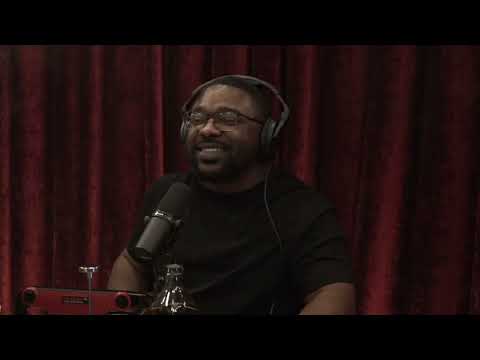
Joe Rogan Experience #1915 - Brian Simpson
Narrator, Narrator, Joe Rogan (host), Brian Simpson (guest), Guest (guest), Narrator, Narrator, Narrator, Narrator, Narrator, Narrator, Narrator, Narrator, Narrator, Narrator
In this episode of The Joe Rogan Experience, featuring Narrator and Narrator, Joe Rogan Experience #1915 - Brian Simpson explores standup, Sanity, and Survival: Joe Rogan and Brian Simpson Unplugged Joe Rogan and Brian Simpson range widely from MMA, jiu-jitsu, and combat sports history to standup comedy craft, discipline, and career development. They unpack how repetition, drilling, and exposure to greatness shape both fighters and comics, drawing parallels between open mics and early fights, and between structured training and writing habits.
Standup, Sanity, and Survival: Joe Rogan and Brian Simpson Unplugged
Joe Rogan and Brian Simpson range widely from MMA, jiu-jitsu, and combat sports history to standup comedy craft, discipline, and career development. They unpack how repetition, drilling, and exposure to greatness shape both fighters and comics, drawing parallels between open mics and early fights, and between structured training and writing habits.
The conversation dives into culture and tech—OnlyFans, porn economics, Apple vs. Android, Elon Musk and Twitter, AI and CRISPR, and the human cost of cobalt mining—while also touching on social issues like disability, homelessness, gender dynamics, and abortion laws. They repeatedly return to themes of discipline, dealing with failure, and the tradeoffs of greatness in any field.
Rogan and Simpson use vivid stories—of brutal boxing KOs, legendary jiu-jitsu upsets, bombing after superstar comics, and pandemic isolation—to illustrate how people respond to extreme pressure. Throughout, they question media narratives, institutional decisions (lockdowns, drugging kids, criminal justice), and the psychology behind obsession, ambition, and self-sabotage.
Key Takeaways
Repetition plus feedback is the core of mastery in both fighting and comedy.
They compare jiu-jitsu drilling to tying your shoes and standup to endless open mics: you have to do it so often that the moves or jokes become automatic, and you must watch your own tapes early and often to accelerate learning.
Get the full analysis with uListen AI
To grow, you must deliberately put yourself after killers, not in comfort zones.
Simpson describes asking to go on after crowd-work monsters like Rick Ingraham and Joey Diaz to force himself to cut fat, get to the funny faster, and adapt his act so he could survive brutally strong acts ahead of him.
Get the full analysis with uListen AI
Greatness usually requires sacrificing balance; you can’t be great at everything simultaneously.
They use Tom Brady, elite fighters, and top comics as examples of people who pour so much into one domain that being a great spouse, parent, and friend at the same time is extremely difficult, if not impossible.
Get the full analysis with uListen AI
Discipline is a trainable “muscle” that atrophies without use.
Simpson talks about letting his non-comedy discipline slide and Rogan suggests concrete structures—daily calorie-burn goals, fixed writing hours, chest-strap heart monitors—to rebuild discipline like any other physical or mental capacity.
Get the full analysis with uListen AI
Power and platforms warp behavior, from cops and guards to billionaires and influencers.
They reference the Stanford Prison Experiment, cops leaving a suspect on train tracks, and social media mobs, arguing that even small amounts of power (a security role, a big audience, a jet-tracking account) can bring out control or pettiness.
Get the full analysis with uListen AI
Our tech comforts are built on invisible suffering and exploitation.
Rogan recounts an episode with Siddharth Kara on cobalt mining in Congo—child labor, toxic exposure, no electricity—and contrasts that with Western smartphone activism, forcing a question of how much distance we need from atrocities to ignore them.
Get the full analysis with uListen AI
Online narratives and media memory are shallow; real context is usually missing.
From Will Smith’s slap to Elon Musk’s perception war, they stress how single clips and headlines ignore decades of work, pressures, and nuance, and how easily people reduce complex humans (or entire male populations) to caricatures.
Get the full analysis with uListen AI
Notable Quotes
“Pay attention to yourself like you're a hater.”
— Brian Simpson
“You should be a monster and then learn how to control it.”
— Joe Rogan (paraphrasing Jordan Peterson)
“How many steps need to be between you and the atrocity for you to move on with your life?”
— Brian Simpson
“Anybody can get better at jiu-jitsu. Some of the stupidest people in the world are good at jiu-jitsu.”
— Joe Rogan
“Discipline is also a muscle, and I’ve allowed it to atrophy.”
— Brian Simpson
Questions Answered in This Episode
How much sacrifice is actually justified in the pursuit of being “the greatest” at something, and who pays the hidden costs around that person?
Joe Rogan and Brian Simpson range widely from MMA, jiu-jitsu, and combat sports history to standup comedy craft, discipline, and career development. ...
Get the full analysis with uListen AI
If you applied the same deliberate drilling and feedback loop from jiu-jitsu or fighting to your own craft, how different would your results be in a year?
The conversation dives into culture and tech—OnlyFans, porn economics, Apple vs. ...
Get the full analysis with uListen AI
Where in your own life are you “king of the hill” instead of climbing a higher mountain like Brian described, and what would it take to move?
Rogan and Simpson use vivid stories—of brutal boxing KOs, legendary jiu-jitsu upsets, bombing after superstar comics, and pandemic isolation—to illustrate how people respond to extreme pressure. ...
Get the full analysis with uListen AI
Knowing the cobalt and labor realities behind smartphones, what—if anything—would you realistically be willing to change about your tech consumption?
Get the full analysis with uListen AI
Is it possible to design social media and creator economies (OnlyFans, Twitter, etc.) that don’t exploit either the workers or the most vulnerable users?
Get the full analysis with uListen AI
Transcript Preview
(drumbeats) Joe Rogan podcast, check it out. The Joe Rogan Experience.
Train by day, Joe Rogan podcast by night, all day. (rock music)
Bro.
Oh.
My friend.
Cheers.
Let's to you, my brother.
Thank you, man.
Hey, my pleasure.
Ah, Scotch.
Ah.
Okay. First of all, Joe, did you see the guy yesterday, his debut MMA match, he won by the way, he has no lower body.
Yes, Zion.
Zion.
Yeah. Dude, incredible.
It was unbelievable.
How fast he closes the distance with no legs.
And, uh, so what my question is, are you a-
Zion Clark, amazing.
... are you allowed... Is he considered a downed opponent?
That's a good question.
Because that, because that-
Changes the game.
... that makes him OP. He, because you can't kick him. You-
You can kick him in the body.
Uh.
You can kick a downed opponent in the body. I mean, you think a leg kick is bad? Imagine an arm kick.
Yeah. And then imagine like you can't grab his legs, you can't...
Yeah. It's, it's... And also, his upper body's insanely strong for someone of that weight class. So you have to think, like... First of all, nothing but props for the guy. No excuses.
Oh, yeah.
The guy's amazing. And just the fucking amount of courage that it takes to even train and become an elite wrestler, and then become an MMA fighter, all with no legs? Incredible.
It's, yeah, that's, it's insane.
There's like... No one's saying that there's an advantage, but one thing that he's able to do, I mean, you, he, you don't have legs to control. So like your game is different. There's, in the stand up game, you know, punches, like if you're punching a guy that's down like that and literally is at the hips, like you have to like bend your knees down and try to punch him, like-
Yeah.
... to train for that guy, how do you train for that guy?
Because all your power comes from your legs. So if you can't push off-
Right.
... when you're punched, you, you can't really load up and, you know?
And if you leg kick that guy in his arm and break his arm, that's fucked up.
But also-
Because now he can't even get around.
But he's probably so... 'Cause here's the thing, you know that old quote about like, uh, don't argue with a, don't argue with a fool, because they'll drag you down to their level and beat you with experience?
Right.
It's like that. It's like he has way more experience down there than you do.
Yeah.
And you gotta get down there.
Look how fast he can move just on his arms. That's insane.
Install uListen to search the full transcript and get AI-powered insights
Get Full TranscriptGet more from every podcast
AI summaries, searchable transcripts, and fact-checking. Free forever.
Add to Chrome