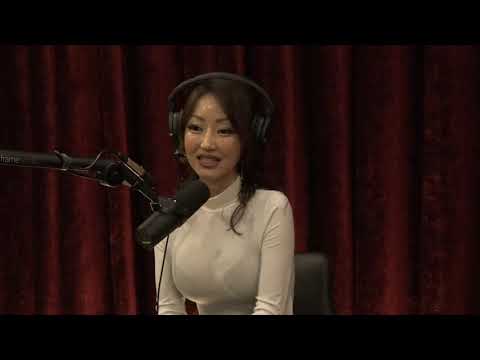
Joe Rogan Experience #1691 - Yeonmi Park
Joe Rogan (host), Yeonmi Park (guest)
In this episode of The Joe Rogan Experience, featuring Joe Rogan and Yeonmi Park, Joe Rogan Experience #1691 - Yeonmi Park explores north Korean Defector Exposes Regime Brutality, Warns West About Freedom Yeonmi Park recounts her harrowing childhood in North Korea, marked by starvation, public executions, and total state control over language, thought, and daily life. She describes her escape at 13 through human traffickers in China, two years of sexual slavery, a miraculous trek across the Gobi Desert, and eventual resettlement in South Korea and then the United States.
North Korean Defector Exposes Regime Brutality, Warns West About Freedom
Yeonmi Park recounts her harrowing childhood in North Korea, marked by starvation, public executions, and total state control over language, thought, and daily life. She describes her escape at 13 through human traffickers in China, two years of sexual slavery, a miraculous trek across the Gobi Desert, and eventual resettlement in South Korea and then the United States.
Park details how China’s Communist Party enables North Korea’s dictatorship through fuel, trade, repatriation of defectors, and even organ trafficking, arguing that Pyongyang could not survive a week without Beijing. She also explains how indoctrination, class caste, and multi‑generational punishment keep North Koreans unaware they are slaves.
Now living in the U.S., Park contrasts genuine oppression with Western “woke” culture, censorship, and the erosion of free speech, warning that Americans are sleepwalking toward the same authoritarian patterns she fled. She stresses that without individual courage, honest speech, and pressure on China, North Korea’s holocaust-like camp system will persist.
Key Takeaways
North Korea’s repression is total: control of food, language, and even dreams.
Park explains that citizens are deliberately starved so they can’t think beyond survival, history before the Kim family is erased, key words like ‘love,’ ‘I,’ ‘liberty,’ ‘rape,’ and ‘human rights’ don’t exist, and even in their sleep defectors often dream they are still trapped there.
Get the full analysis with uListen AI
The regime uses hereditary guilt and visible terror to crush dissent.
One person’s alleged crime can condemn three to eight generations to camps; neighbors of dissidents vanish; children are forced to watch public executions; and minor infractions, like dust on a Kim portrait or tearing a newspaper, can lead to death or camps.
Get the full analysis with uListen AI
China is the indispensable lifeline for North Korean dictatorship.
According to Park, without Chinese fuel, cash, and political cover, Kim Jong‑un’s regime would collapse in days; Beijing repatriates defectors to near-certain torture and death, leases North Korean mines and labor, and blocks serious international accountability.
Get the full analysis with uListen AI
North Korean women are systematically trafficked and exploited in China.
Fleeing starvation, many are sold for a few hundred dollars into forced marriages, brothels, webcam sex work, or organ harvesting; they can’t seek help because Chinese authorities treat them as illegal migrants to be sent back, not refugees to be protected.
Get the full analysis with uListen AI
Freedom is cognitively and emotionally hard for someone raised in a dictatorship.
In South Korea, Park struggled with basic concepts like choice, banking, and planning her own day; thinking for herself was exhausting, and at times she longed for the simplicity of being told what to do, even if it meant living under oppression again.
Get the full analysis with uListen AI
Western ‘woke’ culture rhymes disturbingly with totalitarian patterns.
Park describes Columbia University as a place where feelings trump truth, speech is policed, and people are judged by ancestry and group identity—echoing North Korea’s collective guilt and thought control, though without physical violence.
Get the full analysis with uListen AI
Silence and selective outrage enable modern atrocities to continue.
She criticizes Western elites, corporations, and institutions for loudly condemning historic slavery and animal cruelty while largely ignoring contemporary concentration camps, mass starvation, and sexual slavery in North Korea and China because it conflicts with political or financial interests.
Get the full analysis with uListen AI
Notable Quotes
“If you know you’re oppressed, you are not oppressed. Not knowing is the true definition of oppression.”
— Yeonmi Park
“In North Korea, you don’t even own yourself. The only thing you can do freely is breathe.”
— Yeonmi Park
“North Korea is a holocaust happening again, right now. And of course, we are denying it again.”
— Yeonmi Park
“People here are so obsessed with systemic oppression in America, while there are people in North Korea who don’t even know they are oppressed.”
— Yeonmi Park
“You should be a monster—ruthlessly ambitious—and then learn how to control it. It’s better to be a warrior in a garden than a gardener in a war.”
— Joe Rogan (paraphrasing Jordan Peterson and an old proverb)
Questions Answered in This Episode
If China is the key enabler of North Korea’s regime, what concrete pressures or incentives could realistically change Beijing’s calculus without triggering a larger conflict?
Yeonmi Park recounts her harrowing childhood in North Korea, marked by starvation, public executions, and total state control over language, thought, and daily life. ...
Get the full analysis with uListen AI
How can ordinary citizens in free countries meaningfully support North Korean defectors and raise awareness without feeling overwhelmed or powerless?
Park details how China’s Communist Party enables North Korea’s dictatorship through fuel, trade, repatriation of defectors, and even organ trafficking, arguing that Pyongyang could not survive a week without Beijing. ...
Get the full analysis with uListen AI
What specific signs should Americans watch for that indicate their own society is drifting from healthy democracy toward soft authoritarianism?
Now living in the U. ...
Get the full analysis with uListen AI
How can universities protect emotional well‑being while still exposing students to disturbing truths necessary for adulthood and citizenship?
Get the full analysis with uListen AI
Given your experience, what are the most important ideas or stories Western media should be amplifying about modern-day slavery and political camps that they currently ignore?
Get the full analysis with uListen AI
Transcript Preview
(drumming music) Joe Rogan podcast, check it out. The Joe Rogan Experience. Train by day, Joe Rogan podcast by night. All day. (rock music) Well, very nice to meet you, first of all.
So nice to meet you too.
Thanks for coming here. Um, is this your first time in Texas?
No, I've been here before.
You've been to Austin before?
Yes.
So for people who don't know your story, I'm just gonna give them a primer, just to- just to sort of, uh, establish your history. You were born in North Korea and you escaped North Korea when you were 13. Is that how old you were?
Mm-hmm.
Um, I think we should start off with what it was like living in North Korea. Um, I saw your interview with Jordan Peterson and it was, uh, it was incredibly moving and it was incredibly disturbing and eye-opening and, um, it's ha- it's hard to believe for people that don't know what life is like in North Korea, the reality of you growing up in North Korea, but just talking about how you essentially had no food and you would-
Hmm.
... go looking for bugs to eat.
Yeah.
This was the reality of your existence as a child, that there was no protein.
Yeah.
What ... W- when you ... Now that you live here in America and you can kinda eat whatever you want, when you look back on that, what does it seem like to you? Does it seem like reality? Does it seem like a dream? What does your childhood seem like?
It ... Sometimes this feels like dream.
This feels like a dream?
Yeah, so I pinched myself a lot in the beginning, 'cause they say if it's not dream it hurts, right?
Right.
And you pinch yourself. So a lot of times I pinch myself, because sometimes I'm really horrified if I wake up from this that I'm gonna wake up in my living room in North Korea. So it's ... Sometimes that line is very blurry to me and ... Because it o- the one common thing that North Koreans all have is actually in our dreams when you sleep it's back in North Korea. So in our dream we somehow never able to escape it.
Hmm.
So every day my mom wakes up, like, she tell- tells me about story how she was back in North Korea and I have the exact, the same thing. No matter what, how many years we left afterwards, in our dreams we are still in that country, tr-
So that's the nightmare?
Yeah.
The nightmare is that you're still trapped in North Korea?
Mm-hmm.
When you lived there you didn't know that there was another way to live.
No. It's, uh ... It's like here right now, we cannot imagine a life in a some different planet in the universe. Right? We just don't know what that life looks like. Exactly the same thing. I never knew the life in different planet could be like.
Install uListen to search the full transcript and get AI-powered insights
Get Full TranscriptGet more from every podcast
AI summaries, searchable transcripts, and fact-checking. Free forever.
Add to Chrome