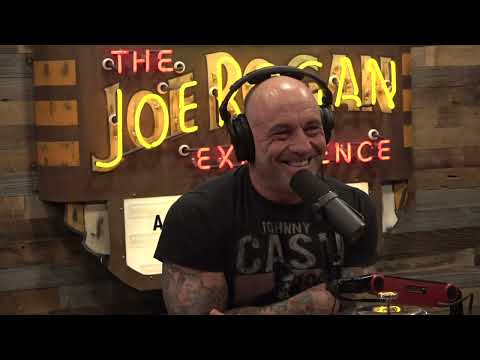
Joe Rogan Experience #2015 - Zach Bryan
Narrator, Narrator, Joe Rogan (host), Zach Bryan (guest), Narrator, Narrator, Narrator, Narrator, Narrator, Narrator, Narrator, Narrator, Narrator, Narrator, Narrator, Narrator
In this episode of The Joe Rogan Experience, featuring Narrator and Narrator, Joe Rogan Experience #2015 - Zach Bryan explores zach Bryan and Joe Rogan on fame, tech, struggle, and authenticity Joe Rogan and Zach Bryan move from joking about the Bud Light culture war into a wider conversation about social media outrage, self‑censorship, and the pressures of being publicly scrutinized artists. Zach tells his unlikely story from Navy ordnanceman to viral songwriter, reflecting on how struggle, loss, and long hours of solitary writing shaped his authenticity and success. They discuss health, alcohol, touring burnout, and the mental value of physical discipline, before diving into technology: surveillance, AI, social media addiction, and fears about a controlled, de‑humanized future. The episode closes with existential threads about aliens, God, memory, and how to live sanely and honestly amid fame and an “interesting” historical moment.
Zach Bryan and Joe Rogan on fame, tech, struggle, and authenticity
Joe Rogan and Zach Bryan move from joking about the Bud Light culture war into a wider conversation about social media outrage, self‑censorship, and the pressures of being publicly scrutinized artists. Zach tells his unlikely story from Navy ordnanceman to viral songwriter, reflecting on how struggle, loss, and long hours of solitary writing shaped his authenticity and success. They discuss health, alcohol, touring burnout, and the mental value of physical discipline, before diving into technology: surveillance, AI, social media addiction, and fears about a controlled, de‑humanized future. The episode closes with existential threads about aliens, God, memory, and how to live sanely and honestly amid fame and an “interesting” historical moment.
Key Takeaways
Outrage cycles are amplified by distance and algorithms, not real dialogue.
Rogan and Bryan note that much of the Bud Light and culture‑war backlash comes from people talking *at* each other on social media instead of having real conversations—small decisions get turned into identity battles, and nuanced human context disappears.
Get the full analysis with uListen AI
Public figures must accept perpetual misunderstanding or become paralyzed.
Zach describes how online blowback made him want to disappear, but Rogan stresses that with millions of viewers, a fixed percentage will always be angry; if artists let that dictate their behavior, they stop being themselves and stop making honest work.
Get the full analysis with uListen AI
Authenticity often beats polish—especially in writing and music.
Bryan’s breakout songs were low‑fi iPhone recordings and quick, emotionally direct pieces; both agree people gravitate to vulnerability and sincerity over over‑produced, “corny” writing, even if it’s technically rough.
Get the full analysis with uListen AI
Struggle and discipline are necessary antidotes to the “catastrophe of success.”
Citing Tennessee Williams, they argue that humans are built for conflict and creation; without some chosen hardship—exercise, craft, touring grind—comfort breeds vanity, dissatisfaction, and mental fragility.
Get the full analysis with uListen AI
Physical conditioning is a core tool for creative and emotional stability.
Rogan frames the body as a racecar for the mind and pushes Bryan toward consistent exercise and possibly a trainer on tour; both note how alcohol and long, sedentary days on the road quietly degrade mood, energy, and performance.
Get the full analysis with uListen AI
Modern tech is drifting toward Black Mirror–style surveillance and control.
They react to World Economic Forum brain‑monitoring demos and Chinese classroom tracking as early versions of cognitive surveillance, comparing them to social‑credit‑like systems that could punish or reward people for thoughts and focus.
Get the full analysis with uListen AI
Creative careers now depend on managing exposure to online feedback.
Bryan admits comments and bots around ticketing, politics, and identity genuinely affect his psyche; Rogan urges him to minimize input from strangers and rely on a small circle of trusted voices rather than chasing or correcting every narrative.
Get the full analysis with uListen AI
Notable Quotes
“All criticism is the tragic expression of an unmet need.”
— Joe Rogan (quoting Marshall Rosenberg)
“Once you fully apprehend the vacuity of a life without struggle, you are equipped with the basic means of salvation.”
— Zach Bryan (reading Tennessee Williams)
“Your body is literally the race car that you're maneuvering around life in.”
— Joe Rogan
“I never in my life envisioned being a musician… I thought I was gonna be in the Navy till the day I die.”
— Zach Bryan
“I just love them. I don't care what anyone is doing… That is my picture in my head of a transgender person.”
— Zach Bryan, on his sister and her spouse
Questions Answered in This Episode
How should artists and public figures decide when to speak honestly versus staying silent in today’s outrage‑driven environment?
Joe Rogan and Zach Bryan move from joking about the Bud Light culture war into a wider conversation about social media outrage, self‑censorship, and the pressures of being publicly scrutinized artists. ...
Get the full analysis with uListen AI
Is it possible to keep the psychological benefits of social media connection while avoiding its most toxic effects on mental health and creativity?
Get the full analysis with uListen AI
What level of technological surveillance (in workplaces, schools, or society) is acceptable, if any, in exchange for efficiency or safety?
Get the full analysis with uListen AI
How much does genuine struggle and sacrifice still matter in an age where some careers can explode overnight via virality?
Get the full analysis with uListen AI
If governments confirmed crashed craft and non‑human entities tomorrow, how would that realistically change your views on religion, meaning, and daily life?
Get the full analysis with uListen AI
Transcript Preview
(drum roll) Joe Rogan podcast, check it out.
The Joe Rogan Experience.
Train by day, Joe Rogan podcast by night, all day. (rock music) What's happening, baby?
How you doing, Joe?
Good to see you, brother.
How you doin'?
And we're drinking Bud Light, ladies and gentlemen.
Sorry, guys. (smacks lips)
Sorry.
We're fucked.
There's nothing wrong with it.
Mm-mm. Mm.
People are so... Cheers, sir.
Cheers, brother.
People are so silly. We were just talking about how silly it is. One person made a really stupid decision, and now everybody's decided that Bud Light is the enemy. But that's, like, this thing that people do in America, where they just decide, "Now I hate thes- these people, these people are the enemy." And, you know-
And it's over.
Yeah, and it's over.
The reason ... (sighs) I've drinking Bud Light and Budweiser, like, my entire adult life. And then on, on Twitter, I defended my, my sister's spouse, and people were like ... People were pissed. And I was like, "I'm so ... I didn't mean to do this." It was crazy. Then Travis Tritt came after me, and I was like ... He didn't come after me. Travis Tritt is so respectable, and he's, like, a good guy. And I met him at the Two Step Inn, where you were. And it was just, it was cool to get to talk to him about it and see, like, two different views. And it was-
Yeah.
It was cool, sitting in the room with him and hearing it.
Well, you know, people d- just the culture war in this country is so goofy. It's so overblown. And a lot of it is people just not talking to each other. It's people talking through social media and talking through narratives. And it's just ...
It freaks me out.
Yeah?
It freaks me out. And being so public, you too a- as well, it's so scary. I feel like it keeps people from being who they actually are-
Oh, yeah.
... which is terrifying 'cause every time I get anywhere, I'm like, "Shit, man, I can't say or do this." And then when you do, it's fucking ... It's crazy.
(laughs)
It's psychotic.
There's a lot of self-censoring.
I know.
But I think it's important to speak your mind.
I think it's getting better.
Yeah, it's just more people have to do it, and then more people ... Y- y- you know, people are worried about the repercussions, but you have to understand that when you're a person like yourself or a person like me, you're communicating to millions of people. And so you're going to have a certain percentage of them that are upset at everything you say, whether you say you like to eat meat, or whether you say you think R- Robert F. Kennedy Jr.'s a good guy, or whether you think that ... You know, whatever the fuck you think.
Install uListen to search the full transcript and get AI-powered insights
Get Full TranscriptGet more from every podcast
AI summaries, searchable transcripts, and fact-checking. Free forever.
Add to Chrome