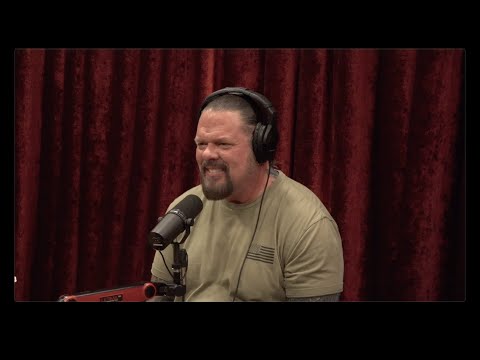
Joe Rogan Experience #2295 - Scott Payne
Narrator, Joe Rogan (host), Scott Payne (guest), Narrator, Joe Rogan (host), Joe Rogan (host), Joe Rogan (host), Joe Rogan (host), Joe Rogan (host), Joe Rogan (host), Joe Rogan (host)
In this episode of The Joe Rogan Experience, featuring Narrator and Joe Rogan, Joe Rogan Experience #2295 - Scott Payne explores undercover FBI Agent Reveals Biker Gangs, Nazis, and Neo-Nazis Within Former FBI undercover agent Scott Payne recounts 25 years infiltrating criminal worlds from street-level narcotics and biker gangs to the Ku Klux Klan and accelerationist neo-Nazi cells. He explains how undercover work really functions: building deep relationships he knows he will later betray, often with violent, damaged, or ideologically extreme people. Payne details harrowing operations, including nearly being discovered while wired inside an Outlaws MC clubhouse and embedding with The Base, a neo-Nazi group plotting race-war style attacks and ritual sacrifices. He also discusses the toll this work took on his body, marriage, and psyche, and the ethical and psychological complexities of befriending people he ultimately helped send to prison.
Undercover FBI Agent Reveals Biker Gangs, Nazis, and Neo-Nazis Within
Former FBI undercover agent Scott Payne recounts 25 years infiltrating criminal worlds from street-level narcotics and biker gangs to the Ku Klux Klan and accelerationist neo-Nazi cells. He explains how undercover work really functions: building deep relationships he knows he will later betray, often with violent, damaged, or ideologically extreme people. Payne details harrowing operations, including nearly being discovered while wired inside an Outlaws MC clubhouse and embedding with The Base, a neo-Nazi group plotting race-war style attacks and ritual sacrifices. He also discusses the toll this work took on his body, marriage, and psyche, and the ethical and psychological complexities of befriending people he ultimately helped send to prison.
Key Takeaways
Undercover success depends more on psychology and authenticity than theatrics.
Payne emphasizes that effective undercover work is about being a believable version of yourself—using your real background, mannerisms, and interests—rather than acting as a totally fabricated character, which is hard to sustain over years.
Get the full analysis with uListen AI
Long-term undercover operations require extreme psychological resilience and structured support.
He describes FBI UC training as brutally sleep-deprived to expose who cracks under stress, and explains the Safeguard program’s mandatory psychological assessments, yet still admits he burned out after years of nonstop operations and had to be pulled off cases.
Get the full analysis with uListen AI
Relationships with targets can become disturbingly real and emotionally conflicting.
Payne formed deep bonds with violent bikers like “Scot Town” and “Clothesline,” to the point where they’d take bullets for each other; he felt genuine sadness and guilt during their arrests, highlighting the moral tension of “building relationships you’re going to betray.”
Get the full analysis with uListen AI
Domestic extremist threats are increasingly decentralized, online, and ideologically complex.
Groups like The Base recruit via encrypted apps, blend Nazi, pagan, and accelerationist beliefs, and plan small-cell “boogaloo” style attacks on infrastructure or perceived enemies, making them harder to detect through traditional protest or organization monitoring.
Get the full analysis with uListen AI
Violent plots often evolve from loose talk to concrete, operational details.
Payne shows how idle extremist rhetoric can turn into step-by-step planning—discussing weapons, disguises, depend diapers for potential bowel loss, and DNA control—indicating a shift from protected speech into prosecutable criminal conspiracy.
Get the full analysis with uListen AI
The criminal underworld is broader than stereotypical gangsters, including professionals and ‘normal’ seeming people.
He chronicles pedophile professors, IT workers in neo-Nazi cells, and prison inmates hiring killers, underscoring that dangerous offenders are not confined to obvious street criminals.
Get the full analysis with uListen AI
Families of undercover agents carry invisible but heavy burdens.
Payne’s wife lived with constant fear, coped by moving furniture when anxious, and at times spiritually “covered” him in prayer; he only later realized she also needed decompression after each operation, not just him.
Get the full analysis with uListen AI
Notable Quotes
“Undercover work is building relationships that you’re going to betray.”
— Scott Payne
“At the end of the day, we’re adrenaline junkies.”
— Scott Payne
“If I believe my life is in danger, I’ll snort the lacquer finish off this table.”
— Scott Payne
“I know I was born to be an Outlaw. I’m either going to die young or die in jail.”
— ‘Clothesline’ as recounted by Scott Payne
“I could have easily gone that way—that proverbial fork in the road.”
— Scott Payne
Questions Answered in This Episode
How should law enforcement ethically balance deep emotional bonds with targets against the necessity of dismantling dangerous organizations?
Former FBI undercover agent Scott Payne recounts 25 years infiltrating criminal worlds from street-level narcotics and biker gangs to the Ku Klux Klan and accelerationist neo-Nazi cells. ...
Get the full analysis with uListen AI
What safeguards or limits should exist on undercover participation in rituals like animal sacrifice, drug use, or religious desecration?
Get the full analysis with uListen AI
Given the decentralized, online nature of groups like The Base, how can society counter radicalization without infringing on protected speech?
Get the full analysis with uListen AI
What long-term mental health support should be standard for undercover operatives and their families, even after retirement?
Get the full analysis with uListen AI
How does hearing stories like Payne’s change your view of biker gangs, neo-Nazis, and the broader landscape of domestic extremism in the U.S.?
Get the full analysis with uListen AI
Transcript Preview
(drumbeats) Joe Rogan podcast, check it out. The Joe Rogan Experience. Train by day, Joe Rogan podcast by night, all day. (instrumental music plays)
Um, you've had a crazy fucking life, man.
Tss.
Like a really crazy life.
That's what I'm saying.
You spent... So to get everybody up to speed right from the beginning, you spent 25 years undercover, working for the FBI in the Klan, Nazi organizations, and biker gangs.
And then some, yes, sir.
What a crazy, crazy life that is.
(laughs) Yeah.
What... First of all, how did you get... How did you first get started doing that?
Uh, good question. I grew up in South Carolina. Um, played ball, all that stuff. I- I- I was always kind of a... I mean, if you look back, not trying to be cocky, whatever, 'cause that's not it. You've had plenty of people on this show that are complete badasses. Um, but I was kind of a bully of bullies. I didn't... I always looked out for... I liked the underdog. Um, I bounced in college, uh, so I was already learning that gift of gab, um, and fight techniques, and stuff like that. And then I got... I became a cop because I- I... When I was in college, I took a course. You know, I'm tak- I'm taking electives. I went to college so I'd have four more years to figure out what I was gonna do.
Yeah.
'Cause I didn't know what I was doing.
Me too.
Except partying. Except, you know... (laughs)
I did three years. (laughs)
(laughs) I- I was good at partying. Um, but, uh, I had an elective that was criminal justice, and, man, I really liked it. Um, psychology was always a strong thing for me, but it took a back seat, and I ended up coming out with a major in criminal justice and a minor in psychology. But during those criminal justice courses, I was like... At first, for a fleeting moment, I said, "I'm gonna be an attorney. Yeah, I'll be an attorney." And then I realized, I'd be a terrible attorney.
(laughs)
I said, because if I was the defense attorney and they said they did it, I would probably just walk up and go, "They did it." Right? That's not gonna get me any clients. And if I was the prosecutor, I pictured me being like Sam Kinison, grabbing them and going, "Say it."
(laughs)
"Say it." You know? "You did it." So I'm like, yeah, that's probably not the best role for me. And, uh, I did a ride along with cops in the, uh, in the department, and that was it. But once I got into law enforcement, I was uniform patrol for three years, uh, I was just so fascinated with undercover. I don't know what it was. I can't really remember. Doing the book, I've tried to dive back in. People ask. I don't really remember. I just know that I loved undercover movies, period. If it was a biker undercover, I don't care how cheesy it was, I love them all.
Install uListen to search the full transcript and get AI-powered insights
Get Full TranscriptGet more from every podcast
AI summaries, searchable transcripts, and fact-checking. Free forever.
Add to Chrome