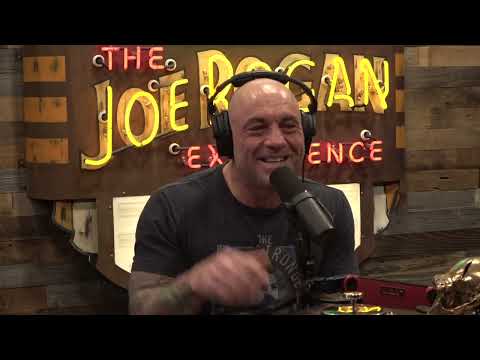
Joe Rogan Experience #1967 - Mike Vecchione
Narrator, Joe Rogan (host), Mike Vecchione (guest), Narrator, Narrator
In this episode of The Joe Rogan Experience, featuring Narrator and Joe Rogan, Joe Rogan Experience #1967 - Mike Vecchione explores from Special Ed Teacher To Killer Comic: Mike Vecchione’s Journey Joe Rogan and Mike Vecchione trace Mike’s path from special education teacher and heartbroken grad student to seasoned New York club comic, exploring how pain, discipline, and relentless stage time shaped his career. They dive deep into the craft of standup: building material slowly, handling hostile or indifferent crowds, protecting stage time from relationships, and learning to genuinely love the audience. The conversation then sprawls into combat sports and performance—wrestling, MMA, and boxing—as analogies for process, resilience, and mental toughness. They close by reflecting on discipline in a distraction-heavy world, the dangers and benefits of social media and tech, and the importance of creating strong comedy communities and paths for new comics.
From Special Ed Teacher To Killer Comic: Mike Vecchione’s Journey
Joe Rogan and Mike Vecchione trace Mike’s path from special education teacher and heartbroken grad student to seasoned New York club comic, exploring how pain, discipline, and relentless stage time shaped his career. They dive deep into the craft of standup: building material slowly, handling hostile or indifferent crowds, protecting stage time from relationships, and learning to genuinely love the audience. The conversation then sprawls into combat sports and performance—wrestling, MMA, and boxing—as analogies for process, resilience, and mental toughness. They close by reflecting on discipline in a distraction-heavy world, the dangers and benefits of social media and tech, and the importance of creating strong comedy communities and paths for new comics.
Key Takeaways
Heartbreak and failure can catalyze real commitment to a calling.
Mike’s serious pursuit of standup only began after a devastating breakup; with nothing to lose, he stopped fearing failure, used open mics to improve public speaking, and eventually built a full-time comedy career from that low point.
Get the full analysis with uListen AI
Standup careers are built incrementally, not through one big break.
Vecchione describes his trajectory as a series of small wins—Tonight Show sets, Last Comic Standing, Montreal—layered over decades, which Rogan likens to “making a mountain one layer of paint at a time.”
Get the full analysis with uListen AI
Process and preparation outweigh raw intensity in performance.
Both in wrestling and standup, focusing on “I must win” or “I must kill” can backfire; instead, Rogan and Mike emphasize mental warm-ups, structured writing, rehearsing, and treating each set or match as executing a trained process.
Get the full analysis with uListen AI
Commanding a difficult room is an underappreciated, essential skill.
Mike recounts a breakthrough set where he calmly neutralized a disruptive “birthday” heckler and slowly won over a cold crowd; a fellow comic recognized it as “masterful,” highlighting how real craft often goes unseen by audiences.
Get the full analysis with uListen AI
Physical struggle and conditioning are powerful antidepressants.
From cold plunges and saunas to brutal fight camps and wrestling practices, they argue that voluntarily enduring physical discomfort builds resilience, elevates mood, and protects against anxiety and depression in a way many smart, sedentary people overlook.
Get the full analysis with uListen AI
Wrestling is the most foundational discipline in modern MMA.
Rogan explains that elite wrestlers can dictate where a fight takes place—standing or on the ground—which forces strikers to worry about multiple threats at once and gives wrestlers a disproportionate advantage in high-level MMA.
Get the full analysis with uListen AI
Digital tools are double-edged: unprecedented learning, unprecedented distraction.
They note that YouTube and phones let young comics and fighters study the greats and advance faster, but also create addiction, comparison, and time-wasting; success now demands deliberate rules, discipline, and honest self-policing around tech use.
Get the full analysis with uListen AI
Notable Quotes
“I describe it to people like making a mountain one layer of paint at a time.”
— Joe Rogan
“There was a fork in the road… I kinda didn’t care if I failed, so I just kept doing it and doing it and doing it.”
— Mike Vecchione
“Love the crowd. Love them. They have hard lives… they came out to get a break from that.”
— Mike Vecchione
“If you can’t wrestle, good luck… unless you can land a wild shot, it’s a long night.”
— Joe Rogan
“This thing requires discipline. A lot of discipline. If you don’t have that, you’re gonna get sucked in.”
— Joe Rogan (on phones and social media)
Questions Answered in This Episode
How might Mike Vecchione’s background in special education and managing behavioral issues uniquely shape his approach to crowds and hecklers?
Joe Rogan and Mike Vecchione trace Mike’s path from special education teacher and heartbroken grad student to seasoned New York club comic, exploring how pain, discipline, and relentless stage time shaped his career. ...
Get the full analysis with uListen AI
What practical routines or rituals could an aspiring comic adopt from this conversation to better prepare mentally before going on stage?
Get the full analysis with uListen AI
Given Rogan’s strong stance against standup comedy ‘stand-ups’ in MMA, how should promotions balance entertainment value with competitive purity?
Get the full analysis with uListen AI
How can young performers today harness the advantages of social media and YouTube without falling into the traps of distraction, comparison, and burnout?
Get the full analysis with uListen AI
What does the underappreciation of comics like Dave Attell and Colin Quinn reveal about how audiences and the industry value fame versus pure craft?
Get the full analysis with uListen AI
Transcript Preview
(drumbeats) Joe Rogan podcast, check it out. The Joe Rogan Experience. (drumbeats) Train by day, Joe Rogan podcast by night, all day. (rock music plays)
We're up. What's up?
All right.
How are you, man? Pleasure to meet you.
Thanks for having me on, Joe. It's a pleasure to be here.
Hey, my pleasure. You're a funny motherfucker, man.
Thank you, man.
I enjoy your shit.
Thank you, man.
How long have you been doing it?
23.
Nice.
Started in October of 2000. Did about three and a half years in Philly with, um, um, De Rosa, Big J, those guys, and then moved h- to New York at the end of, uh, 2003.
Nice.
Yeah. I was a teacher. I got a master's in special education. I was working with, uh, kids who had behavioral problems for about eight years.
You seem like a guy who would work with kids with behavioral problems.
Yeah.
You're very calm.
(laughs) Yeah. Very calming.
(laughs)
Very calming. But, uh, th- it was very, very challenging. Very challenging.
I can imagine that.
'Cause kids would, uh, flip, you know, a lot. Every day at work was something different, you know?
Oh, man.
I worked in a behavioral school for a while, and then, uh, and then went back at night and got my master's 'cause I figured if I'm gonna do this, I might as well teach, and then, uh, taught in a classroom in, in three different public school systems. So, uh-
When did you decide to leave to go comedy full time?
Um, I did about th- I started going to open mics. I was in a relationship and, uh, I thought we were gonna get married, and it broke up. I think a lot of comics have this story, you know, where it's a, it's like a heartbreak situation, and then I was just on my own, kinda out there, finishing up my master's. So I started just going to open mics at the Laff House, which is not there anymore. It's a, um, comedy club on South Street, and I just started going every Wednesday, and then I started going on Thursdays and a little bit more, and then I wasn't funny at first. You know, I'd bomb, I would do okay, bomb, do okay, bomb, but I was like, you know, "I'm probably not gonna be able to do this, but it's gonna help me public speaking-wise."
Mm.
"It's gonna help me somewhere down the line, you know? I got a good vibe for it." So I was like, "Let me just keep doing it." And at that point, you know, I was, uh, you know, alone and I was going through a tough time, so I was like, "I kinda don't care if I fail. I kinda just don't care. I'm gonna just fail-
Install uListen to search the full transcript and get AI-powered insights
Get Full TranscriptGet more from every podcast
AI summaries, searchable transcripts, and fact-checking. Free forever.
Add to Chrome