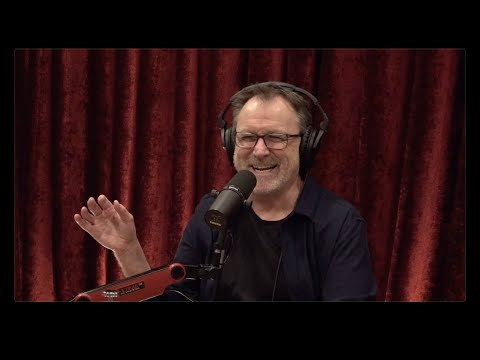
Joe Rogan Experience #2145 - Colin Quinn
Joe Rogan (host), Narrator, Colin Quinn (guest), Guest (guest), Colin Quinn (guest), Guest (guest)
In this episode of The Joe Rogan Experience, featuring Joe Rogan and Narrator, Joe Rogan Experience #2145 - Colin Quinn explores colin Quinn, Comedy, Culture Wars, And The Psychology Of Modern Chaos Joe Rogan and Colin Quinn trade stories from decades in stand-up, reflecting on club culture, crowd behavior, comics policing each other, and how comedy sharpens truth through live feedback. They dive into broader cultural issues: social media’s impact on human psychology, campus radicalism, propaganda from foreign powers, and the erosion of shared reality in America. Quinn describes his new special shot for a psychiatrists’ convention, framing modern society as having a collective psychotic break, while they also riff on martial arts myths, organized crime, porn’s evolution, LA vs. New York, and religious holy sites. The conversation continually loops back to how comedians process all this madness, and why staying sharp, honest, and onstage is the only real antidote they trust.
Colin Quinn, Comedy, Culture Wars, And The Psychology Of Modern Chaos
Joe Rogan and Colin Quinn trade stories from decades in stand-up, reflecting on club culture, crowd behavior, comics policing each other, and how comedy sharpens truth through live feedback. They dive into broader cultural issues: social media’s impact on human psychology, campus radicalism, propaganda from foreign powers, and the erosion of shared reality in America. Quinn describes his new special shot for a psychiatrists’ convention, framing modern society as having a collective psychotic break, while they also riff on martial arts myths, organized crime, porn’s evolution, LA vs. New York, and religious holy sites. The conversation continually loops back to how comedians process all this madness, and why staying sharp, honest, and onstage is the only real antidote they trust.
Key Takeaways
Live comedy only works when audiences know they’re not part of the show.
Quinn and Rogan praise clubs that quickly eject hecklers; social media crowd-work clips have trained audiences to think they’re co-stars, but comics need uninterrupted focus and real-time feedback to develop material.
Get the full analysis with uListen AI
Comics are relentlessly shaped by feedback in a way most people never experience.
They get instant, high-volume data—laughter or silence—from hundreds of people nightly, plus ruthless peer critique, which strips away hack habits and self-delusion far more aggressively than most professions.
Get the full analysis with uListen AI
Social media has removed both risk and remorse from human aggression.
Online, people can threaten and insult without physical danger or seeing a hurt face later; the normal cycle of ‘I went too far, I should apologize’ is short-circuited, leading to more extreme, unregulated cruelty.
Get the full analysis with uListen AI
Modern ideological extremism behaves like a cult, not a debate.
On campuses and online, certain left-wing positions (e. ...
Get the full analysis with uListen AI
Foreign subversion amplifies—but doesn’t fully create—America’s internal weaknesses.
They reference ex-KGB defector Yuri Bezmenov and argue Russia/China have long seeded anti-Western, Marxist ideas in universities, but those ideas only took root because domestic elites and institutions were receptive.
Get the full analysis with uListen AI
Altering kids’ bodies for gender ideology is a step too far, even for many trans people.
They distinguish between adult transition and giving minors hormones or surgery; Rogan emphasizes irreversible impacts (fertility, sexual function, bone structure) and notes detransitioners and gay people who now speak out get viciously attacked.
Get the full analysis with uListen AI
Stand-up longevity demands ruthless honesty about your own mediocrity.
Both note that time off makes you ‘flabby’; you can’t live in theory—crowds instantly expose when you’re rusty or coasting. ...
Get the full analysis with uListen AI
Notable Quotes
“Nobody heckles once. Nobody’s ever heckled once. Nobody heckles sober either.”
— Colin Quinn
“Social media is the first time in history you can threaten people and curse them out and not have to run or have a physical confrontation.”
— Colin Quinn
“Moderates are considered pussy. Nobody’s interested in moderates. Our whole culture is built around extremists.”
— Colin Quinn
“If you think you’re a boy and you’re a girl, live your life how you want. But if you start injecting things into your body at 14 or 15, you’ll never be the same again.”
— Joe Rogan
“I’m really a comic’s comic. If the whole world was comedians, I’d be selling out stadiums.”
— Colin Quinn
Questions Answered in This Episode
How does Colin Quinn’s idea that society is having a ‘psychotic break’ change the way we interpret daily news and online outrage?
Joe Rogan and Colin Quinn trade stories from decades in stand-up, reflecting on club culture, crowd behavior, comics policing each other, and how comedy sharpens truth through live feedback. ...
Get the full analysis with uListen AI
To what extent should comedy clubs enforce strict no-heckling policies versus allowing some audience interaction inspired by social media culture?
Get the full analysis with uListen AI
Are universities salvageable from ideological capture, or has higher education already passed a point of no return?
Get the full analysis with uListen AI
What ethical boundaries should exist between affirming trans identities and protecting kids from irreversible medical decisions?
Get the full analysis with uListen AI
In a world where everyone can broadcast jokes and hot takes, what unique value do live stand-up comedians still provide—and how might that role evolve?
Get the full analysis with uListen AI
Transcript Preview
(drumming music) Joe Rogan podcast, check it out.
The Joe Rogan Experience.
Train by day, Joe Rogan podcast by night, all day. (rock music) Hello, Hello, Joe. Joe, that was fun last night. Let me just start by saying what a fun time at the club. Um, the green room and everything else. And here's what I was, I was talking to the head of security at the club, here's what I love about the club. I worked the club. I had a great weekend b- about a couple of months ago, is they keep the audience in line. Nobody's heckling without getting booted. Is that not the most important thing in comedy that nobody talks about?
It's very important.
It's unbelievable.
And unfortunately, there's so many crowd work, uh, clips that get put out on Instagram-
Right.
... and like people are now thinking that they wanna be a part of the show.
Yeah.
And so I see people much more often chiming in and yelling things out, and they think they're gonna be a part of things.
Yeah. And even when you go, when you try to be nice on the first line, you go, "That was okay, sir." Then they try again, you're like, "Listen, you pi- oh my god."
Yeah.
But that's what I love about your club. Everybody there just has the energy like, "We're gonna tell you right now. Another word, you're out." That's how it should be.
Yeah.
'Cause as you know, there's no, nobody heckles once.
Right.
Nobody's ever heckled once.
Nobody heckles sober either.
And nobody heckles sober.
(laughs)
And they just like to start trouble. And the green room was fun, and even though I didn't go on, it was a, I also didn't go on because you have to understand the language where I was like, you're like, "You wanna go on?" I go, "Um, I don't really wanna go on." They go, "Oh, that's cool." But really then you're supposed to say, "The crowd really wants you to go on." And I'm like, "Joe, I don't wanna bump anybody." "No, you wouldn't be bumping anybody. We'll just cut Tony's time down." "Joe, I don't wanna be that guy." You're like, "Don't be ridiculous."
Oh, I have to dance with you.
Go on. (laughs)
I didn't know you wanted to dance.
Yeah. (laughs)
If you, you wanna dance tonight?
No, I gotta leave, um, go to Seattle tonight.
What the fuck?
I gotta go. (laughs) I would love to, yeah.
Are you, are you performing tonight in Seattle?
No, no.
Well, maybe I can change my flight, i-... Well, let's see-
Move it around.
... maybe I can change it. Move it around. There's plenty-
Maybe I can.
... of flights out of Austin. It's a-
Install uListen to search the full transcript and get AI-powered insights
Get Full TranscriptGet more from every podcast
AI summaries, searchable transcripts, and fact-checking. Free forever.
Add to Chrome