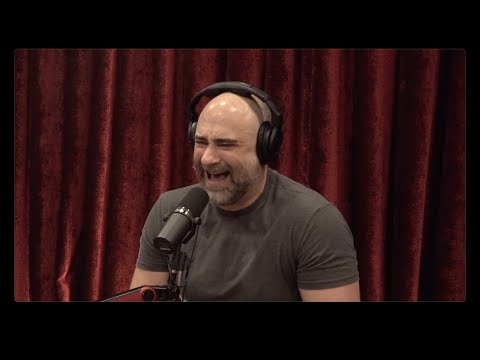
Joe Rogan Experience #2125 - Kurt Metzger
Narrator, Narrator, Joe Rogan (host), Kurt Metzger (guest), Narrator, Narrator, Narrator, Narrator, Narrator, Narrator, Narrator, Narrator, Narrator
In this episode of The Joe Rogan Experience, featuring Narrator and Narrator, Joe Rogan Experience #2125 - Kurt Metzger explores joe Rogan, Kurt Metzger skewer war, media, woke culture, elites’ lies Joe Rogan and comedian Kurt Metzger spend over three hours riffing on politics, war, media corruption, culture wars, and conspiracy-adjacent topics, using dark humor and cynicism throughout.
Joe Rogan, Kurt Metzger skewer war, media, woke culture, elites’ lies
Joe Rogan and comedian Kurt Metzger spend over three hours riffing on politics, war, media corruption, culture wars, and conspiracy-adjacent topics, using dark humor and cynicism throughout.
They criticize U.S. foreign policy in Ukraine and Gaza, question Israel’s conduct and Western double standards, and argue that establishment media on both left and right constantly manipulate narratives.
The conversation ranges from TikTok, DEI, trans issues in sports, COVID policies, pharma, intelligence agencies, UFOs, and elite blackmail, to Haiti, homelessness, and immigration, portraying institutions as systemically deceptive.
Both essentially land on a stance of deep distrust toward government, media, and corporations, encouraging people to recognize propaganda, resist tribal thinking, and accept that many ‘conspiracies’ are now documented history.
Key Takeaways
Official war narratives are heavily curated and often contradictory.
They highlight Israeli officials openly acknowledging civilian deaths (e. ...
Get the full analysis with uListen AI
Social media platforms are information battlegrounds, not neutral spaces.
Metzger argues TikTok isn’t a free-speech haven but a platform whose real problem (for U. ...
Get the full analysis with uListen AI
Censorship and shadow banning quietly shape public perception.
They describe how platforms throttle disfavored opinions without transparency, enforcing elite consensus on COVID, Ukraine, and gender issues, while users sign away rights in opaque terms of service and never see what’s being suppressed.
Get the full analysis with uListen AI
Media ‘fact‑checking’ is often partisan narrative management.
Rogan cites a New York Times explainer that stretches Trump’s rhetoric into ‘violent extremism’ while downplaying Biden’s corruption allegations, arguing this kind of selective framing erodes public trust and infantilizes audiences rather than informing them.
Get the full analysis with uListen AI
Language engineering is a core tool of modern ideological control.
They mock terms like ‘gynosexual,’ ‘MAPs’ (minor‑attracted persons), and claims that biological sex is purely identity, tying this to queer theory’s explicit goal of ‘destroying normal’ and to Orwellian redefinition strategies used to make dissent seem irrational or hateful.
Get the full analysis with uListen AI
DEI and corporate virtue are driven by incentives, not morality.
Examples like Starbucks’ racial firing case and corporate DEI scores show how companies adopt ideological postures for tax, regulatory, and PR advantages, even when policies are legally or ethically shaky, leading to lawsuits and eventual backlash.
Get the full analysis with uListen AI
Many ‘conspiracies’ are now documented institutional behavior.
They cite examples like Haiti’s long‑term exploitation, CIA drug stories, MK‑Ultra, COVID death misclassification, and pharmaceutical liability shields, arguing the real pattern is systemic self‑protection and cover‑ups rather than isolated scandals.
Get the full analysis with uListen AI
Notable Quotes
“Everybody has North Korea in their pocket at all times.”
— Kurt Metzger
“There’s no objective news. It doesn’t exist. You have right‑wing Fox and left‑wing everything else, and you’ll be confused as shit if you watch both.”
— Joe Rogan
“How is it working out for you, telling people to ignore reality?”
— Kurt Metzger
“If you’re going to talk about Biden being corrupt but won’t talk about it because it might help Trump, you’re part of the problem.”
— Joe Rogan
“The only thing you have to do is stop being a punk to your career.”
— Kurt Metzger
Questions Answered in This Episode
How much of the Israel–Gaza and Ukraine coverage that you consume is shaped by the kind of selective framing and omissions Rogan and Metzger describe?
Joe Rogan and comedian Kurt Metzger spend over three hours riffing on politics, war, media corruption, culture wars, and conspiracy-adjacent topics, using dark humor and cynicism throughout.
Get the full analysis with uListen AI
What concrete examples have you seen of social media platforms quietly throttling or disappearing content, and how has that changed your trust in them?
They criticize U. ...
Get the full analysis with uListen AI
Where do you personally draw the line between respecting someone’s identity and rejecting obviously false scientific claims, especially around sex and biology?
The conversation ranges from TikTok, DEI, trans issues in sports, COVID policies, pharma, intelligence agencies, UFOs, and elite blackmail, to Haiti, homelessness, and immigration, portraying institutions as systemically deceptive.
Get the full analysis with uListen AI
If major news outlets are now openly activist in tone, how do you think an ‘objective’ news ecosystem could realistically be rebuilt, if at all?
Both essentially land on a stance of deep distrust toward government, media, and corporations, encouraging people to recognize propaganda, resist tribal thinking, and accept that many ‘conspiracies’ are now documented history.
Get the full analysis with uListen AI
Which issues in your own life have you hesitated to research or speak about because of potential social or career consequences, and what does that say about current censorship norms?
Get the full analysis with uListen AI
Transcript Preview
(drum roll) Joe Rogan podcast, check it out.
The Joe Rogan Experience.
Train by day, Joe Rogan podcast by night, all day. (rock music) What's going on, buddy?
Good, man.
Good to see you. It's fun to see you last night too.
Wait, are we on yet?
Yes.
Oh, that's great that we opened up right on (laughs) -
Right on you puffing? (laughs) Oh. Last night was fun.
Oh my God-
How funny was Attell, dude?
I was remembering today that he said that, uh, Deliverance was his Barbie. (laughs)
(laughs) He said so many asides like that. There were so many-
Yeah.
... like, you know, Tony said something really funny, he said, "You, you watch him, you die laughing and then afterwards you can't remember anything he said."
No, that's right and then I start to have recall, it's like I got abducted and then the memories come back.
(laughs)
So when I woke up I was laughing 'cause I remembered, he said (laughs) -
He said-
Well, about, he, he goes, "I need to get a root canal," but I, I couldn't get it 'cause, I couldn't get a root canal 'cause I was in Oklahoma, you know, every life is sacred. (laughs) He goes, "You ever have a back alley root canal?" (laughs)
(laughs) He was just, everything about him was just so silly and so casual, it was very, very... And when he pulls out the recorder and starts playing that little flute thing.
Yeah, he learned to do that over the pandemic.
Ah.
He learned to play recorder. (laughs)
The fact that he uses a flip phone for real. I guess he has. You want some coffee?
Yeah.
I guess he has-
I guess I should've asked.
... a, um, uh, iPhone that he uses for social media when he, i- if he ever needs to post.
I always, I always wanna send him shit and I can't 'cause he's, I guess he's taking the calls on the flip phone.
Yeah. Yeah, he, he prefers to be out with the flip phone-
Does he work for Assad?
Gi- gi- gi- gi- gi- (laughs)
Gi- gi- gi- (laughs)
I think he prefers to be with the flip phone.
Yeah.
But I think he's right. I think he's right. I think if you have a f- a cell phone that's like connected to the internet or smartphone, but you don't use it that often, every now and then you check it, that's probably the way to go.
You know, we, of course he's right.
Yeah.
Everybody has North Korea in their pocket at all times.
Yes. Yeah, you really do.
Well, I, w-
Our government, their government, everybody's government.
You better hope it's multiple governments so there's at least some competition for your data and it's not just one monopoly has all your data.
Install uListen to search the full transcript and get AI-powered insights
Get Full TranscriptGet more from every podcast
AI summaries, searchable transcripts, and fact-checking. Free forever.
Add to Chrome