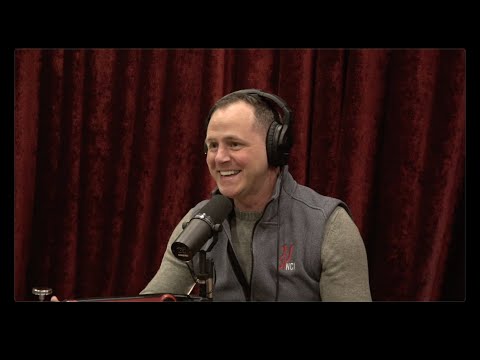
Joe Rogan Experience #2278 - Chase Hughes
Joe Rogan (host), Narrator, Chase Hughes (guest), Guest (guest), Guest (guest), Narrator, Narrator
In this episode of The Joe Rogan Experience, featuring Joe Rogan and Narrator, Joe Rogan Experience #2278 - Chase Hughes explores mind Control, Manipulation, and Mental Warfare in Modern Life Explained Joe Rogan and behavior expert Chase Hughes discuss how brains are influenced and controlled, from medical treatments for epilepsy and brain health to government psyops, cult recruitment, and hypnosis. Hughes explains how methylene blue and red-light therapy helped stop his temporal lobe seizures and potentially regenerate brain tissue, while critiquing mainstream medicine’s blind spots. They break down classic psychology experiments, MK-Ultra–style mind control, cult tactics, and how the same mechanisms can be used ethically to help people or unethically to create “Manchurian candidates.” Throughout, they connect these principles to modern phenomena like social media manipulation, COVID-era propaganda, audience capture, and even athletic performance and stand-up comedy. The conversation centers on how novelty, authority, tribe, and identity are systematically used to shape beliefs and behavior—often without people realizing it.
Mind Control, Manipulation, and Mental Warfare in Modern Life Explained
Joe Rogan and behavior expert Chase Hughes discuss how brains are influenced and controlled, from medical treatments for epilepsy and brain health to government psyops, cult recruitment, and hypnosis. Hughes explains how methylene blue and red-light therapy helped stop his temporal lobe seizures and potentially regenerate brain tissue, while critiquing mainstream medicine’s blind spots. They break down classic psychology experiments, MK-Ultra–style mind control, cult tactics, and how the same mechanisms can be used ethically to help people or unethically to create “Manchurian candidates.” Throughout, they connect these principles to modern phenomena like social media manipulation, COVID-era propaganda, audience capture, and even athletic performance and stand-up comedy. The conversation centers on how novelty, authority, tribe, and identity are systematically used to shape beliefs and behavior—often without people realizing it.
Key Takeaways
Methylene blue can be a powerful neuroprotective tool but must be used knowledgeably.
Hughes credits methylene blue, combined with high-dose melatonin and red-light therapy, with stopping up to nine daily temporal lobe seizures and improving his cognition. ...
Get the full analysis with uListen AI
Human behavior is highly vulnerable to authority and group pressure, far more than most people admit.
The Milgram shock experiments and Asch line experiments showed that ordinary people will override their own perception and ethics to conform to group answers or obey an ‘expert’ in a lab coat—sometimes to the point of what they believe is lethal harm—simply due to novelty and perceived authority.
Get the full analysis with uListen AI
Cult recruiters and high-pressure salespeople exploit the same brain ‘loopholes’ as interrogators and propagandists.
Hughes describes how cult recruiters, timeshare sellers, and even adult-film ‘scouts’ first trigger small deviations from a person’s baseline behavior, elicit identity agreements (e. ...
Get the full analysis with uListen AI
Identity hijacking is the core of deep persuasion and political polarization.
Once a belief or group is fused with someone’s identity (“I am this kind of person”), future behavior becomes highly predictable and malleable. ...
Get the full analysis with uListen AI
Modern social media functions as always-on hypnosis powered by novelty and fake tribal consensus.
Algorithms serve a constant stream of emotionally charged novelty and apparent social proof (likes, comments, bot amplification) that hack focus and tribal instincts. ...
Get the full analysis with uListen AI
True confidence and authority come from real-life discipline, not surface ‘tricks.’
Hughes argues most advice on confidence focuses on symptoms (posture, eye contact, handshake) rather than causes (having your environment, time, finances, social life, and appearance genuinely handled). ...
Get the full analysis with uListen AI
The same mental-control techniques can dramatically improve performance in sports and therapy when used ethically.
Hughes describes using hypnotic ‘alter-ego’ programming for fighters, and Rogan recounts how Cus D’Amato used hypnosis to shape Mike Tyson’s mindset. ...
Get the full analysis with uListen AI
Notable Quotes
“Our brains are not capable of overcoming this technology. We don’t have a firewall.”
— Chase Hughes
“If the opinion that’s coming out needs people to be silenced, it’s a psyop.”
— Chase Hughes
“If your idea is good, nobody has to be quiet.”
— Chase Hughes
“I thought anybody who was an anti-vaxxer was a kook... then I watched what happened.”
— Joe Rogan
“You have a horrible disease—you have a need for love from strangers.”
— Dr. Phil (as recounted by Chase Hughes)
Questions Answered in This Episode
How can ordinary people build a practical ‘mental firewall’ against manipulation from media, governments, and influencers?
Joe Rogan and behavior expert Chase Hughes discuss how brains are influenced and controlled, from medical treatments for epilepsy and brain health to government psyops, cult recruitment, and hypnosis. ...
Get the full analysis with uListen AI
Where is the ethical line between using hypnosis/behavioral science to help someone (e.g., therapy, coaching) and using it to control them?
Get the full analysis with uListen AI
Given what we now know about social media psyops and COVID-era propaganda, how should platforms and governments be restructured, if at all?
Get the full analysis with uListen AI
What early-life patterns (safety, friends, rewards) most strongly predict adult suggestibility, and can they be rewired later in life?
Get the full analysis with uListen AI
How could athletes, performers, and executives safely apply these mental techniques without risking unintended psychological side effects?
Get the full analysis with uListen AI
Transcript Preview
(drumbeats) Joe Rogan podcast, check it out.
The Joe Rogan Experience. Train by day, Joe Rogan podcast by night. All day. (instrumental music)
Hey, man.
Good to see you.
Man.
We're debuting these, uh, mugs. My friend, uh, Turkey Merc on Instagram sent me these Cheshire cat mugs. Isn't that badass?
Yeah. That's really good.
Thought it'd be good for you, 'cause we're, you know, we're talking about mind fucks. Cheshire cat's a little bit of a mind fuck. (laughs)
In the simulation.
Yeah, for sure. So, uh, you were just telling me that you had a brain disease.
Okay.
And you... What did you do to fix it?
So, I, uh-
What was it, first of all?
Uh, it's temporally epilepsy with mesial temporal sclerosis.
When did you develop this?
We don't know, but, uh, I started having seizures, like, a few years ago. And everybody in my family knows I'm a neuroscientist. I say with a lowercase N, not a PhD neuroscientist, but, uh ...
But you studied neuroscience?
Yeah. I, I post-grad at Harvard and, and Duke. But, uh, they assumed, you know, Chase has studied all this stuff. He's gonna know if he's having seizures. But these seizures come with amnesia. So, I didn't remember that I was having any of 'em. And this is, like, three years ago. I had retired from the military and then started having these seizures. So, then I, I found a neurologist, the, the drug that they gave me, the number one side effect was seizures. Of the, from this pharmaceutical company. So, I, I kind of looked around and I found this guy's a functional medicine guy, and he got me on, uh, methylene blue to start off. And I know Mel Gibson was on here talking about it.
Mm-hmm.
And that instantly stopped everything. And, uh, some other stuff.
That stuff so- it was a fabric dye, right?
Yeah, in 1890.
How weird.
And it-
Who the fuck drank it first? (laughs)
(laughs) Who's that guy?
So, going, "Oh, they make blue jeans out of that?" Huh.
Yeah, let me-
What would it taste like?
Yeah. Let me taste some of that.
Why would I drink it every day if- if it affects my health?
It, it tastes like chewing an aspirin.
I, I'd take it.
Okay.
Yeah.
I take it every day as well. And, uh-
Yeah, RFK Jr. told me about it.
Yeah, man, it's fantastic. And so, this guy's injecting, in 1890, injects these rats with it and then does an autopsy on these things. And their brain, the brain stem, every single nerve is blue. So, he discovered this methylene blue has an affinity for neuronal tissue. So, he says, "Well, it's sucking into neurons, what's it doing?" So, we could talk about it if you want to, but-
Install uListen to search the full transcript and get AI-powered insights
Get Full TranscriptGet more from every podcast
AI summaries, searchable transcripts, and fact-checking. Free forever.
Add to Chrome