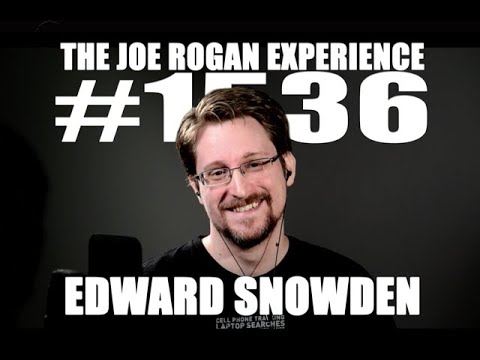
Joe Rogan Experience #1536 - Edward Snowden
Edward Snowden (guest), Joe Rogan (host)
In this episode of The Joe Rogan Experience, featuring Edward Snowden and Joe Rogan, Joe Rogan Experience #1536 - Edward Snowden explores edward Snowden Explains Mass Surveillance, Privacy Rights, and Real Reform Edward Snowden joins Joe Rogan to discuss the recent U.S. appeals court ruling that the NSA’s bulk phone-record collection program he exposed was illegal and ineffective at stopping terrorism.
Edward Snowden Explains Mass Surveillance, Privacy Rights, and Real Reform
Edward Snowden joins Joe Rogan to discuss the recent U.S. appeals court ruling that the NSA’s bulk phone-record collection program he exposed was illegal and ineffective at stopping terrorism.
He explains how modern mass surveillance works—from metadata collection to smartphone exploits like Pegasus—and why both governments and corporations pose deep, systemic threats to privacy.
They examine structural impunity for intelligence agencies, the Espionage Act’s use against whistleblowers, and the dangerous precedent of prosecuting publishers like Julian Assange.
The conversation widens to deplatforming, social media as public infrastructure, policing, poverty, endless war, and what meaningful accountability and reform would actually require.
Key Takeaways
Mass surveillance was both illegal and largely ineffective against terrorism.
An appeals court ruled the NSA’s bulk collection of Americans’ phone records illegal and found it made no meaningful difference in the one terrorism case the government claimed it helped solve, undermining years of security justifications.
Get the full analysis with uListen AI
Metadata is more powerful than content for mapping your life.
Snowden explains that who you call, when, where your phone is, and what services you access builds a detailed 'pattern of life' that can reveal relationships, habits, and beliefs without ever recording actual conversations.
Get the full analysis with uListen AI
Advanced phone hacking tools turn iPhones into total surveillance devices.
Companies like NSO Group exploit software flaws (e. ...
Get the full analysis with uListen AI
Legislation with comforting names often hides erosions of privacy.
Snowden warns about laws branded as protecting children or safety (e. ...
Get the full analysis with uListen AI
The Espionage Act structurally prevents fair trials for whistleblowers.
Under the Espionage Act, defendants like Snowden cannot tell a jury why they leaked or argue public interest, making no legal distinction between selling secrets to a foreign power and responsibly disclosing abuses to journalists.
Get the full analysis with uListen AI
Prosecuting Julian Assange would endanger all investigative journalism.
Charging a publisher under the Espionage Act for the Iraq/Afghan war logs breaks a long-standing line between sources and media; if Assange can be convicted, mainstream outlets that publish leaks could be targeted the same way.
Get the full analysis with uListen AI
Real reform requires accountability for powerful officials, not just new rules.
Snowden argues that intelligence chiefs and senior officials repeatedly break laws without consequence, creating a culture of impunity; until leaders can be criminally liable, systems will be quietly reworked to bypass court rulings.
Get the full analysis with uListen AI
Notable Quotes
“They told us it was about safety. It was about power.”
— Edward Snowden
“You don’t do what I did unless you believe that people can do better.”
— Edward Snowden
“We have built a panopticon, but what sits at the top of it is a computer.”
— Edward Snowden
“There are times when the only thing you can do is tell the truth—and that should not be a crime.”
— Edward Snowden
“If you and I did what they did, we’d go to jail. When they do it, nothing happens.”
— Joe Rogan
Questions Answered in This Episode
If courts now acknowledge certain surveillance programs were illegal and ineffective, what concrete mechanisms could ensure intelligence agencies can’t quietly rebuild them under new legal theories?
Edward Snowden joins Joe Rogan to discuss the recent U. ...
Get the full analysis with uListen AI
How should societies balance the real harms enabled by strong encryption (e.g., child abuse, terrorism) against the systemic risks of banning or weakening end‑to‑end encryption for everyone?
He explains how modern mass surveillance works—from metadata collection to smartphone exploits like Pegasus—and why both governments and corporations pose deep, systemic threats to privacy.
Get the full analysis with uListen AI
At what point should social media platforms be treated as public utilities with First Amendment–like obligations, and how could that be implemented without destroying their ability to moderate genuine abuse and threats?
They examine structural impunity for intelligence agencies, the Espionage Act’s use against whistleblowers, and the dangerous precedent of prosecuting publishers like Julian Assange.
Get the full analysis with uListen AI
What would a fair legal framework for whistleblowing look like in the national-security context, and how could it distinguish between genuine public-interest disclosures and malicious leaks?
The conversation widens to deplatforming, social media as public infrastructure, policing, poverty, endless war, and what meaningful accountability and reform would actually require.
Get the full analysis with uListen AI
Given the link between poverty, crime, and radicalization, what would a serious, long-term reallocation of “war on terror” or policing budgets into social infrastructure actually need to include to be credible?
Get the full analysis with uListen AI
Transcript Preview
(drumming) Joe Rogan Podcast, check it out. The Joe Rogan Experience. Train by day, Joe Rogan Podcast by night. All day. (rock music)
Good to see you again, man.
Good to see you. Thanks for having me. It's, uh, been like a year since we last talked.
It's been like a year, believe it or not. You look exactly the same and the studio-
(laughs)
... looks exactly the same. You might be on another part of the world. No one knows.
Yeah, it's just, uh, my, my apartment that I rent. Y- you know, I, I don't like to give out a lot of information about where I'm at and that kind of stuff, so it's very small.
Very smart.
A plain wall that I've got the lights down low so it looks kind of a, a, a nice gray. At least I think it's nice.
I think it's beautiful.
(laughs)
It looks amazing. Uh, first of all-
Thanks, man.
... congratulations on the recent ruling. Was the Ninth District Court of Appeals?
Yeah.
Is that what it was? It said that-
Yeah.
... what you exposed with the warrantless wiretapping was in fact illegal, and there are-
Yeah.
... many people that are calling for you to be pardoned now.
Yeah, it's ... So much has happened. This ruling ... This is actually not the first time, um, the federal government has ... uh, or the appeals courts have struck down, uh, some of the federal surveillance programs as unlawful. Um, but this one is really important because it happened, uh, from an appeals court. It wasn't from a single judge. It was from, uh, uh, a panel of judges. Um, and what they had, uh, ruled was that the NSA's bulk collection of Americans' phone records, uh, was, uh, illegal. And this is the very first, um, sort of mass surveillance program that, uh, I and the journalists, um, really, that the news was broken back in 2013. So, this is a huge victory for privacy rights. Uh, what it means is ... There was this provision, uh, of the Patriot Act. Like, remember the Patriot Act? Remember like (laughs) a zillion years ago?
I do.
Every, everybody was like-
Yeah.
... "Oh, Patriot Act, Patriot Act." Your friend, Alex Jones, you know, I think (laughs) he was worried about the Patriot Act.
It's a terrible name. The ... There's a real problem with that name.
(laughs)
Because if you're against the Patriot Act, it's like against babies. It's like, uh, like, uh, "This is the pro-baby act," but meanwhile, pro-baby act, they get to look through your email. You know what I mean? It's like the word patriot is attached to that in a very disingenuous way, like calling that the Patriot Act is, is ... I- i- it's really creepy that they can do that. It should have like a number, like Bill A1.
Install uListen to search the full transcript and get AI-powered insights
Get Full TranscriptGet more from every podcast
AI summaries, searchable transcripts, and fact-checking. Free forever.
Add to Chrome