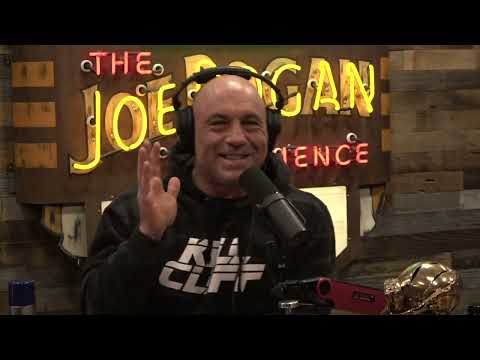
JRE MMA Show #133 with Sean O'Malley
Narrator, Narrator, Sean O'Malley (guest), Joe Rogan (host), Narrator, Narrator, Narrator, Narrator, Narrator, Narrator
In this episode of The Joe Rogan Experience, featuring Narrator and Narrator, JRE MMA Show #133 with Sean O'Malley explores sean O’Malley and Joe Rogan Explore Ideas, Fighting, and Greatness Sean O’Malley joins Joe Rogan to discuss creativity, the nature of ideas, language learning, parenting, and the mental side of elite MMA competition. They dive deep into how stand-up comedy and fighting both rely on preparation, repetition, and learning to manage fear. A large portion of the conversation centers on the bantamweight division, O’Malley’s fight with Petr Yan, training philosophy, weight cutting, and how careers are shaped by matchmaking and preparation. They also break down key fighters and divisions across the UFC, debating stoppages, title shots, and the evolution of MMA as a sport.
Sean O’Malley and Joe Rogan Explore Ideas, Fighting, and Greatness
Sean O’Malley joins Joe Rogan to discuss creativity, the nature of ideas, language learning, parenting, and the mental side of elite MMA competition. They dive deep into how stand-up comedy and fighting both rely on preparation, repetition, and learning to manage fear. A large portion of the conversation centers on the bantamweight division, O’Malley’s fight with Petr Yan, training philosophy, weight cutting, and how careers are shaped by matchmaking and preparation. They also break down key fighters and divisions across the UFC, debating stoppages, title shots, and the evolution of MMA as a sport.
Key Takeaways
Ideas require nurturing from rough concept to polished performance.
Rogan compares new bits to infants that must be recorded, revisited, and refined through repetition, illustrating that creativity is less about sudden genius and more about structured iteration.
Get the full analysis with uListen AI
Learning and using multiple languages keeps the brain sharp.
They note that bilingual children gain cognitive benefits and that adults can slow mental decline by learning languages, doing crosswords, and engaging in other demanding mental tasks.
Get the full analysis with uListen AI
Fight-night composure is a trainable mental skill, not a given.
O’Malley contrasts earlier bouts where he was gripped by fear with his calm before the Petr Yan fight, attributing the shift to accumulated camp experience and deliberate mindset work.
Get the full analysis with uListen AI
Spar smart: high intensity, but protect partners and careers.
O’Malley emphasizes clear communication with sparring partners—go hard enough to simulate real fights, but avoid trying to finish each other, since unnecessary gym knockouts can derail careers.
Get the full analysis with uListen AI
Judging must prioritize effective damage over raw takedown counts.
Rogan rewatched O’Malley vs. ...
Get the full analysis with uListen AI
Careful matchmaking can maximize a prospect’s long-term potential.
They compare boxing’s gradual build-up with how the UFC brought O’Malley along, suggesting that throwing talented fighters to elite opposition too early can stunt development and confidence.
Get the full analysis with uListen AI
Elite success demands a tailored, multi-coach training ecosystem.
O’Malley credits his rise to having a small, focused team—head coach, dedicated strength and conditioning coach, and grappling specialist—who build camps around his style and specific opponents.
Get the full analysis with uListen AI
Notable Quotes
“The most important thing that human life has ever had is ideas.”
— Joe Rogan
“If you’re gonna be champ, you gotta be ready to go.”
— Sean O’Malley
“It’s a skill. It’s a mental skill… you could think the wrong way and go off the rails, or you could manage it.”
— Sean O’Malley
“No human being is supposed to fight for 25 minutes.”
— Joe Rogan (via Chael Sonnen’s line)
“2020 to 2030 is the Suga era.”
— Sean O’Malley
Questions Answered in This Episode
How much should MMA judging criteria be reformed to better reflect effective damage versus positional control and takedowns?
Sean O’Malley joins Joe Rogan to discuss creativity, the nature of ideas, language learning, parenting, and the mental side of elite MMA competition. ...
Get the full analysis with uListen AI
What is the ideal balance between hard sparring for realism and lighter technical work to preserve long-term brain and body health?
Get the full analysis with uListen AI
If all major drugs were legalized and regulated, how would that realistically change crime, overdose deaths, and societal attitudes?
Get the full analysis with uListen AI
How important is careful career matchmaking compared to raw talent in determining whether a promising fighter becomes a superstar or burns out early?
Get the full analysis with uListen AI
In rematches like Adesanya vs. Pereira or Oliveira vs. Makhachev, what specific strategic adjustments most realistically change the outcome?
Get the full analysis with uListen AI
Transcript Preview
(drumming music) Joe Rogan podcast. Check it out.
The Joe Rogan Experience.
Train by day, Joe Rogan podcast by night, all day. (rock music)
Dude, I, I would, yeah, I feel like I'd get more nervous for that than a fight, for sure.
I don't know why, though. It doesn't make sense.
Well, for a fight, I know I'm prepared. I know I have-
Are you good?
... I know I have eight to 10 weeks to prepare for that moment. I guess you could prepare for comedy if you know you're making people laugh and you know you have a good, a good bit. That might make it easier. But to go up there and f- like, freestyle it, it would be hard.
Yeah, you don't wanna-
That'd be impossible, pretty much-
No, no. Freestyling.
... for a new newbie.
Well, you could. It, it depends on your personality, like there's people who could freestyle it, like I'm sure Joey Diaz could freestyle it-
Yeah.
... his first time on stage. It's just all in who you are. Like, I can't. I have to have pr- I prepared my shit for months in advance. I even recorded it on a little tape recorder and played it back and listened to it.
Exhale.
I get that-
You still do that, like record and then-
No.
... listen to it? No.
I, I r- record sets.
Hmm.
But I don't, like, uh, just talk into my tape recorder and, and then, like, uh, listen to that-
(laughs)
... like it's a bit and rehearse it like it's a bit.
Sniffles ] Yeah, comedy would, I, I can watch it. I just don't know if I could ever do it. I feel like I'm a funny person, like when I'm around my group of friends or like around-
Yeah.
... like, comfortable people, like I feel like I can make people laugh. But sometimes when I get really high, I feel like I have good bits.
Yeah. (laughs)
Like, just, and I'm like, "How could you v-" And then I'll tell someone after I'm not high, and I'm like, "Yeah, that f- was not it."
But when you're in the moment, maybe you could have figured out how to translate it. The problem is when you're sober, then you're reading, you're like, "What the fuck was I saying?"
Yeah. (laughs)
I do that all the time.
It happens.
I have notes on my phone so I, like, if, if I'm out and, you know, I just have a crazy idea, I'll write it down on my phone, and then I'll go look at them the next day to see if I mined any gold.
(laughs)
I'm like, "What do I got? What do I got?" But so many times, it's like, "What the fuck are you saying?"
Install uListen to search the full transcript and get AI-powered insights
Get Full TranscriptGet more from every podcast
AI summaries, searchable transcripts, and fact-checking. Free forever.
Add to Chrome