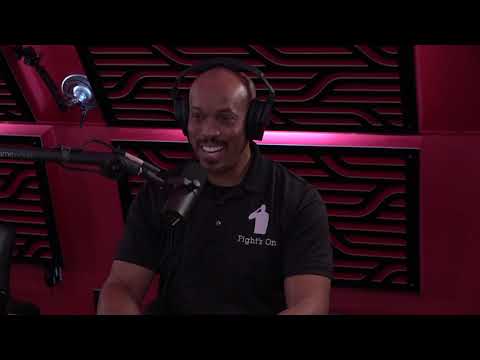
Joe Rogan Experience #1605 - Mark Smith
Narrator, Joe Rogan (host), Mark Smith (guest), Guest (guest), Narrator
In this episode of The Joe Rogan Experience, featuring Narrator and Joe Rogan, Joe Rogan Experience #1605 - Mark Smith explores elite MMA Referee, Fighter Pilot, White House Advisor: Mark Smith’s Journey Joe Rogan interviews MMA referee and former Air Force fighter pilot Mark Smith about the extreme difficulty and responsibility of officiating high‑level MMA bouts, especially around fight stoppages and fighter safety.
Elite MMA Referee, Fighter Pilot, White House Advisor: Mark Smith’s Journey
Joe Rogan interviews MMA referee and former Air Force fighter pilot Mark Smith about the extreme difficulty and responsibility of officiating high‑level MMA bouts, especially around fight stoppages and fighter safety.
Smith details his military career flying F‑16s, serving on the USAF Thunderbirds, and later working as a White House fellow and senior advisor at NASA, explaining how these experiences shaped his discipline and decision‑making.
They dive into modern fighter jet tech (F‑22, F‑35, stealth bombers), G‑forces, and training protocols, as well as space travel, NASA’s evolution, and U.S.–Russia cooperation on the ISS.
The conversation returns often to preparation and professionalism—how Smith trains physically, technically, and mentally for refereeing, and how elite-level standards in aviation and government translate into combat sports officiating.
Key Takeaways
High‑level MMA refereeing is about stopping fights neither too early nor too late.
Smith stresses that the primary mandate is fighter safety, yet stopping a bout prematurely can unfairly alter a fighter’s career; he constantly weighs history, recovery ability, and ‘intelligent defense’ in real time.
Get the full analysis with uListen AI
Preparation and neutrality are non‑negotiable for referees.
Smith studies fighters’ tendencies, trains physically for lateral movement and scrambles, and avoids social media bias; he aims to be invisible during the fight, with his name mentioned only at introductions.
Get the full analysis with uListen AI
Elite aviation and elite refereeing share the same discipline framework.
Experience as a fighter pilot and Thunderbird taught Smith meticulous preparation, debriefing, and continual self‑critique—habits he now applies to every bout, often reviewing decisions with other top officials.
Get the full analysis with uListen AI
Modern fighter jets are limited more by human physiology than hardware.
Planes like the F‑22 can perform extreme maneuvers, but pilots must withstand up to nine Gs using G‑suits, breathing techniques, strength training, and centrifuge qualification; beyond that, drones start to make sense.
Get the full analysis with uListen AI
Instant replay is reshaping MMA officiating but requires careful rules.
Nevada’s new replay protocol lets officials pause, review fouls, and even restart fights from the same position—while also penalizing fighters who fake fouls—yet still depends on the referee’s judgment about damage and intent.
Get the full analysis with uListen AI
Long careers and accumulated damage demand context‑sensitive stoppages.
Smith evaluates older or heavily damaged fighters differently, recognizing that a Diego Sanchez in 2021 is not the same as the indestructible version from a decade ago, and adjusts his safety threshold accordingly.
Get the full analysis with uListen AI
Cross‑domain excellence comes from combining opportunity with deliberate learning.
Smith pursued three master’s degrees, flew combat and demo aircraft, advised NASA, and now referees elite MMA, arguing that sustained success is built on continuous education, structured routines, and learning from mentors.
Get the full analysis with uListen AI
Notable Quotes
“Your goal is to stop it right on time. But it takes a lot of hard work to get to that point.”
— Mark Smith
“As far as air superiority, F‑22 is at the top of the food chain.”
— Mark Smith
“You begin to hang around champions enough, you start to get that championship mentality.”
— Mark Smith
“The last thing you want is to have a fight get messed up and catch the criticism of the promotion, the fans, fellow referees, etc.”
— Mark Smith
“UFC kind of led the sports world for everybody… that gave an outlet for people during the pandemic.”
— Mark Smith
Questions Answered in This Episode
How should commissions and promotions better support referees who make inevitable mistakes, given the pressure and visibility of their role?
Joe Rogan interviews MMA referee and former Air Force fighter pilot Mark Smith about the extreme difficulty and responsibility of officiating high‑level MMA bouts, especially around fight stoppages and fighter safety.
Get the full analysis with uListen AI
Could some version of the fighter‑pilot training and debrief culture be applied more broadly to MMA gyms and corners to improve fighter safety and performance?
Smith details his military career flying F‑16s, serving on the USAF Thunderbirds, and later working as a White House fellow and senior advisor at NASA, explaining how these experiences shaped his discipline and decision‑making.
Get the full analysis with uListen AI
As instant replay becomes more sophisticated, where should MMA draw the line between preserving flow and correcting errors?
They dive into modern fighter jet tech (F‑22, F‑35, stealth bombers), G‑forces, and training protocols, as well as space travel, NASA’s evolution, and U. ...
Get the full analysis with uListen AI
What additional measures should be in place before allowing aging legends or heavily damaged fighters to continue competing at the highest level?
The conversation returns often to preparation and professionalism—how Smith trains physically, technically, and mentally for refereeing, and how elite-level standards in aviation and government translate into combat sports officiating.
Get the full analysis with uListen AI
Given Smith’s experience at NASA and with fighter jets, what does he think a realistic, safe roadmap to long‑duration human spaceflight and lunar or Martian bases actually looks like?
Get the full analysis with uListen AI
Transcript Preview
(drumbeats) Joe Rogan podcast, check it out. The Joe Rogan Experience.
Train by day, Joe Rogan podcast by night. All day. (rock music plays) Mark, welcome.
Thank you.
Thanks for doing this, man. Appreciate it.
Thank you. Dream to be here.
You have, first of all, a- as a referee, you have one of the most difficult jobs in MMA, and you're one of the rarest guys 'cause no one complains about you. Do you know that? Like, I have heard zero complaints about you. Maybe there's somebody out there that's complained. I have never heard it, which is crazy.
Mm-hmm. It's, it's weird. You want your name to be called one time.
(laughs)
And that's when the announcer says-
That's it.
... "Referee in this fight is such-and-such." You don't any complaints other than that, because we know this is a lifetime opportunity for these fighters. We don't wanna do anything negatively to affect them, so that's a good thing.
Well, it's such a difficult job, because in- in pul- you have an impulse, like y- you don't know when to stop. Like, is it now? Is he okay? Is he gonna be okay? Like, sometimes fights get stopped early and it is the worst feeling-
Mm-hmm.
... when a guy is kinda rocked, but then someone stops the fight and then the guy complains-
Mm-hmm.
... and then i- the crowd's like, "Boo," and you're like, "Shit."
It's, you know, it's weird, 'cause our philosophy in, you know, I primarily work with two of the commissions, Nevada State Athletic Commission and California, two of the top commissions in the world. You don't want the fight to go too long to risk-
Right.
... long-term injury for the fighters, so there's that philosophy of maybe stopping a fight one punch too early versus one punch too late. Your goal is to stop it right on time. But it takes a lot of hard work to get to that point. Depending upon the history of the fighter, you know, their ability to come back and, you know, you gotta make that subjective determination right away, when is a time to stop that fight? But, man, it's the worst feeling in the world if you think you get to that point, you let it go too long. Or if you mistakenly stop it too early, oh, God, it's a hard feeling. And trust me-
It's such a difficult job. It's so much harder than anything other than fighting.
Mm-hmm.
Like, everybody else's j- like, judging is kinda hard-
Mm-hmm.
... but they kinda, they can hide. Like, you're on TV.
That's right.
You know, you're right there. If, if it happens and if it's you that makes a bad call, like, all the, the hate comes your way.
And, you know, you gotta kinda stay away from, you know, some of the social media criticism 'cause you got someone there that-
Install uListen to search the full transcript and get AI-powered insights
Get Full TranscriptGet more from every podcast
AI summaries, searchable transcripts, and fact-checking. Free forever.
Add to Chrome