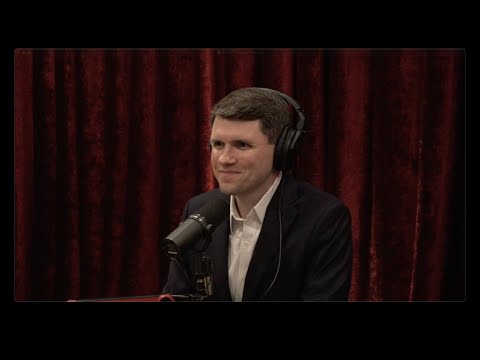
Joe Rogan Experience #2352 - James Talarico
Joe Rogan (host), James Talarico (guest), Narrator
In this episode of The Joe Rogan Experience, featuring Joe Rogan and James Talarico, Joe Rogan Experience #2352 - James Talarico explores christian lawmaker fights Texas theocracy, urges love over culture wars Texas State Representative and seminary student James Talarico joins Joe Rogan to dissect Christian nationalism, the Ten Commandments-in-schools law, abortion, and the erosion of church–state separation in Texas.
Christian lawmaker fights Texas theocracy, urges love over culture wars
Texas State Representative and seminary student James Talarico joins Joe Rogan to dissect Christian nationalism, the Ten Commandments-in-schools law, abortion, and the erosion of church–state separation in Texas.
Talarico explains how two billionaire Christian nationalists wield outsized influence over Texas policy, driving school vouchers, THC bans, and religious mandates in public schools under the banner of faith.
He argues from both constitutional and theological grounds that coercive religion in schools is un-Christian and counterproductive, likely breeding more atheism and resentment among young people.
The conversation broadens into democracy, AI and universal basic income, social media’s damage to attention and meaning, the need for real community, and a politics grounded in loving one’s enemies instead of canceling them.
Key Takeaways
Coercive religion in public schools undermines both faith and democracy.
Mandating the Ten Commandments in Texas classrooms violates church–state separation and, Talarico argues, Jesus’ concern for outsiders; it tells non-Christian kids they don’t belong and turns Christianity into a tool of state power rather than love.
Get the full analysis with uListen AI
Christian nationalism is best understood as worship of power in Christ’s name.
Talarico defines Christian nationalism as using political, economic, or social power to dominate others under a Christian banner, from Ten Commandments bills to replacing counselors with untrained chaplains and defunding public schools for religious vouchers.
Get the full analysis with uListen AI
A small number of billionaires can quietly steer an entire state’s agenda.
He details how West Texas billionaires Tim Dunn and Farris Wilks, both Christian nationalist pastors, fund lawmakers, think tanks, and media (including Daily Wire) to push theocracy-lite policies, showing why voters must “follow the money,” not just the faces on TV.
Get the full analysis with uListen AI
Progressive Christian readings can support LGBTQ inclusion and reproductive choice.
By emphasizing Jesus’ silence on homosexuality, his radical treatment of women, the Genesis “breath” definition of life, and Mary’s consent, Talarico argues there is credible Christian theology that affirms gay rights and women’s bodily autonomy.
Get the full analysis with uListen AI
Policy fights are often really top-versus-bottom, not left-versus-right.
Rogan and Talarico agree many ‘culture wars’ mask class and power struggles: voter ID rules, school vouchers, and THC bans often serve corporate or elite interests (e. ...
Get the full analysis with uListen AI
AI and universal basic income will trigger a meaning crisis, not just an economic one.
They predict automation will wipe out many jobs, making UBI likely; but without structures for community, discipline, and purpose, people may spiral into addiction and distraction rather than use newfound freedom to grow.
Get the full analysis with uListen AI
Loving your enemies is both spiritually radical and politically strategic.
Talarico insists that genuinely listening to opponents—as he did with a pro-gun voter and a conservative colleague—can change minds on both sides and build unexpected coalitions (e. ...
Get the full analysis with uListen AI
Notable Quotes
“If we have to force people to put up a poster, that means we have a dead religion.”
— James Talarico
“Christian nationalism is the worship of power in the name of Christ.”
— James Talarico
“You only truly love God as much as you love the person you love the least.”
— James Talarico, quoting Dorothy Day
“You want to make America great again? You want less losers.”
— Joe Rogan
“I think of politics now less as left versus right and much more as top versus bottom.”
— James Talarico
Questions Answered in This Episode
How can ordinary Texans realistically push back against the influence of billionaire donors like Dunn and Wilks on state policy?
Texas State Representative and seminary student James Talarico joins Joe Rogan to dissect Christian nationalism, the Ten Commandments-in-schools law, abortion, and the erosion of church–state separation in Texas.
Get the full analysis with uListen AI
What practical steps could churches and non-religious communities take to help young people find meaning in an AI- and UBI-driven future?
Talarico explains how two billionaire Christian nationalists wield outsized influence over Texas policy, driving school vouchers, THC bans, and religious mandates in public schools under the banner of faith.
Get the full analysis with uListen AI
Where should the legal line be drawn between protecting kids in schools and respecting religious freedom in a pluralistic society?
He argues from both constitutional and theological grounds that coercive religion in schools is un-Christian and counterproductive, likely breeding more atheism and resentment among young people.
Get the full analysis with uListen AI
How might progressive and conservative Christians work together politically without erasing their deep theological disagreements?
The conversation broadens into democracy, AI and universal basic income, social media’s damage to attention and meaning, the need for real community, and a politics grounded in loving one’s enemies instead of canceling them.
Get the full analysis with uListen AI
What would a genuinely ‘post-cancel-culture’ politics look like in practice, especially on deeply divisive issues like abortion and LGBTQ rights?
Get the full analysis with uListen AI
Transcript Preview
(drumming) Joe Rogan podcast, check it out.
The Joe Rogan Experience.
Train by day, Joe Rogan podcast by night. All day. (instrumental music) How are you, James?
I'm doing well. How are you?
Very good. Nice to meet you.
It's nice to meet you. Thanks for having me.
My pleasure. I found out about you from my friend, Brian Simpson. He was, uh, in the green room of the Comedy Mothership, and he was telling me how excited he was about you.
(laughs)
He said he watched some lecture. I think, I think it was probably y- not a lecture, a speech you were giving about the Ten Commandments in schools. And so then I watched it and I said, "Oh, okay."
(laughs)
"This is very interesting." So I thought we'd have a cool conversation.
Yeah. Well, I, I'm, uh, I'm just honored to be here.
My pleasure.
Thanks for including me.
Thank you. Honored to have you. It's a, always, um, interesting to see a person who is a Christian who is, uh, not for-
(laughs)
... of the Ten Commandments-
Sure.
... in schools.
Yeah. Yeah.
And I think you made a very compelling argument, you know?
Yeah. You know, I, I've gotten that a lot. People who are like, "You're, you're in seminary, you're studying to become a minister, why wouldn't you want the Ten Commandments in every classroom?" So I recognize that it's kind of a, a weird position to be in, but I grew up in a tradition that cherished the separation of church and state. Um, not just because it protects the church or, um, protects democracy, but it is what allows this, um, this democracy to happen where we can all have different faith traditions and live together in peace. Um, and so any attempt to erode that boundary, I feel like I have a special obligation to speak out against it. And so I, I told my colleagues that I thought the bill was unconstitutional. I thought the bill was un-American. But I, I went one step further and I said I thought the bill was un-Christian, which again probably sounds weird to people, but in all of Jesus' teachings, he's always focused on the outsider, the outcast, the person who's left out or the person who's different. And so as a Christian, I, I think my concern is for the Muslim kid and the Jewish kid, the Hindu kid, the atheist kid who's sitting in the classroom who now has a poster on the wall forced by the government that says, you know, "Your religion is inferior." Or, "You're not welcome here." And I just think if, if Jesus saw that, he would weep for those students and, and would demand that we love them as ourselves. And so that's why I, I kinda spoke out against the bill on theological grounds, not just constitutional grounds.
Install uListen to search the full transcript and get AI-powered insights
Get Full TranscriptGet more from every podcast
AI summaries, searchable transcripts, and fact-checking. Free forever.
Add to Chrome