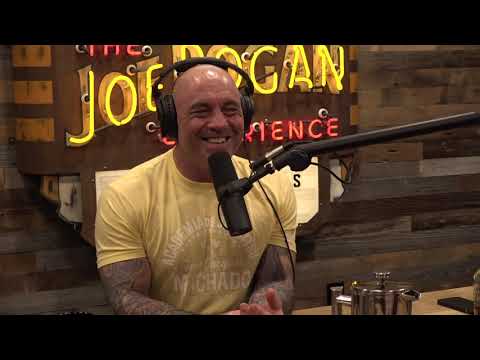
Joe Rogan Experience #1643 - Jonathan Zimmerman
Joe Rogan (host), Narrator, Jonathan Zimmerman (guest), Narrator
In this episode of The Joe Rogan Experience, featuring Joe Rogan and Narrator, Joe Rogan Experience #1643 - Jonathan Zimmerman explores free Speech, Social Media, and Why Censorship Hurts the Powerless Most Joe Rogan and historian Jonathan Zimmerman explore why free speech is essential for social progress, arguing that every major American justice movement relied on it. They critique today’s culture of deplatforming, self-censorship, and hypersensitivity, especially on campuses and online, where speech is often framed as psychological harm rather than a tool for learning. The conversation ranges from social media toxicity, education’s failure to teach critical thinking, and the politicization of platforms, to historical examples where censorship backfired and marginalized groups used speech to gain rights. They also weave in broader discussions of culture, religion, parenting, global inequality, and technology to show how free expression underpins a healthy, pluralistic democracy.
Free Speech, Social Media, and Why Censorship Hurts the Powerless Most
Joe Rogan and historian Jonathan Zimmerman explore why free speech is essential for social progress, arguing that every major American justice movement relied on it. They critique today’s culture of deplatforming, self-censorship, and hypersensitivity, especially on campuses and online, where speech is often framed as psychological harm rather than a tool for learning. The conversation ranges from social media toxicity, education’s failure to teach critical thinking, and the politicization of platforms, to historical examples where censorship backfired and marginalized groups used speech to gain rights. They also weave in broader discussions of culture, religion, parenting, global inequality, and technology to show how free expression underpins a healthy, pluralistic democracy.
Key Takeaways
Free speech has historically been the primary tool of the powerless, not the powerful.
Zimmerman argues that figures like Frederick Douglass, Susan B. ...
Get the full analysis with uListen AI
Censorship and deplatforming often backfire by amplifying the very voices they target.
From abolitionist gag rules to modern campus disinvitations, efforts to silence controversial speakers tend to increase their visibility and martyr status, whereas strong counterspeech and debate are more effective at discrediting bad ideas.
Get the full analysis with uListen AI
Framing disagreeable speech as psychological “harm” shuts down learning and honest dialogue.
Once offense or emotional hurt becomes the decisive standard—via concepts like microaggressions, triggers, or “speech as violence”—discussion ends, because no one can legitimately dispute someone else’s subjective feeling; this is a cul‑de‑sac for education and democracy.
Get the full analysis with uListen AI
Our institutions are failing to teach critical thinking and genuine debate skills.
Zimmerman notes that most students report little substantive debate in high school; they learn to repeat socially approved views, fear social costs for dissent (e. ...
Get the full analysis with uListen AI
Social media design encourages incivility, tribalism, and confirmation bias.
The anonymity or emotional distance of online interaction makes it easier to dehumanize others; algorithmic feeds reinforce existing biases, while “shooting from the hip” commentary replaces informed, face‑to‑face disagreement and mutual understanding.
Get the full analysis with uListen AI
No freedom, including free speech, is absolute—but restrictions must be narrow and clearly justified.
The discussion of school speech cases (Tinker’s armband, the cheerleader’s Snapchat) illustrates Zimmerman’s view: institutions should have to prove a concrete, substantial disruption before limiting expression, rather than policing all off‑campus or offensive speech.
Get the full analysis with uListen AI
Exposure to discomfort, loss, and even offensive ideas is crucial for personal growth.
Rogan ties martial arts, sports, and bad teachers to learning humility and resilience; similarly, encountering bad arguments or offensive speech can sharpen one’s thinking and empathy in ways that safe, sanitized environments cannot.
Get the full analysis with uListen AI
Notable Quotes
“Every great warrior against oppression was also a warrior for free speech.”
— Jonathan Zimmerman
“One way of thinking about all this social media stuff is we’re all teenagers now—and we’re all trying to figure out who’s cool and who isn’t.”
— Jonathan Zimmerman
“If you want to do anything about unfairness or injustice, you’ve got to let everyone talk.”
— Jonathan Zimmerman
“You don’t want to get pigeonholed into an idea that, maybe somewhere down the line, you might find foolish—but you weren’t allowed to be exposed to good arguments to the contrary.”
— Joe Rogan
“The worst human attribute is self‑certainty.”
— Jonathan Zimmerman
Questions Answered in This Episode
If free speech is essential for social progress, how should we handle speech that is clearly harmful or misleading during time‑sensitive events like elections or pandemics?
Joe Rogan and historian Jonathan Zimmerman explore why free speech is essential for social progress, arguing that every major American justice movement relied on it. ...
Get the full analysis with uListen AI
Where should the line be drawn between protecting students from genuine harassment and over‑policing their speech, both on campus and online?
Get the full analysis with uListen AI
How can schools and universities practically teach students to seek out and engage seriously with views they find offensive or threatening?
Get the full analysis with uListen AI
To what extent are today’s political identities functioning as substitutes for declining religious affiliation, and what does that mean for how we handle disagreement?
Get the full analysis with uListen AI
Given social media’s design incentives toward outrage and tribalism, is it realistic to rely primarily on counterspeech rather than platform moderation to combat extremism and disinformation?
Get the full analysis with uListen AI
Transcript Preview
(drumbeats) Joe Rogan podcast, check it out.
The Joe Rogan Experience.
Train by day, Joe Rogan podcast by night. All day. (upbeat music) Free speech and why you should give a damn. Jonathan Zimmerman. Why should we give a damn?
Well, we should give a damn because free speech has been at the heart of every movement for change in this country. Every great warrior against oppression was also a warrior for free speech.
But wouldn't it be convenient if we just silenced people we disagree with? That seems a lot easier for me.
No. It's natural.
(laughs)
All right? Um-
It is natural, right?
Right? And that's why we have to resist it.
Yes.
Like, I get it.
Yeah.
Like, everyone's experienced that.
Yes.
Everyone's seen somebody or heard somebody they despise and say, "God, I just want that person to shut up."
Right.
And that's why we have to resist it.
Um, there's a lot of very intelligent people that disagree with you in this current political climate, unfortunately. I think that was exacerbated by the Trump administration and this desire to, like, stop a lot of the QAnon stuff and the Pizzagate stuff, and a lot of these conspiracy theories that people were frustrated that they were taking hold and they were like, "What do we ... How do we stop this? We gotta stop these people from talking."
Right.
So that's the argument for censorship.
That's one of them, and the other argument has to do with race and ethnicity. I mean, the other-
Yes.
... argument is that it, you know, it harms minorities. And I think those are different arguments, but sometimes they're connected.
The ... So-
Yeah.
... you mean censorship against racism, you-
Correct.
Is that what you're saying?
Correct. Yeah.
Okay, yeah.
Yeah, yeah.
Or sexism or homophobia-
Yeah.
... or any-
Yeah, yeah.
... any of those things, yeah. It's, um ... I think one of the problems that we're dealing with in today's climate is not just that everything's, like, hyper-politicized and people are really, uh, very passionate in debating things online, but just the nature of online discourse is so limited. It lends itself to, like, simple sentences, you know, one, you know, uh, 140 or 280 s- you know, s- symbols. It's just not enough. It's not enough characters to express yourself, and then also text.
(laughs)
You know, unless you're writing a book, it's hard to get all your thoughts out.
And, and also one of the things that people who study communications have taught us is that when we, uh, have exchanges online, they tend to be more uncivil.
Yeah.
We'll, we'll, we, we will type, um, things and text things, um, about somebody or to somebody that we would never, ever say to their face.
Install uListen to search the full transcript and get AI-powered insights
Get Full TranscriptGet more from every podcast
AI summaries, searchable transcripts, and fact-checking. Free forever.
Add to Chrome