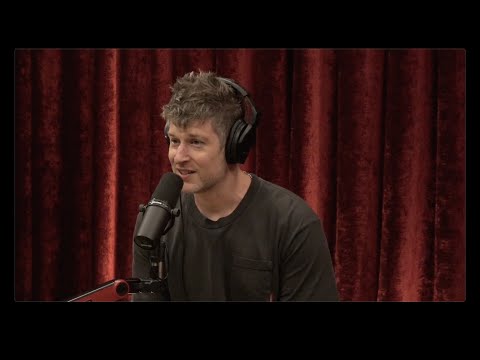
Joe Rogan Experience #2170 - Max Lugavere
Joe Rogan (host), Max Lugavere (guest), Narrator
In this episode of The Joe Rogan Experience, featuring Joe Rogan and Max Lugavere, Joe Rogan Experience #2170 - Max Lugavere explores fighting Dementia: Max Lugavere Exposes Food, Toxins, and Prevention Science Joe Rogan and Max Lugavere discuss Max’s new documentary *Little Empty Boxes*, which chronicles his mother’s battle with Lewy body dementia and explores the emerging science of dementia prevention.
Fighting Dementia: Max Lugavere Exposes Food, Toxins, and Prevention Science
Joe Rogan and Max Lugavere discuss Max’s new documentary *Little Empty Boxes*, which chronicles his mother’s battle with Lewy body dementia and explores the emerging science of dementia prevention.
They unpack the collapse of the amyloid hypothesis in Alzheimer’s research, the role of research fraud, and why decades of drug trials have largely failed patients.
The conversation focuses heavily on modifiable risk factors—nutrition, obesity, insulin resistance, air pollution, environmental toxins, and physical inactivity—as key levers for brain health across the lifespan.
They also explore broader health topics such as ultra-processed foods, endocrine-disrupting chemicals, exercise, sauna, and practical lifestyle strategies to extend cognitive and overall healthspan.
Key Takeaways
Alzheimer’s and many dementias start decades before symptoms, making prevention crucial.
By the time cognitive symptoms appear and a diagnosis is made, Alzheimer’s is already in a late stage, with significant neuronal damage and impaired brain glucose metabolism; early- and midlife lifestyle patterns strongly influence risk.
Get the full analysis with uListen AI
The dominant amyloid hypothesis has likely misdirected Alzheimer’s research for years.
A high-profile 2006 Nature paper that tied a specific amyloid-beta variant to cognitive decline was exposed as fraudulent, yet it guided billions in funding and 16+ years of work toward plaque-clearing drugs that mostly failed to improve cognition.
Get the full analysis with uListen AI
Metabolic health—especially insulin resistance and type 2 diabetes—is tightly linked to dementia risk.
Type 2 diabetes roughly doubles to quadruples Alzheimer’s risk; some researchers describe Alzheimer’s as “type 3 diabetes” because insulin resistance impairs brain energy production and damages blood vessels that feed the brain.
Get the full analysis with uListen AI
Ultra-processed foods drive obesity, metabolic disease, and dementia risk.
Around 60–70% of calories in many populations come from ultra-processed foods, which are engineered to be hyper-palatable, low in nutrients, minimally satiating, and a major route of exposure to industrial chemicals—each 10% increase in intake is linked with significantly higher Alzheimer’s risk.
Get the full analysis with uListen AI
Environmental toxins and air pollution are emerging as major drivers of neurodegeneration.
Compounds like paraquat and trichloroethylene, plus fine particulate matter (PM2. ...
Get the full analysis with uListen AI
Strength training, regular movement, and sauna meaningfully support brain and overall health.
Muscle mass improves insulin sensitivity, disposes glucose, and produces brain-supportive factors (like BDNF); observational data from Finland show frequent sauna use is associated with markedly reduced risk of dementia, stroke, cardiovascular disease, and all-cause mortality.
Get the full analysis with uListen AI
Simple, sustainable habit changes beat extreme overhauls for long-term health.
Lugavere recommends adding one manageable behavior at a time—like a high-protein breakfast, daily walking, or basic resistance exercises—then building from there, instead of attempting radical, unsustainable transformations.
Get the full analysis with uListen AI
Notable Quotes
““This is a disease of midlife with symptoms that appear in late life.””
— Max Lugavere
““Your average American today is inflicting self-harm unwittingly on a daily basis.””
— Max Lugavere
““It’s the craziest scam ever pulled off that foods people have eaten forever are the problem, and ultra-processed foods are fine.””
— Joe Rogan
““When you’re diagnosed with Alzheimer’s, I think reversing it is impossible. You can slow it, but you can’t turn it around.””
— Max Lugavere
““If there’s a way my work can prevent even one additional case, that would be amazing.””
— Max Lugavere
Questions Answered in This Episode
If Alzheimer’s is largely a disease of midlife, what specific screening or biomarkers should clinicians and individuals be pushing for in their 30s, 40s, and 50s?
Joe Rogan and Max Lugavere discuss Max’s new documentary *Little Empty Boxes*, which chronicles his mother’s battle with Lewy body dementia and explores the emerging science of dementia prevention.
Get the full analysis with uListen AI
How should public health funding and research priorities shift now that the amyloid hypothesis has been so strongly undermined?
They unpack the collapse of the amyloid hypothesis in Alzheimer’s research, the role of research fraud, and why decades of drug trials have largely failed patients.
Get the full analysis with uListen AI
Given the evidence against ultra-processed foods, what policy or regulatory changes would most effectively reduce their impact on population health?
The conversation focuses heavily on modifiable risk factors—nutrition, obesity, insulin resistance, air pollution, environmental toxins, and physical inactivity—as key levers for brain health across the lifespan.
Get the full analysis with uListen AI
How can individuals realistically reduce exposure to environmental toxins and air pollution when so many sources are structural, industrial, or urban-planning related?
They also explore broader health topics such as ultra-processed foods, endocrine-disrupting chemicals, exercise, sauna, and practical lifestyle strategies to extend cognitive and overall healthspan.
Get the full analysis with uListen AI
What would a practical, day-to-day “brain-protective” lifestyle look like for a typical working adult balancing time, money, and family constraints?
Get the full analysis with uListen AI
Transcript Preview
(drumbeats) Joe Rogan podcast, check it out.
The Joe Rogan Experience.
Train by day, Joe Rogan podcast by night, all day. (instrumental music plays) What's up, Max? How are you? It's good to see you.
So good to- I know.
What's cracking?
Oh, man. Just, uh, first of all, honored to be here.
Thank you. Honored to have you.
Love you and your work, and yeah, I mean, just a national treasure. So-
Thank- that's very nice of you.
... go out on a limb and say it. But, um, no, I'm super, super excited because I've been working on this documentary for the last 10 years of my life, and, um, it's finally out today, which, uh, I'm super pumped for, and it's called Little Empty Boxes. And we talked about it the, the last time I was here.
Mm-hmm.
And, um, it's a project that means the world to me. I think it's the most important thing I've ever done, and it's the first-ever dementia prevention documentary about the science of dementia prevention, but it focuses... It's a very emotional and personal film for me because it follows my mom, who, for many years, suffered from a rare form of dementia called Lewy body dementia, which is akin to having both Parkinson's disease and Alzheimer's disease at the same time.
That's what Robin Williams had.
That's what Robin Williams had, yeah.
Yeah.
And it's a, it's a rare condition. It affects about one million people in the United States, but it's a, um, it's a dementia, and dementia is now a soaring public health problem. And there's a lot of controversy in- within the field. Um, the last time I was here, we talked about, you know, fraud in the, um, in the research space with regard to the prevailing hypothesis as to what causes Alzheimer's disease, which is the most common form of dementia. And actually, finally, over the past month, that paper was finally retracted. It took two years. But, um-
Could you explain to everybody what the fraud was?
Yeah, so basically, among the dementias, Alzheimer's disease is the most common form of it, and that affects about six million people in the United States. And since it was first named in 1906 by physician Alois Alzheimer, the prevailing hypothesis as to what causes Alzheimer's disease, dubbed the amyloid hypothesis, has been that this plaque formed by a precursor protein called amyloid-beta accumulates in the brain, and by finding a drug that can potentially remove, extract that, that, those plaques from the brain, from the extracellular space around neurons, that we could essentially cure the disease, that the, that the causal factor in the condition was this, was ultimately this amyloid-beta protein which forms the plaque. And trial after trial has been a, a dismal, had been a dismal failure, and it wasn't looking good until in, um, 2006, a paper was published in Nature, which for any scientist publishing in Nature, it's like winning an Academy Award. And that paper, essentially, what that did was it, it allegedly identified this variant of amyloid-beta that connected the plaque to the cognitive dysfunction. So the most important clinical feature of Alzheimer's disease. Because for a long time, it was known that cognitively healthy people accumulate plaque in their brains, and that plaque doesn't seem to correlate with cognitive impairment or anything like that. And so that was very deflating for researchers in the field until this 2006 paper came out, and what it did was it renewed faith in this, in this hypothesis, which was always a hypothesis, and continued to send billions and billions of dollars worth of funding down this path. And what turned out to be the case just two years ago was that that paper was essentially fraudulent, and it represented about 16 years worth of wasted time, wasted money, which was hugely deflating for not just the research community, but also for any patient who's ever suffered from Alzheimer's disease. And, you know, the way that the field is now slowly starting to turn, but this is a drum that I've been beating for the past 10 years, is that we really need to start talking about these conditions in terms of prevention. And that's what inspired me to set down this path of creating this documentary, Little Empty Boxes.
Install uListen to search the full transcript and get AI-powered insights
Get Full TranscriptGet more from every podcast
AI summaries, searchable transcripts, and fact-checking. Free forever.
Add to Chrome