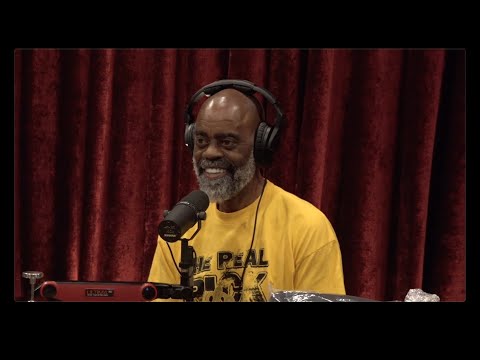
Joe Rogan Experience #2163 - Freeway Rick Ross
Narrator, Narrator, Joe Rogan (host), Freeway Rick Ross (guest), Narrator
In this episode of The Joe Rogan Experience, featuring Narrator and Narrator, Joe Rogan Experience #2163 - Freeway Rick Ross explores freeway Rick Ross on crack, CIA, redemption, and real reform Joe Rogan and Freeway Rick Ross revisit Ross’s extraordinary journey from illiterate South Central teenager to one of America’s largest crack cocaine traffickers, later discovering he’d been an unwitting node in the CIA‑linked Contra drug pipeline.
Freeway Rick Ross on crack, CIA, redemption, and real reform
Joe Rogan and Freeway Rick Ross revisit Ross’s extraordinary journey from illiterate South Central teenager to one of America’s largest crack cocaine traffickers, later discovering he’d been an unwitting node in the CIA‑linked Contra drug pipeline.
Ross explains how learning to read in prison, studying business and mindset books, and self‑advocating in court overturned his life sentence under California’s three‑strikes law.
They discuss predatory drug laws, private prisons, homelessness, and the hypocrisy around legal vs. illegal drugs, arguing that prohibition fuels cartels and mass incarceration instead of solving addiction.
Ross details rebuilding his life through T‑shirts, books, legal cannabis, motivational speaking, and boxing management, emphasizing second chances, community investment, and the power of discipline redirected toward legitimate success.
Key Takeaways
Prohibition fuels crime while failing to reduce drug demand.
Rogan and Ross argue that making drugs illegal hasn’t decreased use or supply; it has simply handed markets to cartels and rogue actors (domestic and foreign), while criminalizing users and low‑level sellers instead of addressing addiction and economic despair.
Get the full analysis with uListen AI
Self‑education can radically change a life trajectory, even from prison.
Ross learned to read behind bars, consumed over 300 books on money, mindset, and success, and used that knowledge to spot a legal flaw in his three‑strikes sentence and later to build legitimate businesses and a speaking career.
Get the full analysis with uListen AI
Reentry requires real support, not just release.
Ross left prison technically homeless, with young kids and no formal work history; a simple T‑shirt idea amplified by Rogan’s show jump‑started his finances, illustrating how modest but targeted opportunities (housing, income, mentorship) can completely alter post‑prison outcomes.
Get the full analysis with uListen AI
Systems around crime and punishment are economically incentivized to persist.
They highlight private prisons, prison‑guard unions, and bloated homeless nonprofits as structures that profit from ongoing incarceration and social breakdown, creating perverse incentives to over‑police minor drug offenses while under‑serving root causes.
Get the full analysis with uListen AI
Talent and discipline are neutral tools; context decides where they’re applied.
Ross used the same obsessive discipline that made him a promising tennis player to become a hyper‑efficient drug trafficker; both men stress that with different mentorship and opportunities, that drive could have built legitimate enterprises from the start.
Get the full analysis with uListen AI
Narrative control shapes who is condemned and who is celebrated.
They note that rappers and celebrities can openly brag about past drug dealing and be glorified, while people like Ross were vilified and imprisoned; media, labels, and platforms decide which stories get amplified and which are erased or suppressed.
Get the full analysis with uListen AI
Helping others is both morally right and personally rewarding.
Ross emphasizes that his deepest satisfaction now comes from mentoring fighters, artists, and formerly incarcerated people, arguing that money should circulate back into communities and that “selfish generosity” — helping because it feels good — is a powerful corrective to exploitative models.
Get the full analysis with uListen AI
Notable Quotes
“I was doing at least $1 million every day, and I had days I’d do as much as $3 million.”
— Freeway Rick Ross
“We always talk to kids about why not to sell drugs, but why not give them all the information and let them make their own decision?”
— Freeway Rick Ross
“If you wanna make America great, have less losers. How do you have less losers? Give more people a chance.”
— Joe Rogan
“I was an addict to selling cocaine… everything that went wrong, coke made it better.”
— Freeway Rick Ross
“At the end, I want them to say, ‘He made the world a better place because he lived.’”
— Freeway Rick Ross
Questions Answered in This Episode
How should drug policy be redesigned if the goal is genuinely to reduce harm rather than to generate arrests and revenue?
Joe Rogan and Freeway Rick Ross revisit Ross’s extraordinary journey from illiterate South Central teenager to one of America’s largest crack cocaine traffickers, later discovering he’d been an unwitting node in the CIA‑linked Contra drug pipeline.
Get the full analysis with uListen AI
What kind of reentry infrastructure (housing, jobs, mentorship) would meaningfully cut recidivism for people leaving prison?
Ross explains how learning to read in prison, studying business and mindset books, and self‑advocating in court overturned his life sentence under California’s three‑strikes law.
Get the full analysis with uListen AI
Where is the ethical line between personal responsibility and systemic responsibility in stories like Ross’s — especially when government actors are complicit?
They discuss predatory drug laws, private prisons, homelessness, and the hypocrisy around legal vs. ...
Get the full analysis with uListen AI
How can communities create positive role models and narratives that compete with the glamorization of crime in music and media?
Ross details rebuilding his life through T‑shirts, books, legal cannabis, motivational speaking, and boxing management, emphasizing second chances, community investment, and the power of discipline redirected toward legitimate success.
Get the full analysis with uListen AI
What safeguards are needed to prevent the legal cannabis industry from repeating the same exploitative patterns Ross sees in illegal markets and mainstream music?
Get the full analysis with uListen AI
Transcript Preview
(drumming music) Joe Rogan podcast, check it out.
The Joe Rogan Experience.
Train by day, Joe Rogan podcast by night, all day. (rock music) Good to see you again, my friend.
Man, it's been a long time.
It's been, yeah, like nine years. Yeah, we were talking about it.
Yeah, yeah.
It's been a while.
Yeah, yeah. I've been-
For people who don't know-
... I've been waiting.
(laughs)
(laughs) I was like, um... You know, I dialed your number and it wasn't working no more. I was like, "Okay, he gonna- he'll-"
I've had about eight different numbers since then.
"... he'll call me."
(laughs)
(laughs)
Yeah.
I said, "He'll call me."
Yeah. For people who don't know, the real Rick Ross is not a rapper, just like your shirt says.
And you know, you know who inspired that shirt?
I think I did.
You did, you did.
(laughs)
And you don't even know the whole story.
What's the story?
Well, you know after that day you, you told me that I needed a shirt, right?
Yeah.
You know I was, I was really homeless then.
Really?
You didn't know that part of the story?
I didn't know. Yeah.
Well, I didn't go around like, "Hey man, I'm homeless." (laughs) So I was technically homeless. Uh, I was staying in a vacant apartment, me and my old lady and my two kids. And, uh-
Wow.
... when I told you that I, that I was doing bad, you was like, "Man, you need a T-shirt." And you know, when I left the show, I was a little hot. I was like, "Damn, that motherfucker told me I need a T-shirt and I, I'm, I'm, I'm fucked up. But, uh, he know I handle money, he know I'm a thinker. Why he didn't help me?" And so I'm walking down the street downtown and this kid come up to me and he was like, "Hey Rick, I heard you on Joe Rogan the other day." And I was like, "Yeah?" He's like, "Yeah, and I got a T-shirt idea for you." I said, "Oh shit, another one of those motherfuckers." (laughs)
(laughs)
And I said, "What's your idea?" And he said, "The real Rick Ross is not a rapper." And I said, "Corny as a motherfucker," but I kept a open mind and I said, "Okay, let's do it." The kid did it. I go to him a couple weeks later and he give me 100 T-shirts and I sell the whole 100 the same day.
Wow.
And then something popped in my head that said, "Why don't you call Joe?" That's when your number was still the same. And I called you, you called me to the show, and you put my T-shirt on. And the T-shirt went crazy. My PayPal... 'Cause, you know, I ain't saw you since then. So I never got to tell you, thanks for telling me to do a T-shirt, (laughs) even though I was mad at you. (laughs)
Install uListen to search the full transcript and get AI-powered insights
Get Full TranscriptGet more from every podcast
AI summaries, searchable transcripts, and fact-checking. Free forever.
Add to Chrome