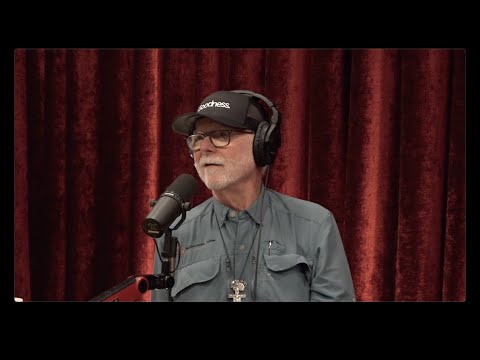
Joe Rogan Experience #2181 - Alan Graham
Alan Graham (guest), Joe Rogan (host)
In this episode of The Joe Rogan Experience, featuring Alan Graham and Joe Rogan, Joe Rogan Experience #2181 - Alan Graham explores faith-Driven Community Rebuilds Lives, Rethinks Homelessness and Human Dignity Joe Rogan interviews Alan Graham, founder of Mobile Loaves & Fishes and Community First! Village, about his 26‑year mission to serve chronically homeless people through a permanent, community-based neighborhood in Austin, Texas.
Faith-Driven Community Rebuilds Lives, Rethinks Homelessness and Human Dignity
Joe Rogan interviews Alan Graham, founder of Mobile Loaves & Fishes and Community First! Village, about his 26‑year mission to serve chronically homeless people through a permanent, community-based neighborhood in Austin, Texas.
Graham traces his journey from real-estate entrepreneur to faith-motivated social innovator, explaining how a spiritual awakening and years spent on the streets built his understanding of homelessness and human potential.
They explore the limits of government programs, the importance of personal relationships and community, and how Graham’s village model provides housing, work, creativity, and belonging for people long written off by society.
The conversation widens into religion, technology, mental health, addiction, social media–driven fear, and why a healthy culture is measured by how it treats its most marginalized members.
Key Takeaways
Long-term, relationship-based communities outperform short-term service models for chronic homelessness.
Graham’s village offers permanent housing, neighbors, work opportunities, and shared life—not just beds and meals—leading to stability, reduced drug use, and a sense of belonging for people who averaged nine years on the streets.
Get the full analysis with uListen AI
The most stigmatized homeless individuals often have significant, overlooked gifts.
Community First! ...
Get the full analysis with uListen AI
Fear-driven stereotypes about homeless people and crime rarely match on-the-ground data.
Despite intense neighborhood opposition, the village has seen rising adjacent property values and no recorded crimes by residents against neighbors, while local youth from outside the village have committed thefts inside it.
Get the full analysis with uListen AI
Government alone cannot “solve” homelessness; communities must act with, not just for, people.
Graham argues the state can support infrastructure, but real change comes from citizens entering into mutual relationships—“pulling over to help change the flat tire”—not outsourcing compassion to city councils and agencies.
Get the full analysis with uListen AI
Addiction and mental illness are often survival responses to extreme trauma and isolation, not moral failings.
When people move from the streets into the village, illegal drug use drops about 80% and alcohol use 40–50%, suggesting that safety, community, and purpose naturally reduce self-destructive coping behaviors.
Get the full analysis with uListen AI
Regulation and NIMBYism have eliminated low-end housing that once kept people off the street.
From the 1970s–1990s, the U. ...
Get the full analysis with uListen AI
A culture’s health is visible in how it treats its most discarded members.
Rogan and Graham frame sprawling tent encampments and indifference to suffering as symptoms of a deeper cultural sickness, contrasting that with the hope and order visible in a well-run, inclusive community like Community First! ...
Get the full analysis with uListen AI
Notable Quotes
“We empower communities into a lifestyle of service with the homeless, not to and for the homeless.”
— Alan Graham
“I wanted the roughest, toughest, hardest, most despised, outcast, lost and forgotten population.”
— Alan Graham
“Most people are good people… the problem is we’re engineered to concentrate on the threats.”
— Joe Rogan
“The government is not coming into your bedroom tonight to tuck you in.”
— Alan Graham
“The health of a community is often measured by how they treat the downtrodden.”
— Joe Rogan
Questions Answered in This Episode
How could a Community First!–style village be adapted for dense, expensive cities like Los Angeles, New York, or San Francisco?
Joe Rogan interviews Alan Graham, founder of Mobile Loaves & Fishes and Community First! ...
Get the full analysis with uListen AI
What specific policies would need to change (zoning, HUD standards, licensing) to allow more low-cost, innovative housing for the poorest Americans?
Graham traces his journey from real-estate entrepreneur to faith-motivated social innovator, explaining how a spiritual awakening and years spent on the streets built his understanding of homelessness and human potential.
Get the full analysis with uListen AI
How can individuals who aren’t religious or entrepreneurial still meaningfully participate in “with, not for” models of serving homeless neighbors?
They explore the limits of government programs, the importance of personal relationships and community, and how Graham’s village model provides housing, work, creativity, and belonging for people long written off by society.
Get the full analysis with uListen AI
What safeguards are needed to replicate this village model at scale without losing its relational, human-centered character?
The conversation widens into religion, technology, mental health, addiction, social media–driven fear, and why a healthy culture is measured by how it treats its most marginalized members.
Get the full analysis with uListen AI
How might emerging tools—such as psychedelics for addiction treatment or 3D-printed housing—ethically integrate into community-based solutions for homelessness?
Get the full analysis with uListen AI
Transcript Preview
(drumming music plays) Joe Rogan podcast. Check it out. The Joe Rogan Experience. Train by day, Joe Rogan podcast by night. All day. (rock music plays)
All right. Hello, Alan.
Hey, uh-
What's happening?
Uh, well, I'm here on the Joe Rogan Experience, man. That's, uh, that's what's happening for Alan, so.
(laughs) Push this thing up, uh, get it, like, pretty close to your face. There we go.
Yeah. Great. Yeah.
Um, thanks for doing this, man. Um, I'm- I was very curious to meet you and I'd, uh, heard so much about you from, uh, John Paul DeJorio and, you know, what you're doing. And we've always wondered, like, there's always been these questions, like, how do you put a dent in the homeless situation? Like, what can be done? And what I see from you is probably the best example, the best possible example I've ever seen. And going to your place, going to see this community that you've established, and how you, you give these people hope and, and a purpose. It's really pretty amazing stuff.
Well, I appreciate that much. Yeah.
How did you get started on this journey? And when? How long have you been doing it?
Well, Joe, the, uh, the organization's 26 years old. So founded it in, uh, 1998. It was just a simple idea to start going out on the streets and feeding people out with a catering truck, what many of our friends would call a roach coach. And, uh, I, I got this idea, uh, built on a conversation that my wife and I had with a girlfriend of ours who was telling us about a ministry in Corpus Christi, Texas where on cold winter nights multiple churches would come together and pool their resources to take out to the men and women that were on the streets in the winter in, uh, in Corpus. And at that moment, the image of this catering truck came out of my psych- subconscious mind into my conscious brain, um, as a distribution mechanism from those of us that have abundance to those that lack. And, uh, uh, that was pretty, pretty simple. And as a serial real estate entrepreneur, um, I thought that that idea was a brilliant idea. Of course, every idea that you come up with is a brilliant idea-
Yeah.
... when you're a serial entrepreneur. And, um, um, it just blew up in a, in a positive way. But it really began a couple of years prior to that on a spiritual retreat, uh, that I went to at my church, uh, that I was invited to. And, um, had I known that a bunch of guys were gonna get together and hold hands and kind of do that bromance, hugging it out, I, I, I'd have never gone.
(laughs)
But I end up in this re- retreat for 30 hours of, uh, of handholding and bromance, hugging it out, and had a, had a pretty powerful experience that, uh, really just led me, uh, to going, "God, what do you want me to do?" I mean, I wasn't asking for anything big. It's just, you know, what are the little things that I can go out there and do? And it was through that and a series of things that, uh, led to the founding, and then, uh, ultimately the founding of the community. So ...
Install uListen to search the full transcript and get AI-powered insights
Get Full TranscriptGet more from every podcast
AI summaries, searchable transcripts, and fact-checking. Free forever.
Add to Chrome