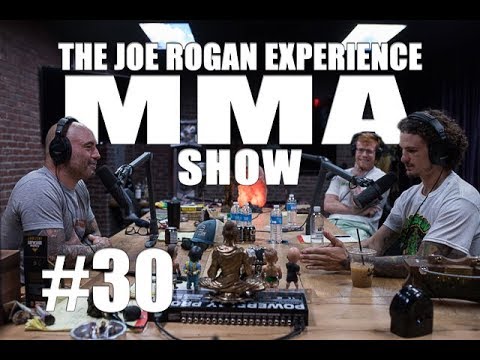
JRE MMA Show #30 with Sean O'Malley & Tim Welch
"Sugar" Sean O'Malley (guest), Joe Rogan (host), Tim Welch (guest), Guest (third participant, likely in-studio friend/producer) (guest), Guest (late-episode in-studio friend/producer) (guest), Guest (late-episode in-studio friend/producer) (guest), Guest (very brief interjection) (guest), Guest (MMA-focused contributor late in episode) (guest), Guest (single short interjection) (guest)
In this episode of The Joe Rogan Experience, featuring "Sugar" Sean O'Malley and Joe Rogan, JRE MMA Show #30 with Sean O'Malley & Tim Welch explores sugar Sean O’Malley on fighting, discipline, diet, ego, and weed Joe Rogan hosts UFC bantamweight Sean O’Malley and his coach Tim Welch for a long-form conversation about O’Malley’s rise, training environment, and mindset. They discuss growing up in Montana, moving to the MMA Lab in Phoenix, and how tight coaching, accountability, and smart training fueled O’Malley’s rapid development.
Sugar Sean O’Malley on fighting, discipline, diet, ego, and weed
Joe Rogan hosts UFC bantamweight Sean O’Malley and his coach Tim Welch for a long-form conversation about O’Malley’s rise, training environment, and mindset. They discuss growing up in Montana, moving to the MMA Lab in Phoenix, and how tight coaching, accountability, and smart training fueled O’Malley’s rapid development.
A major portion centers on nutrition, recovery, and lifestyle: shifting from junk food and vegan experimentation to performance-focused eating (game meat, keto-style periods, probiotics), plus meditation, float tanks, and minimal partying. They also tackle mental game—confidence vs. ego, learning from losses, surrounding yourself with the right people, and using psychedelics and cannabis thoughtfully rather than escapism.
The trio weave in extensive MMA talk (Max Holloway, Justin Gaethje, Anderson Silva, Jon Jones, weight cutting, judging) with broader riffs on health science, religion, upbringing, and the brokenness of U.S. drug and social policy. Throughout, Welch and O’Malley frame fighting as a vehicle for self-mastery, not just violence or fame.
Key Takeaways
Treat every win like a loss to fuel continuous improvement.
Welch has O’Malley review each victory as if he’d lost, forcing them to dissect weaknesses and remove complacency; this mindset is credited for his steep skill progression between fights.
Get the full analysis with uListen AI
Who you train and live with massively shapes your ceiling.
Moving from Montana to Phoenix put O’Malley in rooms with killers (Benson Henderson, Augusto Mendes, Henry Cejudo’s team) and under a culture of accountability, radically raising his standard of work and professionalism.
Get the full analysis with uListen AI
Year‑round nutrition and recovery habits matter more than camp diets.
O’Malley’s back pain and chronic inflammation disappeared after dropping processed foods and sugar, focusing on whole foods, fish/game, and probiotics; he emphasizes not ballooning between fights and treating diet as a lifestyle, not a 6‑week camp fix.
Get the full analysis with uListen AI
Creativity under pressure is a rare but trainable fighting superpower.
Rogan notes that O’Malley’s best moments come from improvising in chaos—spinning guard passes, ad‑hoc strikes—because he’s relaxed and reactive rather than overthinking; drilling fundamentals plus encouraging playful experimentation in the gym supports this.
Get the full analysis with uListen AI
Meditation and mental training are as critical as physical reps.
Both men credit daily meditation, reading (Eckhart Tolle, sports psych), and mindset work for better emotional regulation, focus, and resilience, especially after injuries and layoffs that could easily derail careers.
Get the full analysis with uListen AI
Substances are tools; they magnify habits more than they fix problems.
They argue cannabis and psychedelics can enhance training focus, creativity, and empathy when used intentionally (e. ...
Get the full analysis with uListen AI
System‑level issues in MMA—weight cutting and judging—are solvable but outdated.
Rogan criticizes massive weight cuts and three‑judge systems, suggesting more weight classes and larger, expert judging panels (possibly remote) to reduce bad decisions and dangerous dehydration, underscoring how the sport’s administration lags behind athlete performance.
Get the full analysis with uListen AI
Notable Quotes
“The greater the chaos, the calmer he becomes.”
— Tim Welch (on Sean O’Malley’s fight demeanor)
“Let’s pretend you lost that fight.”
— Tim Welch (explaining how they approach every win in camp)
“You are what you eat. Literally your body is made out of what you eat.”
— Joe Rogan
“I love performing. The bigger the crowd, the better I feel like I perform.”
— Sean O’Malley
“Once you understand the way broadly, you will see it in all things.”
— Joe Rogan (quoting Miyamoto Musashi to illustrate transferable mastery)
Questions Answered in This Episode
How sustainable is O’Malley’s highly creative, improvisational style as he faces top‑5 bantamweights with more tape and game‑planning on him?
Joe Rogan hosts UFC bantamweight Sean O’Malley and his coach Tim Welch for a long-form conversation about O’Malley’s rise, training environment, and mindset. ...
Get the full analysis with uListen AI
If athletic commissions actually moved to ban early weigh‑ins, how would fighters like O’Malley and their teams adjust strategy and the politics around it?
A major portion centers on nutrition, recovery, and lifestyle: shifting from junk food and vegan experimentation to performance-focused eating (game meat, keto-style periods, probiotics), plus meditation, float tanks, and minimal partying. ...
Get the full analysis with uListen AI
Where is the line between constructive ego (building a persona, hyping fights) and destructive ego that can derail a fighter’s growth or mental health?
The trio weave in extensive MMA talk (Max Holloway, Justin Gaethje, Anderson Silva, Jon Jones, weight cutting, judging) with broader riffs on health science, religion, upbringing, and the brokenness of U. ...
Get the full analysis with uListen AI
Could large, remote expert judging panels—as Rogan suggests—realistically be implemented in major promotions without creating new forms of controversy?
Get the full analysis with uListen AI
How might mainstream acceptance of psychedelics for therapy and performance change the culture of MMA and the way fighters handle trauma, losses, and retirement?
Get the full analysis with uListen AI
Transcript Preview
Sugar.
Three, two, one. (hand slaps) And we're live. Sugar Sean and, uh, Tim Welch, your friend-
Yes.
... that you brought with you here today.
Friend, teammate, coach, brother.
Both of you from Montana. Montana people, it's good, it's a good place.
Yeah, it is. But for what we do, it's not the best place. (laughs)
(laughs)
Yeah, how much training can you get in Montana? It's not, not the best spot. Like, when I was there, uh, two years ago, pheasant hunting with Anthony Bourdain, and that guy is such a maniac. He trains everywhere he goes every day, and he found some club, some local jujitsu club in Montana, in Bozeman, and was rolling with people.
Brian Dietz probably.
Yeah, Bozeman's probably one of the better places to train, but the one thing good about being from Montana is when we were in Phoenix, it's like a big process getting a fight. Sugar, how many amateur fights you have?
Yeah, I had 14 MMA fights, uh, amateur MMA fights, four kickboxing, couple boxing. It was every weekend. I could-
In Montana?
... fight every weekend. Yeah.
So Montana people are just angry, just wanna (smacks lips) fight.
You can-
We just like to fight.
They're just mad.
You can sign up that week and fight, so you can get-
(sighs)
... a ton of fights-
No commission.
... no commission.
No commission? Oh, that's good.
So you can fight.
So it's a manly place, that Montana.
(laughs) Yeah, it is.
It is. It's quite manly. I mean, you guys have grizzly bears and shit, lots of elk.
Oh, yeah. (laughs) Yep.
Elk, grizzly bears, wolves, you know. I was there, uh, two summers ago, I went, and just was like, "Man, I need to figure out a way how to spend more time here." I was in Bozeman.
Oh, yeah.
And fuck, man-
Nice, huh?
... it's beautiful.
Hell, yeah.
Yeah.
It's fucking stunning.
Yeah, I definitely wanna... I enjoy being away from there right now, just 'cause I grew up there.
Right.
Um, being in Phoenix is like... I wouldn't, I don't wanna be anywhere else. I love being in Phoenix. The training there is insane.
Yeah, where we're at, Phoenix is like the fucking Mecca, man. Like, we get to train with Augusto Mendes, Tiquinho every day. Like, he beat Rafa Mendes. He beat Cabrinho. He beat-
Mm-hmm.
... Ryan Hall. He's-
Yeah.
... beat all these people. And almost every mile, there's a really good gym, like boxing gym, jujitsu gym, wrestling gym. Henry Cejudo-
Right.
... has a club there. The MMA Lab with Jon Crouch, like, where we train-
Yeah.
... there's killers everywhere.
Install uListen to search the full transcript and get AI-powered insights
Get Full TranscriptGet more from every podcast
AI summaries, searchable transcripts, and fact-checking. Free forever.
Add to Chrome