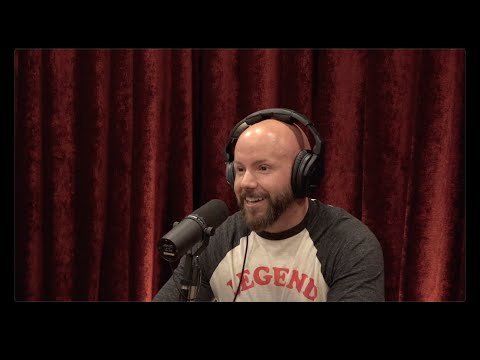
Joe Rogan Experience #2208 - Brigham Buhler
Narrator, Narrator, Joe Rogan (host), Brigham Buhler (guest), Narrator, Narrator, Narrator
In this episode of The Joe Rogan Experience, featuring Narrator and Narrator, Joe Rogan Experience #2208 - Brigham Buhler explores exposing Chronic Disease: Senate Testimony, Pharma Capture, and Real Health Joe Rogan and Brigham Buhler unpack Brigham’s recent testimony before the U.S. Senate on America’s chronic disease crisis, detailing how food systems, pharmaceutical interests, and regulatory capture are driving unprecedented levels of illness.
Exposing Chronic Disease: Senate Testimony, Pharma Capture, and Real Health
Joe Rogan and Brigham Buhler unpack Brigham’s recent testimony before the U.S. Senate on America’s chronic disease crisis, detailing how food systems, pharmaceutical interests, and regulatory capture are driving unprecedented levels of illness.
They describe the bipartisan hearing, the emotional stories from citizens, and the rapid media pushback that attempted to discredit the panel as “woo-woo” influencers despite participation from Harvard- and Stanford-trained physicians.
Brigham outlines systemic problems: ultra-processed food and chemicals, misaligned healthcare incentives, pharma-funded regulators, and media conflicts of interest that prioritize profits over public health.
The conversation ends with a call for individual responsibility and systemic reform—using diet, lifestyle, preventive care, and technology (including AI) to “Make America Healthy Again” outside of partisan framing.
Key Takeaways
Chronic disease is killing more Americans annually than all U.S. war deaths combined.
An estimated 1. ...
Get the full analysis with uListen AI
Regulators and media are structurally conflicted by pharma and corporate money.
A large share of FDA drug-review funding comes directly from pharmaceutical companies, and major news outlets are owned by institutional investors who also hold big pharma stakes, skewing coverage and enforcement priorities.
Get the full analysis with uListen AI
The U.S. food supply is uniquely saturated with chemicals and additives.
Where the FDA approved about 700 food ingredients in the 1950s, today the U. ...
Get the full analysis with uListen AI
Metabolic health underpins cancer risk, mental health, and overall mortality.
Obesity and metabolic disease are identified as the top non-smoking risk factors for most cancers, and poor metabolic health is strongly linked to surging rates of depression, suicide, and deaths of despair.
Get the full analysis with uListen AI
The healthcare business model rewards treatment and procedures, not prevention.
From primary care time constraints to hospital profit structures and pharmacy benefit manager (PBM) rebates, incentives favor more drugs and surgeries over nutrition, lifestyle counseling, and root-cause diagnostics.
Get the full analysis with uListen AI
GLP-1 drugs and testosterone can be useful tools, but incentives distort their use.
Brigham supports carefully targeted GLP-1 use for morbid obesity yet opposes their casual use in children or as a first-line fix; similarly, testosterone is over-restricted by insurers despite its value in preventing metabolic decline.
Get the full analysis with uListen AI
Individuals can’t wait for government; they must act through daily choices.
Given slow policy change and entrenched interests, the hosts argue citizens should “fight with their pocketbooks” by changing diets, exercising, seeking deeper testing, and supporting practitioners and companies focused on prevention.
Get the full analysis with uListen AI
Notable Quotes
““I’m not here to represent the left or the right. I’m here to represent humanity. This is not a Republican issue. This is not a Democrat issue. This is a humanity issue.””
— Brigham Buhler
““The system’s waiting for you to get sick, and then they’re giving you drugs. Rather than waiting to get sick and taking a drug, let’s get proactive and predictive.””
— Brigham Buhler
““Do we need double-blind studies to know that chemicals we spray on fields that destroy insects at the cellular level might possibly create some sort of issue in other biological beings?””
— Brigham Buhler (paraphrasing Jason from the hearing)
““We have to stop… loving our kids less than we hate each other.””
— Brigham Buhler (quoting RFK Jr.)
““If you told a sick person who’s worth Bill Gates money, ‘You can keep all your money and be sick forever, or give it all up and be healthy,’ he’d give it all up and start from scratch.””
— Joe Rogan
Questions Answered in This Episode
If chronic disease is so strongly tied to diet and environment, what specific food policy changes should be prioritized first at a national level?
Joe Rogan and Brigham Buhler unpack Brigham’s recent testimony before the U. ...
Get the full analysis with uListen AI
How can we realistically reduce pharma and corporate influence over regulators and media without crippling drug innovation or supply?
They describe the bipartisan hearing, the emotional stories from citizens, and the rapid media pushback that attempted to discredit the panel as “woo-woo” influencers despite participation from Harvard- and Stanford-trained physicians.
Get the full analysis with uListen AI
What ethical framework should guide the use of GLP-1 drugs, testosterone, and other powerful interventions so they help the right people without becoming mass lifestyle crutches?
Brigham outlines systemic problems: ultra-processed food and chemicals, misaligned healthcare incentives, pharma-funded regulators, and media conflicts of interest that prioritize profits over public health.
Get the full analysis with uListen AI
In a future where AI can outperform many primary-care clinicians on diagnostics, how do we preserve the human element of medicine and avoid new forms of abuse or bias?
The conversation ends with a call for individual responsibility and systemic reform—using diet, lifestyle, preventive care, and technology (including AI) to “Make America Healthy Again” outside of partisan framing.
Get the full analysis with uListen AI
What practical steps can an average person take in the next 12 months—without elite resources—to dramatically improve their metabolic health and reduce their reliance on the healthcare system?
Get the full analysis with uListen AI
Transcript Preview
(drumming) Joe Rogan podcast, check it out.
The Joe Rogan Experience.
Train by day, Joe Rogan podcast by night, all day. (rock music plays)
(laughs) So- so tell me what it's like to testify in front of the Senate. What is that like?
Man, it was pretty wild. Uh, it all transpired so fast. I got a call from, uh, Calley Means, we've become pretty good buddies. I know you're having him and his sister, Casey, on the podcast. Uh, brilliant folks that are just patient advocates. I mean, at the end of the day, uh, they had the same experiences I had. Calley a little bit different walk of life, he was a lobbyist. Casey was a doctor, Stanford-trained surgeon, uh, realized that she was in a system where they didn't really heal people, they just treated symptoms and profiteered off disease states, and she said, "There's gotta be a better way." So their voice rung so loud after, I think, they did Tucker, that, uh, it led to momentum. And then, because of you having me on the podcast, that's how I met, uh, RFK. And so, Bobby's team had reached out to me, maybe about a year and a half ago, to come up to Dallas while he was doing a campaign there, and sit down with him. And he was just asking 100 questions about what's going on, and, "What did you see on the pharmaceutical side?" and, "What did you see owning pharmacies and billing insurance companies?" And so, when they had an opportunity to put this team together to testify in front of the Senate, the goal was to create a non-partisan group of individuals to take a new, fresh approach to what is going on with chronic disease in America, uh, because the chronic disease crisis is at an all-time high. I mean, we could go through all the statistics, and I know that Casey and Calley will when they're on here, so I don't wanna steal their thunder, but it's staggering. I mean, close to anywhere between 1.7 to 1.9 million people are dying a year of chronic disease. We talk a lot about war. Since the dawn of this country, roughly estimated between 1.3 to 1.5 million people total have died in war, American lives. So in a year, we're losing more people to chronic disease than all the wars combined.
Wow.
And we're not talking about it. So to me, I was excited when they said, "Hey, the Senate's willing to- to hear," and that's the beauty of a democracy. They- they did let us come in there and candidly take a dump on the (laughs) Senate floor on what's going on with this healthcare system-
Was any-
... and really dig into the weeds.
Did anybody try to take the side of the pharmaceutical drug industry? Did anybody question you or try to push back?
So prior, you do a debrief. So we did do a roundtable prior to going into the communal roundtable in front of the public eye, which they had no idea what was coming. They- they- they- the Senate didn't expect it. We had assembled a grassroots effort to get the word out there, and over 2,000 people took off from work. These are... This is a Senate hearing. Over 2,000 hardworking Americans took time from their busy day, flew to DC, had to sit in an overflow room to listen to these testimonies, and the level of feedback from people, from like real humans, real world people, was staggering. I mean, people afterwards came up in tears, sharing their story of how the system had let them down or a loved one down, misdiagnoses, like all the different issues that they've dealt with trying to navigate this system. Um, and to the Senators' credit, you know, behind closed doors, they- they did say, "You probably don't wanna go ultra hard after the food industry or ultra hard after the pharmaceutical industry, because it may limit our ability to get things done," but they did-
Install uListen to search the full transcript and get AI-powered insights
Get Full TranscriptGet more from every podcast
AI summaries, searchable transcripts, and fact-checking. Free forever.
Add to Chrome