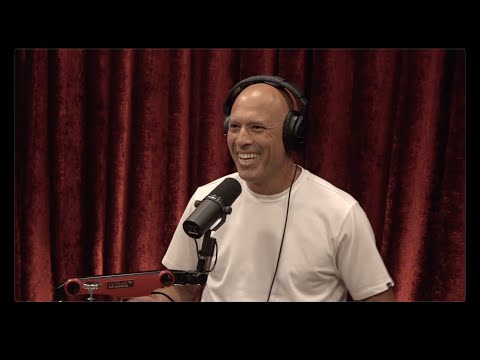
JRE MMA Show #156 with Royce Gracie
Royce Gracie (guest), Joe Rogan (host), Narrator
In this episode of The Joe Rogan Experience, featuring Royce Gracie and Joe Rogan, JRE MMA Show #156 with Royce Gracie explores royce Gracie Reflects on UFC Origins, Jiu-Jitsu, Culture, and Discipline Joe Rogan and Royce Gracie revisit the birth of the UFC, how Royce was chosen as the original representative of Gracie Jiu-Jitsu, and how those early, almost rule‑less events exposed the reality of fighting to the world.
Royce Gracie Reflects on UFC Origins, Jiu-Jitsu, Culture, and Discipline
Joe Rogan and Royce Gracie revisit the birth of the UFC, how Royce was chosen as the original representative of Gracie Jiu-Jitsu, and how those early, almost rule‑less events exposed the reality of fighting to the world.
Royce details his family's fighting legacy, Helio and Carlos Gracie’s philosophy of defensive jiu-jitsu, and the strategic decision to win without hurting opponents in order to showcase technique rather than brutality.
They contrast the old style-vs-style era with today’s highly evolved MMA, debate rules (time limits, rounds, stand-ups, banned strikes), and discuss the necessity of jiu-jitsu, wrestling, and striking in modern competition.
The conversation widens into discipline, hunting, firearms, political and cultural shifts in the U.S. and Brazil, and Royce’s next chapter opening a large academy in Sarasota, Florida.
Key Takeaways
Technique-focused jiu-jitsu was deliberately showcased over brutality in early UFCs.
Helio and Rorion Gracie instructed Royce not to hurt opponents, prioritizing positional dominance and submissions to prove the art’s effectiveness and attract students rather than crush rivals.
Get the full analysis with uListen AI
Defensive mindset can neutralize size and power advantages.
Helio taught Royce to “walk in not to lose,” emphasizing perfect defense and patience until an opponent makes a mistake, a philosophy exemplified in long fights like Royce vs. ...
Get the full analysis with uListen AI
Modern MMA demands at least functional fluency in all ranges of combat.
Royce stresses that today every fighter must understand jiu-jitsu, wrestling, and striking; without grappling defense or distance management, you’re simply not competitive at the top level.
Get the full analysis with uListen AI
Rules shape fighting behavior and can distort realism.
Rogan and Royce argue that stand-ups between rounds, bans on knees to the head of a grounded opponent, and time limits favor certain styles and reduce realism; they propose longer or single rounds and resuming positions between rounds.
Get the full analysis with uListen AI
Relentless discipline compounds over years into mastery.
They highlight Dagestani fighters and grapplers like Gordon Ryan as examples of kaizen—training every day, minimizing distractions, and using structured repetition to progress ahead of the field by “years” of mat time.
Get the full analysis with uListen AI
Endurance and mental toughness are as critical as strength and skill.
Royce’s preparation included extreme endurance efforts (41-mile runs, multi-hour swims, hour‑plus fights), reinforcing that being technically good but gassing out quickly is a fatal weakness in combat sports.
Get the full analysis with uListen AI
Hunting and firearms, done responsibly, deepen self-reliance and respect for life.
Royce defends ethical hunting—using all parts of the animal and feeding others—and argues everyone should understand gun safety and self-defense, especially when state systems fail to protect citizens.
Get the full analysis with uListen AI
Notable Quotes
“I said the other day, I’m not part of the history. I am the history.”
— Royce Gracie
“My father told me, ‘Don’t walk in to win. Walk in not to lose.’”
— Royce Gracie
“Jiu-jitsu is the only martial art that delivers as advertised.”
— Joe Rogan
“If you take jiu-jitsu away, it goes back to karate against kung fu.”
— Royce Gracie
“Discipline… without discipline, you’re nothing.”
— Joe Rogan (paraphrasing Mike Tyson and agreeing)
Questions Answered in This Episode
If modern MMA adopted Royce and Joe’s suggested rule changes (single long rounds, resuming positions, legal knees on the ground), how would champions and dominant styles change?
Joe Rogan and Royce Gracie revisit the birth of the UFC, how Royce was chosen as the original representative of Gracie Jiu-Jitsu, and how those early, almost rule‑less events exposed the reality of fighting to the world.
Get the full analysis with uListen AI
How can coaches and academies today preserve Helio’s defensive, leverage-based philosophy in a competition scene that increasingly rewards aggression and athleticism?
Royce details his family's fighting legacy, Helio and Carlos Gracie’s philosophy of defensive jiu-jitsu, and the strategic decision to win without hurting opponents in order to showcase technique rather than brutality.
Get the full analysis with uListen AI
What specific training structures best replicate the Gracie ‘garage’ model of converting challengers into students without injuring them?
They contrast the old style-vs-style era with today’s highly evolved MMA, debate rules (time limits, rounds, stand-ups, banned strikes), and discuss the necessity of jiu-jitsu, wrestling, and striking in modern competition.
Get the full analysis with uListen AI
In an age of social media and short attention spans, how can martial artists realistically cultivate the kind of daily discipline Gordon Ryan or Dagestani fighters embody?
The conversation widens into discipline, hunting, firearms, political and cultural shifts in the U. ...
Get the full analysis with uListen AI
Where is the ethical line between effective, realistic combat training and unnecessary brutality—both in the cage and in self-defense teaching?
Get the full analysis with uListen AI
Transcript Preview
(drumbeats) Joe Rogan podcast, check it out. The Joe Rogan Experience. Train by day, Joe Rogan podcast by night, all day. (rock music)
All right, we're up. What's happening, my friend?
(laughs)
Great to see you.
Life is good in my world.
Yeah. Life is good in your world.
(laughs)
It's, uh, it's always good to see you, man. But it's, uh, you know, I know you're you. And I know, you know, you, y- you s- you're just Royce Gracie. You're th- you're the, the, you just, y- you're who you are. But for most human beings, you are one of the most unusual people that's ever lived. The original ultimate fighter.
(laughs)
The number one, the guy, the reason why this whole thing is so big. You're the fucking man.
Uh, it's because of my father.
Yes.
I'm a product of his work.
For sure. For sure. But for most people, our introduction to Brazilian jujitsu was you in UFC1.
(sighs)
You know, we didn't... Uh, I, you know, I grew up in martial arts. But we didn't know about Brazilian jujitsu till UFC1 in 1993.
Yeah. It's, uh, that when, uh, Rorion had a vision. So back then, we used to teach in the garage, private classes, one student at a time. And, uh, Rorion had the vision, how can we spread out throughout the world? It's once America find out, we gotta put on TV.
Yeah.
Once America find out, the whole world will find out.
The world found out so quick. I've never seen a martial art spread through the country like Brazilian jujitsu did in the 1990s.
A lot of people thought the Gracies are arrogant. They were trying to put down the other martial arts. But was not. It was, uh, it's like a, it was like a put up or shut up.
Yeah.
Karate against kung fu, everybody claims that their style is the best. There's only one way to find out. And w- and we're willing to, to try to find out. We're not saying that we're the best. We're just like, "Hey, you say you're the best. I'm say the be- I'm the best." There's only one way to find out.
Well, the thing is, you guys had already tried it in, in dojos. You'd already gone to gyms. You'd already had challenge matches, you know. Gracie in Action videos were an eye-opening video for a lot of martial artists, 'cause they saw these karate guys who are, you know, the guys you thought they were these badass fighters. And they just got taken down and strangled, taken down and strangled, taken down and arm barred.
But again, that was in Brazil.
Mm-hmm.
A lot of that would happen in Brazil. When we came to America, it was a different level. It was, okay, this guy's the world champion in karate, the number one boxer, the number one kickboxer. Well, let's see if our stuff work against them. (laughs)
Install uListen to search the full transcript and get AI-powered insights
Get Full TranscriptGet more from every podcast
AI summaries, searchable transcripts, and fact-checking. Free forever.
Add to Chrome