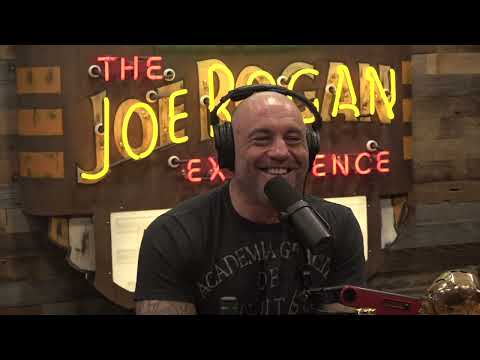
Joe Rogan Experience #1920 - Dave Portnoy
Narrator, Narrator, Narrator, Joe Rogan (host), Narrator, Dave Portnoy (guest), Narrator, Narrator, Narrator, Narrator, Narrator, Narrator, Narrator
In this episode of The Joe Rogan Experience, featuring Narrator and Narrator, Joe Rogan Experience #1920 - Dave Portnoy explores joe Rogan and Dave Portnoy dissect media, power, and modern manhood Joe Rogan and Dave Portnoy have a wide‑ranging, three‑plus‑hour conversation covering politics, media bias, social media manipulation, combat sports, performance‑enhancing drugs, and controversial public figures.
Joe Rogan and Dave Portnoy dissect media, power, and modern manhood
Joe Rogan and Dave Portnoy have a wide‑ranging, three‑plus‑hour conversation covering politics, media bias, social media manipulation, combat sports, performance‑enhancing drugs, and controversial public figures.
They push back on being labeled “right‑wing,” stressing nuance, pro‑social views, and frustration with rigid ideological camps and cancel culture.
Much of the discussion centers on distrust of legacy media and institutions, from pandemic narratives and pharma influence to Twitter censorship and charity scams.
They also dive deep into MMA, boxing, gambling, steroids, Andrew Tate, Kanye West, and the ethics of platforming polarizing voices in a fragmented information landscape.
Key Takeaways
Rigid political labels erase nuance and fuel toxic tribalism.
Rogan and Portnoy argue that if people can predict every one of your political answers, you’re not thinking independently, and media ecosystems push people into simplistic left/right boxes to more easily vilify them.
Get the full analysis with uListen AI
Follow the money to understand why media and institutions distort information.
They highlight that TV news is heavily funded by pharmaceutical ads and other big corporate interests, making truly critical coverage of those sectors unlikely, which erodes public trust and drives audiences toward independent voices.
Get the full analysis with uListen AI
Censorship and narrative control backfire and often increase a creator’s reach.
Rogan notes his audience grew during controversies over COVID content and Spotify pressure, arguing that attempts to suppress dissenting views often validate critics’ claims and push audiences toward alternative platforms.
Get the full analysis with uListen AI
Charitable giving requires due diligence, not blind trust in brands.
They cite examples like Kids Wish Network and Wounded Warrior controversies to show how some charities spend shockingly little on beneficiaries, recommending direct giving or carefully vetted organizations instead.
Get the full analysis with uListen AI
Combat sports success is a mix of talent, discipline, and smart self‑promotion.
They discuss fighters like Conor McGregor, Chael Sonnen, Khamzat Chimaev, and Jake Paul to illustrate how technical skill plus narrative, mic skills, and calculated matchmaking can dramatically amplify a career.
Get the full analysis with uListen AI
Performance‑enhancing drugs are often systemic, not isolated cheating.
Rogan frames steroids and PEDs in sports like bodybuilding, grappling, and past MMA eras as an ‘everyone is doing it’ arms race, where recovery and training volume advantages are massive and testing regimes shape behavior.
Get the full analysis with uListen AI
Social media is structurally unhealthy for nuanced discourse and mental health.
They describe Twitter as “radioactive,” dominated by negativity, bots, and troll farms, and recommend a “post and ghost” strategy—use it to publish, but avoid getting sucked into arguments and comment spirals.
Get the full analysis with uListen AI
Notable Quotes
“If I know how you're gonna answer a question before it's asked, I don't trust you.”
— Dave Portnoy
“If you think TV news will go hard at pharma when 75% of their ads are pharma, you're out of your mind.”
— Joe Rogan
“I’m not gonna change who I am because of pressure. Otherwise I’d just quit and do the podcast for free.”
— Joe Rogan
“I’m a petty person. I have champagne bottles engraved with my enemies’ names and I wait for them to fuck up.”
— Dave Portnoy
“Twitter’s not the real world. You walk outside and no one even knows what’s going on there.”
— Joe Rogan
Questions Answered in This Episode
How should we realistically distinguish between legitimate misinformation and inconvenient but valid dissenting views, especially during crises like pandemics?
Joe Rogan and Dave Portnoy have a wide‑ranging, three‑plus‑hour conversation covering politics, media bias, social media manipulation, combat sports, performance‑enhancing drugs, and controversial public figures.
Get the full analysis with uListen AI
What practical steps can individuals take to verify charities, media claims, and experts before trusting them with money or attention?
They push back on being labeled “right‑wing,” stressing nuance, pro‑social views, and frustration with rigid ideological camps and cancel culture.
Get the full analysis with uListen AI
Where is the ethical line between ‘smart self‑promotion’ and outright manipulation in sports, media, and business?
Much of the discussion centers on distrust of legacy media and institutions, from pandemic narratives and pharma influence to Twitter censorship and charity scams.
Get the full analysis with uListen AI
Does amplifying controversial figures in the name of free speech ultimately do more harm or good to public discourse?
They also dive deep into MMA, boxing, gambling, steroids, Andrew Tate, Kanye West, and the ethics of platforming polarizing voices in a fragmented information landscape.
Get the full analysis with uListen AI
If legacy institutions are structurally compromised by financial incentives, what might a healthier, scalable model of news and information look like?
Get the full analysis with uListen AI
Transcript Preview
(drumming music) Joe Rogan podcast, check it out.
The Joe Rogan Experience.
Train by day, Joe Rogan podcast by night. All day. (rock music)
We up?
Okay. All right. Hello, Joe Rogan. How you doing, man?
How's it going?
Good to see you, brother. What's going on?
Not too much.
We were just talking about how, uh, we're a couple of right-wing psychos.
Yeah.
(laughs)
Perceived that way at least. Perceived that way.
It's so weird. People just have to lump you into one category or another, and if you're not completely aligned with the left, they'll just lump you in with the right.
Yours is pretty easy to figure out, though, because you didn't endorse Bernie Sanders.
Did you... (laughs)
Right?
Yeah. (laughs)
So I mean, it- it- it should be, like, all of one second to figure out maybe you aren't.
Uh, yeah, but that doesn't mean anything to anybody. It just, uh, it's just, we live in the weirdest time. People just want to categorize people in a tweet. You know, they want to categorize people in 140 or 280 symbols. It's just, uh, they just decide that you're this or you're that, that way they can categorize you as the enemy.
Does that bother you at all?
No nuance.
Do you care?
I mean, I wish that they didn't, but what are you gonna do?
Yeah.
You know, I mean, does it bo- I mean, yeah, if somebody miscategorizes me or mis-, uh, mislabels me, I guess it would bother me a little bit. But that's just on them, you know, it's- it's not who I am. So-
Yeah.
... I- I'm a big believer in social programs. I'm a big believer in welfare. I'm a big believer in- in taking care of poor people. I'm a big believer in, like, social programs to clean up cities. And we, there's- there's a lot of shit that we should be doing in this country to- to help people that are disenfranchised, because it's not fair. Anybody thinks it is fair that someone lives in a fucking crime-infested, gang-ridden inner city and that's exactly the same as someone who grew up in the suburbs, that's crazy.
Right. So that would go against what I think a lot of people would expect you to say.
Yeah, but I also, you know, I'm a v- cage-fighting commentator. I- I, I'm a big believer in the Second Amendment. You know, there's- there's a lot of reasons why they would decide to categorize me as a- a right-wing person. But it's- it's not correct. And also, there's all this ridiculous woke shit that's going on, this bizarre mind virus that's going from universities into- to tech companies and- and the media, and just fucking infiltrating people with these rigid ideas of what you have to say and not say, and what you can and not say. And it's like, th- none of that is liberal. None of th- none of that is really, like, open-minded or progressive. It's all just a, it's a cult. It, and so if you go against it, the only thing you could possibly be is the other.
Install uListen to search the full transcript and get AI-powered insights
Get Full TranscriptGet more from every podcast
AI summaries, searchable transcripts, and fact-checking. Free forever.
Add to Chrome