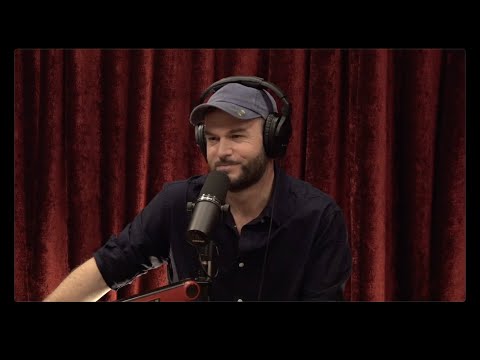
Joe Rogan Experience #2133 - Brendan O'Neill
Narrator, Brendan O'Neill (guest), Joe Rogan (host)
In this episode of The Joe Rogan Experience, featuring Narrator and Brendan O'Neill, Joe Rogan Experience #2133 - Brendan O'Neill explores free speech, moral panics, and modern heresy in a fragile age Joe Rogan and Brendan O’Neill discuss how fear, censorship, and ideological conformity shape today’s biggest controversies, from climate change and COVID to gender ideology and the Israel–Hamas war.
Free speech, moral panics, and modern heresy in a fragile age
Joe Rogan and Brendan O’Neill discuss how fear, censorship, and ideological conformity shape today’s biggest controversies, from climate change and COVID to gender ideology and the Israel–Hamas war.
They argue that powerful institutions, media, and academia increasingly suppress dissenting views, weaponize language, and reward moral hysteria instead of rational debate.
O’Neill frames much of contemporary culture—especially campus activism, identity politics, and online mobs—as a new form of heresy hunting that punishes deviation from elite-approved narratives.
Throughout, they return to the idea that defending free speech and skeptical inquiry is the only reliable safeguard against bad policy, authoritarian drift, and collective moral collapse.
Key Takeaways
Distinguish real existential risks from manufactured panic and profit-driven alarmism.
O’Neill argues that governments, NGOs, and media often inflate or distort threats like climate catastrophe to gain money, power, and moral status, making it essential to separate genuine civilizational risks from fear campaigns.
Get the full analysis with uListen AI
Censorship produces worse decisions by removing corrective feedback.
From climate debates to COVID policy, they contend that suppressing dissenting experts and ordinary skeptics leads to policy disasters—because bad ideas go unchallenged and the public can’t exercise critical judgment.
Get the full analysis with uListen AI
Modern ‘cancel culture’ functions as updated heresy hunting and social execution.
O’Neill sees professional punishment, deplatforming, and reputational destruction as contemporary equivalents of historical blasphemy trials, designed less to punish one individual than to terrify everyone else into silence.
Get the full analysis with uListen AI
Treating identity claims as unquestionable truths invites exploitation and abuse.
They argue that unconditional validation of gender self-ID has enabled perverse edge cases—such as male sex offenders in women’s spaces or males in women’s sports—while making rational safeguarding almost impossible.
Get the full analysis with uListen AI
Youth fragility is fueled by narcissistic culture and online validation economies.
Social media ecosystems reward self-diagnosis, victim identities, and ‘specialness,’ encouraging teens to adopt mental health and gender labels as shortcuts to attention and absolution rather than confronting ordinary life difficulties.
Get the full analysis with uListen AI
Elite institutions are increasingly irrational and morally inconsistent.
From universities that police pronouns but hesitate to condemn ‘death to the Jews,’ to media that soft-pedal Hamas atrocities, they see a pattern: educated elites abandon their own stated values when those conflict with fashionable ideologies.
Get the full analysis with uListen AI
Populist uprisings are a rational response to elite contempt and policy failure.
O’Neill interprets Brexit, Trump, and similar movements as working-class attempts to reassert voice and sanity against a ruling class that mocks them as ‘deplorables’ or ‘gammons’ while mismanaging borders, economies, and culture.
Get the full analysis with uListen AI
Notable Quotes
“Every freedom we enjoy is the gift of heresy.”
— Brendan O’Neill
“Cancel culture isn’t just about taking down big names; it’s a warning shot to everyone else: imagine what could happen to you.”
— Brendan O’Neill
“If you don’t have dissenting voices, that’s fine—if you’re right. And everybody always thinks they’re right.”
— Joe Rogan
“Freedom of speech isn’t a soothing balm. It’s what makes us human.”
— Brendan O’Neill
“We’re essentially a bunch of cult members who don’t believe we’re in a cult—and that’s one of the most dangerous things you can be.”
— Joe Rogan
Questions Answered in This Episode
Where should societies draw the line between responsible risk communication and fearmongering when it comes to issues like climate change or pandemics?
Joe Rogan and Brendan O’Neill discuss how fear, censorship, and ideological conformity shape today’s biggest controversies, from climate change and COVID to gender ideology and the Israel–Hamas war.
Get the full analysis with uListen AI
How can we protect children from both ideological capture and genuine discrimination while still allowing adults wide latitude to live as they choose?
They argue that powerful institutions, media, and academia increasingly suppress dissenting views, weaponize language, and reward moral hysteria instead of rational debate.
Get the full analysis with uListen AI
What concrete mechanisms could limit government–tech collusion in censorship without crippling platforms’ ability to fight genuine harms like terrorism or doxxing?
O’Neill frames much of contemporary culture—especially campus activism, identity politics, and online mobs—as a new form of heresy hunting that punishes deviation from elite-approved narratives.
Get the full analysis with uListen AI
If universities are increasingly ideological rather than exploratory, what new institutions or models could realistically replace them as engines of serious education?
Throughout, they return to the idea that defending free speech and skeptical inquiry is the only reliable safeguard against bad policy, authoritarian drift, and collective moral collapse.
Get the full analysis with uListen AI
In conflicts like Israel–Hamas, how should we balance moral judgments about causes and actors with the visceral horror of civilian casualties that modern media makes impossible to ignore?
Get the full analysis with uListen AI
Transcript Preview
(drumming) Joe Rogan podcast, check it out.
The Joe Rogan Experience.
Train by day, Joe Rogan podcast by night, all day. (instrumental music) Brent, what's up?
Joe, how you doing?
It is my goal-
(laughs)
... before the end of the world to talk to as many interesting people as possible, and it feels like that's kind of ramped up lately. So, uh, I saw you on Trigonometry, and I was introduced to your stuff through that, and then I watched a bunch of your conversations online. So I'm excited to talk to you, man. Thanks for being here.
I'm so happy to be here. You wouldn't believe it. So thank you for having me, Joe.
My- my pleasure, yeah, 'cause it did- does seem like I really do want to talk to as many people as I can before-
Mm-hmm.
... you can't talk to anybody anymore (laughs) .
Yeah. Well, exactly. H- who knows, you know, how long before talking to people is outlawed or suddenly talking to people like me and people like you?
Well, I- I don't think that's gonna happen likely anytime in the future. I think too many people push back against it. But I think it- it certainly could make it increasingly more difficult, and my- my real fear is that we do something so stupid that we lose all communication, period. I have a real fear of World War III, the like I've n-... I haven't had since I was a kid. When I- when I was a kid, I was grow- growing up in the '80s-
Mm-hmm.
... we were re- legitimately worried that we were gonna get in a nuclear war with Russia.
Yeah.
It was a real fear. And I remember when the fall... (sigh) The fall of the Soviet Union, it was like a weight had been lifted off the shoulders of the Earth.
Yeah.
Like, we were like, "Oh my God."
Yeah.
"Thank God it's over." So...
I remem- I remember those days in the '80s. Uh, we watched a film at school called The Day After. Wh- did you see that? Which is a film about-
I think we've talked about that.
Yeah.
Did we talk about that before? A film about after nuclear war?
Yeah.
Yeah.
It's a film about Russia bombing America. It's very depressing, but it- we watched it at school, and we had numerous discussions about what wou- would we do in the event of a nuclear holocaust, how would we try to survive it. But it was on our minds all the time.
Mm-hmm.
And there was also other apocalyptic scenarios, if you recall, like acid rain-
Mm-hmm.
... was a big one. The ozone layer was another one.
Yep.
W- w- ... My childhood was full of fears that the end of the world was nigh, and I think people feel that again today for different reasons, and my approach to it is always to think, well, where are the real problems in terms of civilization really grinding to a halt, and what are the unreal problems that are just designed to whip up fear and make us panic-
Install uListen to search the full transcript and get AI-powered insights
Get Full TranscriptGet more from every podcast
AI summaries, searchable transcripts, and fact-checking. Free forever.
Add to Chrome