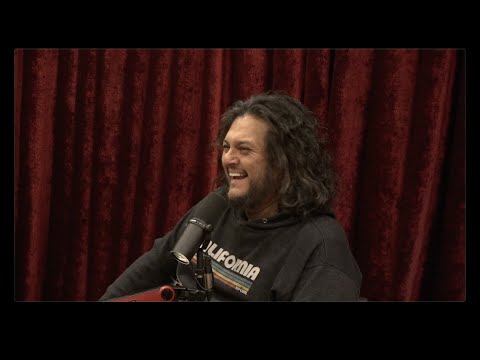
Joe Rogan Experience #2276 - Felipe Esparza
Felipe Esparza (guest), Narrator, Joe Rogan (host), Narrator, Narrator, Narrator, Narrator, Narrator, Narrator
In this episode of The Joe Rogan Experience, featuring Felipe Esparza and Narrator, Joe Rogan Experience #2276 - Felipe Esparza explores joe Rogan and Felipe Esparza Trade Wild Stories On Comedy, Chaos, Fame Joe Rogan and Felipe Esparza reminisce about decades in stand-up, from brutal local comedy scenes to legendary comics and bizarre club owners’ “advice.”
Joe Rogan and Felipe Esparza Trade Wild Stories On Comedy, Chaos, Fame
Joe Rogan and Felipe Esparza reminisce about decades in stand-up, from brutal local comedy scenes to legendary comics and bizarre club owners’ “advice.”
They dig into how cocaine, heroin, and brain injuries derail or reshape creative lives, weaving in stories about Sam Kinison, Mitch Hedberg, Otto & George, Brian Holtzman, and others.
The conversation repeatedly spirals into extreme anecdotes: bestiality deaths, human remains used as fertilizer, mercury treatments, medieval sanitation, and gruesome historical practices.
Throughout, they contrast past and present—old TV, sketch shows, censorship, war, disease, and technology—while plugging Felipe’s new Netflix special “Raging Fool.”
Key Takeaways
Regional comedy ecosystems can produce world-class killers who never go national.
Rogan describes Boston and San Francisco scenes where comics like Steve Sweeney, Don Gavin, Larry “Bubbles” Brown, and Bob Marley murdered locally but never fully translated to TV or national fame, showing how geography and industry structure limit careers.
Get the full analysis with uListen AI
Manager and club-owner “branding” advice is often useless or harmful.
Stories about Mitzi calling Joey Diaz “Fat Baby,” Jamie Masada telling comics to be a “Generation X guy” or a “football comic,” and urging Brad Williams to build an all–little-person show underscore that only the comic can truly shape their persona.
Get the full analysis with uListen AI
Addiction and self-destruction are deeply intertwined with parts of comedy and music history.
They talk about cocaine’s role in 80s chaos, heroin and Mitch Hedberg, Sam Kinison’s drug-fueled brilliance, and how Rogan avoided cocaine after watching a friend disintegrate—underscoring how substance use can fuel short bursts of creativity but usually destroys lives.
Get the full analysis with uListen AI
Audiences and industry often confuse edgy characters with the real person behind them.
Dice, Larry the Cable Guy, Otto & George, and Brian Holtzman are cited as examples of comics who inhabit extreme stage personas, sometimes drawing hate and censorship toward the character while the off-stage person is kind and gentle.
Get the full analysis with uListen AI
Sanitation and environmental context radically shape what a “normal” life looks like.
Their detour into 19th‑century New York’s open sewage, “night soil” carts, and disease shows how recently basic urban hygiene emerged, and how barbaric everyday life was compared to modern expectations of health and cleanliness.
Get the full analysis with uListen AI
Technological and cultural change keeps redefining what’s “too offensive” in comedy.
They compare In Living Color, Ace Ventura, handicapped and gay caricatures from the 90s to today’s outrage cycles, noting how truly wild sketches once aired on network TV that would be considered career-ending now.
Get the full analysis with uListen AI
Felipe Esparza’s path shows the grind of building a career outside traditional gatekeepers.
Esparza talks about rehab, studying joke-writing from library books, hustling bookers’ lists, enduring rejection at clubs, then independently financing and selling his Netflix special “Raging Fool,” highlighting a DIY route modern comics can pursue.
Get the full analysis with uListen AI
Notable Quotes
“You’ll never feel this level of happiness if you don’t go for something.”
— Joe Rogan quoting Israel Adesanya’s post-fight speech
“Sometimes I wonder, man, like, how would I handle that much success at that early age? You wouldn’t. I wouldn’t. We’d go crazy.”
— Joe Rogan and Felipe Esparza, on Elvis-level fame
“This is not a comedy show. Close all the doors. Border patrol is gonna come in here and take everybody.”
— Felipe Esparza, recalling a Brian Holtzman bit at a Latino festival
“There’s not a path for those guys… he belonged at the Store, and now he’s found a crowd at the Mothership.”
— Joe Rogan, on Brian Holtzman’s late career recognition
“We’re so lucky. Living back then was hell, bro. People are ignoring the stink.”
— Felipe Esparza, on pre-sewer cities and night-soil streets
Questions Answered in This Episode
How much responsibility does the comedy industry bear for enabling or ignoring addiction and self-destructive behavior among comics?
Joe Rogan and Felipe Esparza reminisce about decades in stand-up, from brutal local comedy scenes to legendary comics and bizarre club owners’ “advice.”
Get the full analysis with uListen AI
In a social media era, can a regional “assassin” comic still stay mostly local, or does the internet inevitably pull them national?
They dig into how cocaine, heroin, and brain injuries derail or reshape creative lives, weaving in stories about Sam Kinison, Mitch Hedberg, Otto & George, Brian Holtzman, and others.
Get the full analysis with uListen AI
Where should the ethical line be drawn between free artistic expression and harmful caricature in sketch comedy, given how wild older shows were?
The conversation repeatedly spirals into extreme anecdotes: bestiality deaths, human remains used as fertilizer, mercury treatments, medieval sanitation, and gruesome historical practices.
Get the full analysis with uListen AI
How might future generations look back on our current environmental and health practices the way we now view 19th‑century open sewers and mercury medicine?
Throughout, they contrast past and present—old TV, sketch shows, censorship, war, disease, and technology—while plugging Felipe’s new Netflix special “Raging Fool.”
Get the full analysis with uListen AI
What can aspiring comedians learn from Felipe Esparza’s choice to self-finance, own, and then license his Netflix special instead of following a traditional studio path?
Get the full analysis with uListen AI
Transcript Preview
(drum roll) Joe Rogan podcast, check it out.
The Joe Rogan Experience. Train by day, Joe Rogan podcast by night. All day. (instrumental music)
Good to see you, my friend. It has been too long.
What's up, fool? Good to see you too.
When was the last time I saw you, brother? It was like-
Um-
... five years ago or something.
Five years ago, and I wa- I did the show here when you were in LA-
Yeah.
... at the warehouse.
(clicks tongue) Damn. That's what I miss most about the store, is, uh, you know, traveling dudes. W- we- we would meet up. We'd meet up at the home base.
Yes.
You know?
And now, when I was a young comic, I would see these older comics, like, that I would see on television. They were just w- coming out at that bar or the patio.
Just get a refresh.
Yeah, and you pass by, and you say, "Oh."
Yeah.
"That's, um, man-"
Arsenio Hall, holy shit.
"That's Elaine Wosler."
Right.
"OG right there."
Right, right.
And then you're like, "What?"
Right.
I used to see her at Dodger Stadium when I were working at Dodger Stadium, and I would ask her for advice.
(whistles)
And she was just- just- you know, like, well, every comic back then, "You just keep writing."
She's a funny comic, man.
Yeah.
She was a funny comic. Who's that lady that was on, um, Curb Your Enthusiasm? She's very funny too, old school comic. Goddamn it. I'm v- very embarrassed that I forgot her name. She hasn't done comedy in a long time. Look that up.
Susie?
Yeah, Susie Essman.
Oh, Susie Essman does standup?
Yes. Oh, she was great.
Oh.
She was really funny. I middled for her once in, like, fucking 1989 or some shit. (laughs) Way back in the day, my friend.
Wh- who'd you middle for, that lady? Wow.
Yeah. Yeah. I f- go- some place on Long Island. I can't- might have been, like, Governor's or something like that. I don't- I do not remember, but I remember she was very nice. She was very funny, very nice, very encouraging, which is the- the best, man. When you get to work with someone that you see on television and you're just, like, starting out and they're nice to you, that's so valuable.
I can't believe that, like, when I- when I was last-
There she is, Susie Essman.
There she is. Whoa! She looks like Elaine from Seinfeld.
She... Yeah, similar.
But that's the haircut back then, huh?
sh- Yeah. Well, they all had-
With the crazy heifer?
... crazy hair. Everybody lost their mind in the '80s.
Ali Lieberman?
Install uListen to search the full transcript and get AI-powered insights
Get Full TranscriptGet more from every podcast
AI summaries, searchable transcripts, and fact-checking. Free forever.
Add to Chrome