Joe Rogan Experience #1714 - Josh Dubin & Robert Jones
Narrator, Joe Rogan (host), Josh Dubin (guest), Robert Jones (guest), Joe Rogan (host), Narrator
In this episode of The Joe Rogan Experience, featuring Narrator and Joe Rogan, Joe Rogan Experience #1714 - Josh Dubin & Robert Jones explores wrongfully Imprisoned 24 Years: Robert Jones Exposes Justice System Failures Joe Rogan speaks with exoneree Robert Jones and attorney/advocate Josh Dubin about Robert’s wrongful conviction for a rape, murder, and robberies in New Orleans, and his 23 years, 7 months in Angola prison. They detail how prosecutors and police ignored and hid exculpatory evidence, relied on a self‑serving informant, and resisted DNA testing that ultimately helped prove Robert’s innocence. Robert explains how he survived one of America’s most violent prisons, educated himself in the law from a third‑grade literacy level to winning cases for others, and played a key role in his own exoneration. The conversation broadens into systemic issues—confirmation bias, lack of accountability for misconduct, flawed death‑penalty practices, and inadequate compensation for the wrongfully convicted—while highlighting Robert’s current work in criminal justice reform and youth mentoring.
Wrongfully Imprisoned 24 Years: Robert Jones Exposes Justice System Failures
Joe Rogan speaks with exoneree Robert Jones and attorney/advocate Josh Dubin about Robert’s wrongful conviction for a rape, murder, and robberies in New Orleans, and his 23 years, 7 months in Angola prison. They detail how prosecutors and police ignored and hid exculpatory evidence, relied on a self‑serving informant, and resisted DNA testing that ultimately helped prove Robert’s innocence. Robert explains how he survived one of America’s most violent prisons, educated himself in the law from a third‑grade literacy level to winning cases for others, and played a key role in his own exoneration. The conversation broadens into systemic issues—confirmation bias, lack of accountability for misconduct, flawed death‑penalty practices, and inadequate compensation for the wrongfully convicted—while highlighting Robert’s current work in criminal justice reform and youth mentoring.
Key Takeaways
Wrongful convictions are often driven by hidden evidence and tunnel vision, not simple mistakes.
In Robert’s case, police and prosecutors withheld multiple exculpatory reports—including statements from the real perpetrator and physical evidence tying that man to all the crimes—while building a narrative around an anonymous tip and a self‑interested informant.
Get the full analysis with uListen AI
Survival in prison requires establishing boundaries and respect early, especially in violent facilities.
Robert describes confronting aggression head‑on from his second day in jail, leveraging his boxing background and willingness to escalate if necessary to deter further abuse so he could focus on education and legal work instead of constant self‑defense.
Get the full analysis with uListen AI
Self-education and relentless advocacy from behind bars can be pivotal, but resources still matter.
Starting at a third‑grade literacy level, Robert taught himself law, filed his own motions (including an early DNA preservation motion that predated state law), and won cases for others—yet still needed external legal resources from the Innocence Project to finally be freed.
Get the full analysis with uListen AI
Confirmation bias and a win-at-all-costs culture in prosecution sustain wrongful convictions.
Dubin explains how prosecutors and judges often rationalize away new evidence—such as confessions by real perpetrators—as “survivor’s guilt” or manipulation, prioritizing preserving convictions and political capital over truth.
Get the full analysis with uListen AI
The death penalty is uniquely dangerous in a flawed system that demonstrably convicts innocents.
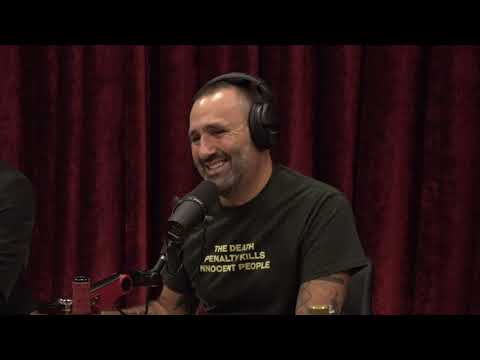
They note that dozens of death row inmates—like those on Dubin’s shirt and cases such as Clemente Aguirre—have been exonerated after years on death row, underscoring that capital punishment inevitably kills innocent people when the system is this error‑prone.
Get the full analysis with uListen AI
Compensation for wrongful incarceration is inconsistent, minimal, and hard to obtain.
Louisiana caps compensation (now $40,000 per year with a 10‑year cap), and even that isn’t automatic; Robert waited years, fought for a modest $2 million settlement, and highlights that many states offer little or no statutory compensation or set procedural traps to avoid paying.
Get the full analysis with uListen AI
Lived experience can drive powerful reform when coupled with institutional engagement.
Instead of leaving the system behind, Robert now works for the Orleans Public Defender’s Office, runs a youth-mentoring nonprofit, helps change laws, and is writing a book on “Power of Endurance,” using his story to shift public perception and policy from the inside.
Get the full analysis with uListen AI
Notable Quotes
“If you bring me bullshit, I'm gonna give you a cesspool.”
— Robert Jones
“Every time life throw a punch at you, you gotta throw a counter punch.”
— Unnamed prison boxing trainer (recounted by Robert Jones)
“You’re in the presence of a miracle. What this man was able to endure, overcome, and accomplish since he’s been out is nothing short of mind‑blowing.”
— Josh Dubin on Robert Jones
“Wanting to put someone in jail for a crime that they’re innocent of is almost as horrific as the crime you’re charging the person with.”
— Joe Rogan
“I’m not a motivational speaker, I’m a transformative speaker... I can teach you how to maintain your inspiration when you face difficulties.”
— Robert Jones
Questions Answered in This Episode
What specific legal or policy reforms would most effectively prevent prosecutors from withholding exculpatory evidence in future cases?
Joe Rogan speaks with exoneree Robert Jones and attorney/advocate Josh Dubin about Robert’s wrongful conviction for a rape, murder, and robberies in New Orleans, and his 23 years, 7 months in Angola prison. ...
Get the full analysis with uListen AI
How can jury selection, training, or structure be changed to reduce confirmation bias in both prosecutors and jurors?
Get the full analysis with uListen AI
What would a fair, national standard for compensating wrongfully convicted people look like, and how could it realistically be implemented?
Get the full analysis with uListen AI
In what ways could public defender offices more systematically integrate formerly incarcerated people like Robert into their advocacy and client support work?
Get the full analysis with uListen AI
How might stories like Robert’s be incorporated into school curricula or civic education to build broader public literacy about the justice system’s flaws?
Get the full analysis with uListen AI
Transcript Preview
(drumming) Joe Rogan podcast. Check it out. The Joe Rogan Experience. Train by day, Joe Rogan podcast by night. All day. (instrumental music)
Gentlemen. What's up? How are you? Good to see you, man. (laughs)
Good to see you, bro.
Always. And Robert, very nice to meet you.
It's a pleasure as well.
Pull this sucker up right to your face. It moves around. Yeah, it's very, uh-
That cool?
Yeah, keep it ... Try to keep like a fist from your face.
All right.
Um, before we ... Let's just, let's just get into it. Let's explain. Robert, why don't you get started with this? Explain how you came to know Robert and what his, uh, circumstances were?
Yeah, um, in 2016, 2016, right?
Yeah.
I was speaking in New Orleans. I was asked to speak at this conference of, like, hundreds of criminal defense attorneys with Barry Scheck, who founded the Innocence Project, and we were teaching a class essentially, um, for the National Association of Criminal Defense Lawyers. And Barry and I were giving a presentation in front of hundreds of lawyers about things that they could do to ensure that during jury selection and at trial that you can expose prosecutorial misconduct, um, how you can make stronger legal pleas to get what we call exculpatory evidence, or evidence that would tend to show someone's innocence. So it was an hour-long speech and Barry and I were, like, going in 15-minute blocks, and at some point, while we're on the stage, and I feel like we're killing it, you know, I'm, like, feeling myself-
(laughs)
... like they're really loving this stuff. And at some point, on stage, uh, Barry goes to me, "By the way, you know, we just had an exoneration here in New Orleans and this guy might show up." And he ... And I said, "When was the exoneration?" He said, "Just a couple of weeks ago." And I said ... It's kind of a tricky thing to put him in a position to come up and speak in front of hundreds of lawyers and I said, "How long was he in for?" He said, "Almost 24 years. 23 years, 7 months." For a, a v- vicious rape and murder that he didn't commit. So we're wrapping up our speech and all of a sudden, I see this man walk in the room and, like, a lot of heads turn around 'cause it was at, like, a big hotel, um, like, ballroom and all the heads swung around because the door opened real loud (laughs) and slammed.
(laughs)
So everybody is looking at this guy and I see this very well-dressed man and Barry, you know, says, "Oh, and you know, we have a very special treat for you. This man, just a few weeks ago, um, was walked out of Angola, one of the most violent penitentiaries in the country." And I'm ... I feel like, you know, something bad is about to happen because I know what that's like to, um ... At least I don't know what it's like, but I know what it's like to see somebody in the throes of just getting out and they're usually shell-shocked in a way that is not conducive to public speaking. So this guy just strides up on the stage, grabs the mic and gives this, this galvanizing speech where, you know, like you could see the jaws dropping open about how important it is to fight while you're in court and to not back down from judges that aren't letting you, you know, protect your client's constitutional rights. And I'm sitting there watching him and I ... and I'm thinking to myself, this ... I've never seen anything like ... This is special. So Rob- Robert and I met right there on the stage and, uh, we got to talking and then we went across the street to a bar and we had a f- more than a few cocktails and he, he told me his whole story, um, about the crime, about this awful, you know, set of prosecutors and detectives that covered up evidence and lied and were responsible for hi- his incarceration and I've said this to you before, these ... You know, if, if you've never been in the presence of an exoneree, you don't really know, um, you know, really the true strength and, like, the triumph of the human spirit in a way that is very hard to describe. So, you know, 25 minutes in, we're at a very crowded bar in the French Quarter and I'm weeping. (laughs)
Install uListen to search the full transcript and get AI-powered insights
Get Full TranscriptGet more from every podcast
AI summaries, searchable transcripts, and fact-checking. Free forever.
Add to Chrome