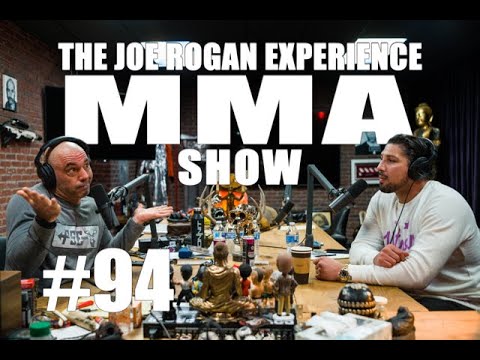
JRE MMA Show #94 with Brendan Schaub
Joe Rogan (host), Brendan Schaub (guest), Narrator, Narrator, Narrator, Narrator, Narrator, Narrator, Narrator, Narrator, Narrator, Narrator, Narrator
In this episode of The Joe Rogan Experience, featuring Joe Rogan and Brendan Schaub, JRE MMA Show #94 with Brendan Schaub explores rogan and Schaub Debate COVID Risk, UFC Fights, and Freedom Joe Rogan and Brendan Schaub riff at length about the early COVID-19 lockdowns, weighing health risks against economic collapse, personal freedom, and common sense precautions. They discuss treatment hopes like hydroxychloroquine, the reality of who’s most at risk, and how lifestyle and fitness intersect with disease outcomes.
Rogan and Schaub Debate COVID Risk, UFC Fights, and Freedom
Joe Rogan and Brendan Schaub riff at length about the early COVID-19 lockdowns, weighing health risks against economic collapse, personal freedom, and common sense precautions. They discuss treatment hopes like hydroxychloroquine, the reality of who’s most at risk, and how lifestyle and fitness intersect with disease outcomes.
A major throughline is the fate of live events—especially the UFC and stand-up comedy—culminating in the real-time news that UFC 249 is canceled after pressure from Disney/ESPN. They also dive deep into MMA matchups, fighter psychology, and the business pressures behind the UFC’s insistence on continuing.
Surrounding these themes is the usual JRE sprawl: parenting, childhood sports and resilience, homelessness in LA, conspiracy thinking, technology addiction, guns and self-defense, pornography and media nostalgia, and the evolution of podcasting versus old media.
The conversation alternates between serious analysis and dark comedy, illustrating how two performers process a global crisis while worrying about friends’ health, their industry’s survival, and creeping government and corporate control.
Key Takeaways
Fitness and health habits materially affect how you fare in a pandemic.
Rogan and Schaub repeatedly contrast health-conscious people with those who are obese or unhealthy, arguing that COVID-19 should be a wake-up call to take care of your body—through exercise, diet, and recovery—rather than relying only on masks and medicine.
Get the full analysis with uListen AI
The real COVID risk is less to the healthy individual than to the vulnerable.
They acknowledge that most healthy adults who catch the virus will recover, but stress that asymptomatic or mild cases can still transmit it to the elderly or immunocompromised, so a strategy must include shielding high‑risk groups.
Get the full analysis with uListen AI
Emergency responses can entrench long-term surveillance and control.
In discussing phone-based health passports, tracking, and mandatory testing, Rogan warns that requiring constant digital monitoring to move freely is a slippery slope toward normalized surveillance and unequal power between citizens and institutions.
Get the full analysis with uListen AI
Business incentives drive aggressive risk-taking in sports and entertainment.
They unpack how the UFC’s massive rights deal with ESPN pressures Dana White to stage 40+ events, helping explain the push for UFC 249 and “Fight Island” even amid public-health concerns—and how corporate partners like Disney ultimately have veto power.
Get the full analysis with uListen AI
Old-media deal structures make little sense in a direct-to-audience world.
Using their own experiences with networks asking for 50% of podcast revenue, they argue creators should own and distribute their work independently, since platforms like YouTube and podcast apps have removed the scarcity that once justified heavy studio cuts.
Get the full analysis with uListen AI
Childhood adversity isn’t required for success if kids learn to lose and compete.
They note that many successful, interesting people had chaotic upbringings, but suggest structured sports can instead teach resilience, handling loss, and developing a ‘chip on the shoulder’ without psychological trauma.
Get the full analysis with uListen AI
Crisis psychology amplifies both productive habits and destructive narratives.
They observe more families walking and working out, but also more conspiracy theories (5G, spiritual “manifesting,” etc. ...
Get the full analysis with uListen AI
Notable Quotes
“We’ve never seen anything like this where everything just instantly shut down.”
— Joe Rogan
“If it bounces right off you but it kills someone that’s your age, whose fault is that? If they’re severely out of shape, that’s on you, man.”
— Brendan Schaub
“I hope this is a wake-up call for people that aren’t taking care of themselves.”
— Joe Rogan
“We have little countries inside our country. This is fantastic.”
— Joe Rogan, on tribal sovereignty and holding UFC events on Native American land
“There should never be a group that has more power over an individual than another individual.”
— Joe Rogan
Questions Answered in This Episode
Where should societies draw the line between protecting public health and preserving individual freedom during pandemics?
Joe Rogan and Brendan Schaub riff at length about the early COVID-19 lockdowns, weighing health risks against economic collapse, personal freedom, and common sense precautions. ...
Get the full analysis with uListen AI
How much personal responsibility for disease outcomes should be placed on lifestyle choices like fitness, and where does that become unfair or unrealistic?
A major throughline is the fate of live events—especially the UFC and stand-up comedy—culminating in the real-time news that UFC 249 is canceled after pressure from Disney/ESPN. ...
Get the full analysis with uListen AI
Do emergency measures such as health-pass apps and phone tracking inevitably become permanent tools of surveillance, or can they be safely rolled back?
Surrounding these themes is the usual JRE sprawl: parenting, childhood sports and resilience, homelessness in LA, conspiracy thinking, technology addiction, guns and self-defense, pornography and media nostalgia, and the evolution of podcasting versus old media.
Get the full analysis with uListen AI
What ethical obligations do sports organizations like the UFC have to fighters, staff, and the public when financial contracts push them to keep operating?
The conversation alternates between serious analysis and dark comedy, illustrating how two performers process a global crisis while worrying about friends’ health, their industry’s survival, and creeping government and corporate control.
Get the full analysis with uListen AI
Has the podcast era permanently shifted power away from traditional media gatekeepers, or will large corporations eventually reassert control through platforms and regulation?
Get the full analysis with uListen AI
Transcript Preview
Quarantine, baby. How you holding up? (smacks lips)
Getting through, man.
Are you weirded or just accepting it?
I'm accepting it, and I'm, I'm trying to stay positive. I send you guys all the positive stats I get. (laughs)
(laughs) Well, I know several people that have gotten it and gotten over it. The worst was Michael Yeo. And I need to confirm this with Michael, but I'm pretty sure Michael had a cold, and then caught the corona, and then got pneumonia. And-
Jesus Christ.
And he got it real bad.
Yeah, he's bad.
He, he got it real bad. He was hospitalized for a week.
Yeah, his posts choke me up. Did you see his Instagram posts?
Yes, yes. And you see him coughing while he's doing it.
Yeah.
He's such a good guy.
He's the nicest guy.
He's the nicest guy. If we lost him, that'd be fucking-
It'd be a shame.
... devastating. Um, I know people that have gotten it, gotten over it, not, not m- much of a problem. You know? And they, they just felt like shit for a couple days, and then they were fine.
But that's the majority of people, Joe.
Majority of people.
I know people get upset when I say that-
And it's true, though.
... it's true, though. Those are the numbers.
Yeah, there's-
Majority of the people get it and they're fine.
Yeah. What I'm hoping is-
(clears throat)
... they come up with, with a legitimate treatment where it's like, "This is confirmed that if you take hydroxychloroquine," you know, with Z-Pak.
And the Z-Pak.
If they say something like that, this is confirmed, if they say, "W- we got it covered folks, we no longer have to worry about people dying of coronavirus."
Yeah.
"We just catch it real early," sorta like Tamiflu-
Yeah.
... or some other things that... Look, staph used to fucking kill the shit out of people.
Oh, tons.
You know? Killed a lot of people. Infections killed a lot of fucking people. Now, they give you antibiotics. I mean, imagine if jujitsu killed people. Imagine if you went to the gym and you got staph and you died. How many fucking people would train? I wouldn't train. Nobody would train.
Hell, no.
You'd be so terrified of staph, right? Well, that's how we are right now with this coronavirus. We're worried because we don't have, like, a rock solid legitimate treatment or a vaccine.
But that hydrochlorothiane, whatever the hell it is, it's Z-Pak-
Chloroquine.
... supposed to, supposed to work. The trials that they've seen, right?
Yeah. Well-
For some people.
D- (sighs) You know that it's what they call anecdotal evidence. It's not 100% proven clinical trial, peer-reviewed where they can say, "Hey, we, we had a 160 people that were coronavirus positive. We put them on this hydroxychloroquine, 100%."
Install uListen to search the full transcript and get AI-powered insights
Get Full TranscriptGet more from every podcast
AI summaries, searchable transcripts, and fact-checking. Free forever.
Add to Chrome