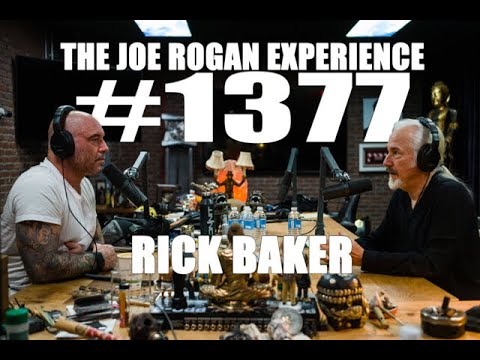
Joe Rogan Experience #1377 - Rick Baker
Joe Rogan (host), Rick Baker (guest), Narrator
In this episode of The Joe Rogan Experience, featuring Joe Rogan and Rick Baker, Joe Rogan Experience #1377 - Rick Baker explores rick Baker Reveals Monster-Making Magic, Hollywood Battles, Joyful Retirement Joe Rogan interviews legendary makeup and creature effects artist Rick Baker about his lifelong obsession with monsters, his groundbreaking work on films like An American Werewolf in London, Star Wars, Thriller, Gremlins 2, and The Wolfman, and how those projects actually got made.
Rick Baker Reveals Monster-Making Magic, Hollywood Battles, Joyful Retirement
Joe Rogan interviews legendary makeup and creature effects artist Rick Baker about his lifelong obsession with monsters, his groundbreaking work on films like An American Werewolf in London, Star Wars, Thriller, Gremlins 2, and The Wolfman, and how those projects actually got made.
Baker traces his path from a shy, only child experimenting with greasepaint in his bedroom to an industry-defining artist who fought studios to protect his designs while enduring brutal hours, toxic materials, and heavy creative interference.
They contrast classic practical effects with modern CGI, discuss the importance of fanboy passion in filmmaking, and explore how studio politics, multiple producers, and risk-averse executives can undermine clear creative vision.
Now retired from the film industry, Baker explains why he walked away at his peak to create purely for himself again—sculpting, painting, and making masks at home—and reflects gratefully on his legacy and impact on younger artists.
Key Takeaways
Pursue obsessive curiosity early and relentlessly, even without a clear path.
Baker started as a shy kid smearing greasepaint on his face, building masks in his bedroom, and cold-calling anyone remotely connected to monsters; that self-directed experimentation and persistence eventually opened doors in an industry he had no family ties to.
Get the full analysis with uListen AI
Limitations can produce stronger, more iconic designs than unlimited tools.
He argues that pioneers like Lon Chaney, Jack Pierce, and Ray Harryhausen created some of the best, most enduring makeups and creatures precisely because they were forced to solve problems with crude materials, minimal budgets, and clever restraint.
Get the full analysis with uListen AI
Protecting a clear creative vision often requires uncomfortable conflict.
Baker repeatedly fought studios—over The Grinch’s design, Wolfman hair budgets, and more—because producers wanted safer, cheaper, or simpler options; his willingness to push back (even leveraging fan pressure online) is what preserved many iconic looks.
Get the full analysis with uListen AI
Over-production and too many decision-makers dilute artistic impact.
He contrasts early collaborators like John Landis and Joe Dante, who trusted him, with later projects where dozens of producers nitpicked pores and minutiae, resulting in soul-sucking cycles of redesign that watered everything down and drove him toward retirement.
Get the full analysis with uListen AI
Practical effects still work best when shot and edited with intention.
Baker notes that the effectiveness of the American Werewolf and Star Wars cantina creatures wasn’t just the builds—it was the way they were lit, framed, and seen only in quick, powerful glimpses, versus modern CGI that often overstays its welcome and looks fake.
Get the full analysis with uListen AI
Your health and long-term joy must outweigh prestige and paychecks.
Years of 15–20 hour days, exposure to toxic chemicals, and constant stress from studio politics convinced Baker to walk away from lucrative film work so he could enjoy his remaining healthy years making art for himself instead of for executives.
Get the full analysis with uListen AI
Legacy comes from consistency over decades, not one breakthrough.
The book on his career made Baker realize how much he’s created—from Octaman and Schlock to Maleficent and Harry and the Hendersons—and how those cumulative projects, plus inspiring younger artists (e. ...
Get the full analysis with uListen AI
Notable Quotes
“I retired from the film industry. I didn’t retire from being a creative guy.”
— Rick Baker
“Why did you hire me if you’re not letting me do what I do?”
— Rick Baker
“It’s not called How the Green Jim Carrey Stole Christmas.”
— Rick Baker
“Sometimes the most effective makeups are just the tiniest little bit of things you do and they let a lot of the humanity show through.”
— Rick Baker
“If I died today, I’d be happy with what I’ve accomplished.”
— Rick Baker
Questions Answered in This Episode
If Baker had total creative control today, what kind of monster or horror film would he design from scratch without studio interference?
Joe Rogan interviews legendary makeup and creature effects artist Rick Baker about his lifelong obsession with monsters, his groundbreaking work on films like An American Werewolf in London, Star Wars, Thriller, Gremlins 2, and The Wolfman, and how those projects actually got made.
Get the full analysis with uListen AI
How might a modern remake of An American Werewolf in London look if it were done with today’s techniques but Baker’s insistence on practical effects and minimal CGI?
Baker traces his path from a shy, only child experimenting with greasepaint in his bedroom to an industry-defining artist who fought studios to protect his designs while enduring brutal hours, toxic materials, and heavy creative interference.
Get the full analysis with uListen AI
What specific boundaries should exist between producers and department heads to preserve both budget discipline and artistic integrity?
They contrast classic practical effects with modern CGI, discuss the importance of fanboy passion in filmmaking, and explore how studio politics, multiple producers, and risk-averse executives can undermine clear creative vision.
Get the full analysis with uListen AI
How will younger practical-effects artists reconcile their desire to work with physical materials in an industry that increasingly defaults to CGI?
Now retired from the film industry, Baker explains why he walked away at his peak to create purely for himself again—sculpting, painting, and making masks at home—and reflects gratefully on his legacy and impact on younger artists.
Get the full analysis with uListen AI
What lessons from Baker’s battles on projects like The Wolfman and Cursed can new filmmakers and showrunners apply to avoid sabotaging their own stories?
Get the full analysis with uListen AI
Transcript Preview
Here we go. On three, two, one. (claps) Rick Baker, ladies and gentlemen.
Hey.
How are you, sir?
Hey, I'm great, Joe. Everybody's been saying on my Instagram I should do this, uh, podcast for ages, so.
Well, I'm glad they listened or you listened-
(laughs)
... rather. I've, I've been a fan of yours forever, man. I was a huge Star Wars fan when I was a kid and you inspired me. When I was young, I really wanted to be a makeup artist. I wanted to do special effects and the kind of stuff that you do.
Oh, I had no idea.
(laughs) Yeah, man. Um, uh, I think it was probably Star Wars that kicked it off for me 'cause I, like many kids... A l- a lot of people today, y- you know, we're so removed with first VHS and then DVDs and laser discs and now streaming, it's so easy to watch movies. But when Star Wars came out, we would go see it over and over and over again. It was like a little contest between a lot of the kids that I went to school with.
Uh-huh.
I think I saw it 13 times-
Wow.
... while it was out in the movie theater.
Wow.
But I became fascinated... I've always been fascinated with comic books. I always wanted to be a comic book illustrator. And I, I always loved, like, uh, l- like those fantasy novels, like, creepy and eerie-
Mm-hmm.
... you know, those, uh, those ill- graphic novels. But I really became fascinated with special effects and, um, particularly makeup after your work.
Uh, well, you know, it was kind of the same thing for me. I mean, I, you know, I, I grew up in... I was born in 1950, you know, I grew up in front of a TV, but it was a little black and white one, you know, and, and, uh, there was always the monster movies on Saturdays, you know, and/or Sundays. And that, that just stuff just hit a chord with me and I just said, "I have to do this," you know.
When did you... What was the first thing that you did?
First, first ever makeup kind of thing I did?
Yeah.
Well, I mean, uh, you know, I was... I'm an only child. Uh, my mom wasn't supposed to have kids 'cause she had a bad heart and stuff. And, and, uh, but they wanted children. And, and, uh, but I was very shy. I, I'm, I stayed in my bedroom, I couldn't talk to an adult and stuff like that.
Yeah.
And the very s- first thing I, you know, I, I got interested in makeup and I got some just white grease paint and black grease paint and smeared it on my face. And just with a layer of grease paint on my face when I was looking in the mirror, it wasn't, wasn't little Ricky Baker anymore. And I could do things that I couldn't do without this shit smeared on my face, you know? (laughs)
Install uListen to search the full transcript and get AI-powered insights
Get Full TranscriptGet more from every podcast
AI summaries, searchable transcripts, and fact-checking. Free forever.
Add to Chrome