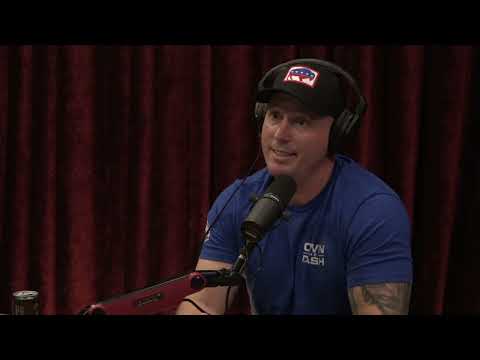
Joe Rogan Experience #1787 - Dakota Meyer
Dakota Meyer (guest), Narrator, Narrator, Joe Rogan (host), Narrator
In this episode of The Joe Rogan Experience, featuring Dakota Meyer and Narrator, Joe Rogan Experience #1787 - Dakota Meyer explores medal of Honor Marine Shares Rock-Bottom, Psychedelics, And Redemption Path Joe Rogan talks with Medal of Honor recipient Dakota Meyer about his post-combat collapse, near-suicide, and eventual turnaround centered on purpose and service to others.
Medal of Honor Marine Shares Rock-Bottom, Psychedelics, And Redemption Path
Joe Rogan talks with Medal of Honor recipient Dakota Meyer about his post-combat collapse, near-suicide, and eventual turnaround centered on purpose and service to others.
Meyer explains how victimhood, alcohol, and self-pity nearly destroyed him, and how fatherhood, firefighting, psychedelics (ibogaine and 5-MeO-DMT), and a stronger circle of friends helped him rebuild.
They explore PTSD, veteran and first-responder mental health, extreme ownership, physical adversity (jujitsu, hard workouts), and how environment and personal accountability shape character.
The conversation also touches on policing, COVID fear, obesity, geopolitical conflict, political corruption, and Meyer's new book with Rob O’Neill, “The Way Forward,” as a blueprint for living with purpose.
Key Takeaways
Shifting your purpose from self to others is often the real ‘way forward.’
Meyer realized his darkest period came when his life was centered only on himself and what the country ‘owed’ him; anchoring his purpose in his kids, teammates’ sacrifices, firefighting, and service gave him a reason to live and improve.
Get the full analysis with uListen AI
Victimhood protects you from accountability—but also blocks any comeback.
He describes how blaming war, PTSD, and others for his drinking and behavior let him avoid responsibility, but also drove people away and kept him stuck until he owned that he was the problem.
Get the full analysis with uListen AI
Your circle is destiny: curate relationships like financial investments.
Meyer treats time and emotional energy like equity, only investing in people he’d trust around his daughters; surrounding himself with disciplined, service‑oriented friends (firefighters, gym community, people like Tim Kennedy and Jocko) radically changed his trajectory.
Get the full analysis with uListen AI
Physical adversity is a powerful, underused mental health tool.
Both Rogan and Meyer argue that hard, regular physical challenges (jujitsu, brutal workouts, contact sports) normalize stress, build character, and often dissolve anxiety and overreaction to minor life problems.
Get the full analysis with uListen AI
Psychedelics can catalyze deep psychological change when everything else fails.
Ibogaine forced Meyer to confront ego, unfinished efforts, and relationships where he’d never feel ‘good enough,’ while 5‑MeO‑DMT gave him an overwhelming sense of love and inner goodness; together they eliminated his weekly anxiety attacks and helped him live more present and self-accepting.
Get the full analysis with uListen AI
Self‑criticism can fuel performance—but must be recognized and controlled.
Meyer still hears an internal voice calling him a failure (rooted in not saving his team in combat), yet post-psychedelics he recognizes it as a tool rather than truth, using it to push harder in crises instead of letting it define his identity.
Get the full analysis with uListen AI
Accountability must coexist with compassion in addressing PTSD and trauma.
He rejects both coddling and excuse-making around PTSD: the diagnosis is real, but it’s not a free pass for destructive behavior; seeking help and taking ownership are essential to recovery for veterans and first responders alike.
Get the full analysis with uListen AI
Notable Quotes
“There’s always a way forward. The only time I couldn’t see it was when my purpose was just me.”
— Dakota Meyer
“I pulled my gun out, stuck it to my head and squeezed the trigger. It was the loudest click I’ve ever heard in my life.”
— Dakota Meyer
“How selfish is it for me to be a drunk asshole and that’s how I represent the guys who gave their today so I could have a tomorrow?”
— Dakota Meyer
“War is PTSD for a lot of people, but PTSD isn’t a free card to be an alcoholic, hit your wife, or not get help.”
— Dakota Meyer
“Most people don’t experience enough difficult scenarios in their life. That’s one of the things I love most about jiu-jitsu—you can transform a regular person through controlled adversity.”
— Joe Rogan
Questions Answered in This Episode
How can someone who feels trapped in a victim mindset start shifting their purpose toward serving others in a practical, day-to-day way?
Joe Rogan talks with Medal of Honor recipient Dakota Meyer about his post-combat collapse, near-suicide, and eventual turnaround centered on purpose and service to others.
Get the full analysis with uListen AI
What safeguards or therapeutic supports should be in place if a traumatized veteran or first responder is considering treatments like ibogaine or 5‑MeO‑DMT?
Meyer explains how victimhood, alcohol, and self-pity nearly destroyed him, and how fatherhood, firefighting, psychedelics (ibogaine and 5-MeO-DMT), and a stronger circle of friends helped him rebuild.
Get the full analysis with uListen AI
How do you balance using a harsh inner voice as motivation versus recognizing when it’s tipping into unhealthy self‑destruction?
They explore PTSD, veteran and first-responder mental health, extreme ownership, physical adversity (jujitsu, hard workouts), and how environment and personal accountability shape character.
Get the full analysis with uListen AI
What concrete steps can institutions—military, police, fire departments—take to promote accountability without shaming people away from seeking mental health support?
The conversation also touches on policing, COVID fear, obesity, geopolitical conflict, political corruption, and Meyer's new book with Rob O’Neill, “The Way Forward,” as a blueprint for living with purpose.
Get the full analysis with uListen AI
In your own life, where are you mistaking ‘first‑world problems’ for real crises, and how could exposure to productive adversity (training, service, challenge) reframe them?
Get the full analysis with uListen AI
Transcript Preview
(drumbeats) Joe Rogan podcast. Check it out.
The Joe Rogan Experience.
Train by day, Joe Rogan podcast by night. All day. (instrumental music plays)
Dakota, what's happening brother? How are you?
Good to see you. What's up, man?
You wrote a book, man.
I did. I did, with, with Rob O'Neil.
The Way Forward.
Yeah.
Master life's toughest battles, and create your lasting legacy. What, uh, what drove you to this?
You know, like, I, I, I think that there was, like, a p- a point in my life to where I kind of just j- had, you know, kind of put it all together of, like, wanting to help people. You know, like the way forward. There's always a way forward. You know, my, my life's been such a shit show in so many ways. (laughs) Um, and s- obviously Rob's has too. That was one thing we could relate on is, like, you know, we both came from two different places, did two different things, but, like, there's always a way forward, you know, focusing on what matters.
Was there a time in your life where you didn't think there was a way forward? Were you...
Yeah. Yeah, I mean, I, I wrote about that in my first book about, (clears throat) you know, a time that, um, I just didn't know if there was a way forward. But, you know, what, what I, what I learned was, is like, you know, when you don't see a way forward, it's because your purpose is yourself, and it's not other things, right? People that, people that are lost. Or, I felt like when I'm lost is when I'm too busy focusing on things for me and that... My, my purpose is me, and it's not, like, the things that are around me, the things that matter.
Like, in what way? What do you mean?
(smacks lips) You know, like my kids. Like, my friends. My circle, right?
Mm-hmm.
Like, doing something bigger than me. Like, focusing on something that's, that's bigger than, than just, you know, trying to survive. Like, okay, well, I'm gonna go pay my bills. Well, that's not really a, a, a great purpose, right?
Right.
But, but finding something bigger that you could believe in, like, you know, being a firefighter, or being a good dad, or, you know, just the, trying to have goals of fitness, or start a company, or all those things, right?
So, did you feel like, uh, at one point in time where y- you were only thinking about yourself, and you didn't see there was any point to it all? Is that what you mean?
Yeah. Yeah, I mean, I got out of the Marine Corps. And, um, you know, I got out, and it was all about me, right? It's like, "Oh, you know, I, um, I served this country. This country owes me now." Um, you know, 'cause, look, when you're in the military, you're... The whole time you're told you're a hero.
Install uListen to search the full transcript and get AI-powered insights
Get Full TranscriptGet more from every podcast
AI summaries, searchable transcripts, and fact-checking. Free forever.
Add to Chrome