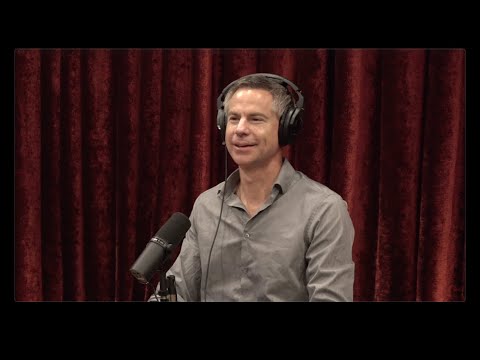
Joe Rogan Experience #2211 - Michael Shellenberger
Narrator, Joe Rogan (host), Michael Shellenberger (guest), Narrator
In this episode of The Joe Rogan Experience, featuring Narrator and Joe Rogan, Joe Rogan Experience #2211 - Michael Shellenberger explores censorship, Deep State Power, Drugs, and UFO Secrets Collide Here Joe Rogan and Michael Shellenberger discuss global censorship, focusing on Brazil’s extreme restrictions on X/Twitter and how governments, intelligence agencies, and NGOs collaborate to control speech under the banner of fighting “misinformation.”
Censorship, Deep State Power, Drugs, and UFO Secrets Collide Here
Joe Rogan and Michael Shellenberger discuss global censorship, focusing on Brazil’s extreme restrictions on X/Twitter and how governments, intelligence agencies, and NGOs collaborate to control speech under the banner of fighting “misinformation.”
They expand this into a broader critique of Western elites: the weaponization of disinformation frameworks, COVID-era narrative control, institutional failures in medicine and academia, and how safety rhetoric often masks power grabs.
The conversation then pivots to drugs and public health—covering opioids, psychedelics, marijuana, and broader questions about freedom versus harm reduction, with Rogan defending maximal adult freedom and Shellenberger pushing for tighter constraints on hard drugs.
In the final stretch, they examine UAP/UFO whistleblowers, alleged secret Pentagon programs, and government disinformation, arguing that regardless of whether UFOs are alien, black projects, or misperceptions, the state’s secrecy and narrative management are the core democratic problem.
Key Takeaways
Modern censorship is coordinated, transnational, and often routed through NGOs and “fact-checkers.”
Shellenberger describes how governments, intelligence-linked firms, and foundations (e. ...
Get the full analysis with uListen AI
The justification for censorship has shifted from national security to vague, elastic categories like “misinformation,” “hate,” and “harm.”
COVID, elections, and migration are cited as core topics where dissent is policed; concepts like “mal-information” (true but inconvenient facts) are used to rationalize suppressing accurate but politically troublesome information.
Get the full analysis with uListen AI
Many legacy institutions now create or worsen the very problems they claim to solve.
Shellenberger’s forthcoming book “Pathocracy” argues that organizations like the American Academy of Pediatrics, public health bodies, and universities often produce iatrogenic harm—e. ...
Get the full analysis with uListen AI
The drug crisis is partly a policy creation, but the remedy pits freedom against paternalism.
They agree the Sacklers and overprescription of opioids fueled the crisis, but diverge on solutions: Rogan argues for broad legalization plus education; Shellenberger supports decriminalized marijuana but wants hard drugs like fentanyl and meth aggressively constrained and linked to mandatory rehab/jail after repeated overdoses.
Get the full analysis with uListen AI
Societal fragility is tied to loss of stoicism, over-pathologizing, and victimhood culture.
They contend that Western societies have replaced messages of self-reliance and “right living” with trauma-centric, protectionist narratives that feed medicalization, dependency, and censorship, while Europe’s more stoic norms help maintain better behavioral boundaries.
Get the full analysis with uListen AI
Free speech must cover unpopular, offensive, and even false views to function.
They stress that defending speech only for views you like isn’t real free speech; historical examples (Nazis in Skokie, socialists under the Sedition Act) and current censorship of credentialed COVID dissenters show how quickly “counter-disinformation” becomes political weaponry.
Get the full analysis with uListen AI
On UAPs, secrecy and disinformation from the state are themselves a central threat, regardless of what the phenomena are.
Shellenberger reports on a whistleblower alleging a secret Pentagon UAP program (“Immaculate Constellation”) and a hidden database of high-quality sensor data, arguing that if the government is running disinformation or hiding crash-retrieval programs from Congress, that’s a serious constitutional and democratic breach.
Get the full analysis with uListen AI
Notable Quotes
“The threat of populism is that it’s popular.”
— Michael Shellenberger
“What Fauci and Hotez and Bill Nye call science is not actually science, because science is a process. When they say 'science,' they really mean 'obey me.'”
— Michael Shellenberger
“If you’re stifling debate, you’re stifling science. You are anti-science if you are anti-debating about science.”
— Joe Rogan
“We have this beautiful philosophy called Stoicism… It’s the most emancipatory, liberating philosophy because it says it’s all about your mentality.”
— Michael Shellenberger
“If we’re not alone, then the reason we don’t know what they are is because of them, not strictly because of the U.S. government.”
— Michael Shellenberger
Questions Answered in This Episode
If governments, intelligence agencies, and NGOs are driving censorship under the banner of fighting misinformation, what concrete mechanisms could realistically rein them in without empowering a new censor?
Joe Rogan and Michael Shellenberger discuss global censorship, focusing on Brazil’s extreme restrictions on X/Twitter and how governments, intelligence agencies, and NGOs collaborate to control speech under the banner of fighting “misinformation.”
Get the full analysis with uListen AI
Where should the line be drawn between protecting public health (e.g., around drugs or vaccines) and preserving maximal adult freedom to take risks, even deadly ones?
They expand this into a broader critique of Western elites: the weaponization of disinformation frameworks, COVID-era narrative control, institutional failures in medicine and academia, and how safety rhetoric often masks power grabs.
Get the full analysis with uListen AI
Are legacy institutions like major medical bodies, universities, and media organizations reformable from within, or does their “pathocratic” behavior demand parallel institutions instead?
The conversation then pivots to drugs and public health—covering opioids, psychedelics, marijuana, and broader questions about freedom versus harm reduction, with Rogan defending maximal adult freedom and Shellenberger pushing for tighter constraints on hard drugs.
Get the full analysis with uListen AI
If robust whistleblower protections and full congressional oversight were implemented on UAP/UFO programs, what kinds of disclosures would be most destabilizing—and are we prepared for that socially and politically?
In the final stretch, they examine UAP/UFO whistleblowers, alleged secret Pentagon programs, and government disinformation, arguing that regardless of whether UFOs are alien, black projects, or misperceptions, the state’s secrecy and narrative management are the core democratic problem.
Get the full analysis with uListen AI
How can societies restore stoic, responsibility-based norms—about speech, health, and personal conduct—without sliding into authoritarian moralism or culture-war overcorrections?
Get the full analysis with uListen AI
Transcript Preview
(drumbeats) Joe Rogan podcast, check it out. The Joe Rogan Experience.
Train by day, Joe Rogan podcast by night, all day. (instrumental music) Mr. Schellenberger, good to see you.
Mr. Rogan, good to see you, man.
How you been, man?
(sighs) Every day, every day is so- (laughs)
You've been neck deep, neck deep in the chaos of the world.
I made it, I made it to Brazil and back, so put it that way.
What was that like?
(inhales deeply) It was intense, man. I mean, it was, uh, it's still going on. Um, we did Twitter Files Brazil.
Right.
And three days later, that was back in March, three days later, Elon just throws down and starts to attack this main Supreme Court justice, who's the guy that's now banned X. So X is banned in Brazil, they're in negotiations, but it was very exciting to be there, because... And the Brazilians were just relieved. They were like, "Everything that we thought was happening is proven by the Twitter Files Brazil." And they were just very grateful to Elon. So it's been this-
What, what did the Twitter Fires Br- I know about the Twitter Files America, I don't know about the Twitter Files in Brazil.
So they, uh, this is like one of the most extreme forms of censorship we've seen in democratic countries. Um, India's been pretty bad too, but this, what they were, uh, the worst of it was that they were-
Pull that sucker up.
Is it too... Okay.
Yeah, sorry, just bringing it up to you.
How's that?
Good, better? Good to go.
This is, the most dramatic part is that they were, the judge, this is a Supreme Court justice who's basically the dictator of Brazil, is, had, was demanding that particular journalists and politicians just be banned, not only from X, but from every other social media platform, which is a tactic that we had seen in earlier censorship files. We had done something on something called the Cyber Threat Intelligence League, uh, with Taibbi, showing this, and it was an early military censorship operation, and they'd had a list of tactics, and one of them was to get people banned on every platform. So you're basically like, just de-personing people, just destroying their career. You can't make a career o- as a journalist or a politician if you're banned from every platform. So that was the, one of the most dramatic parts, all in secret, all, um, you know, open investigations, ongoing, and basically nobody had... there was no checks and balances, there was no chance to argue with it, so that came out and Elon responded like three days later and was like, "Yeah, Brazil's like the worst in the world." And just starts attacking the Supreme Court justice as like Darth Vader and Voldemort and doing what Elon does. Fast-forward to last month and they had a huge protest in Sao Paolo, one of the largest free speech protests in history, which was itself just amazing and inspiring, because, you know, it's, uh, free speech has been something that we didn't really think we had to fight for. So to see like hundreds of thousands of people in the streets of Sao Paolo was amazing. I was there with the former president, he sort of sees me, brings me up, I'm up, up on top of the stage. He's, you know, just, you know, ba- you know, yelling at the crowd, everyone's worked up, you know, he kinda looks over at me and covers the mic and he's like, "It's Schellenberger, right?" You know, he's like, "Michael Schellenberger's up here." And the crowd's just, you know, they knew about the Twitter Files. Afterwards we go down and it's just, you know, it's just a lot of emotion and anger, but also hope. The Brazilian people are, for me it's like one of the most exciting cultures in the world because they're so expressive. The president, like while he's speaking, he's like crying, you know, it's a very like emotionally open culture. So now, I mean, the question for Elon, they're having to do negotiate this, is do you, do you out of principle keep, you know, X banned in Brazil to defend the several dozen people that the government is requiring be banned permanently, but that means that 20 million Brazilians are denied X as a platform, or do you go along with what the government's demanding and hope to fight for another day? And that's what's happening now.
Install uListen to search the full transcript and get AI-powered insights
Get Full TranscriptGet more from every podcast
AI summaries, searchable transcripts, and fact-checking. Free forever.
Add to Chrome