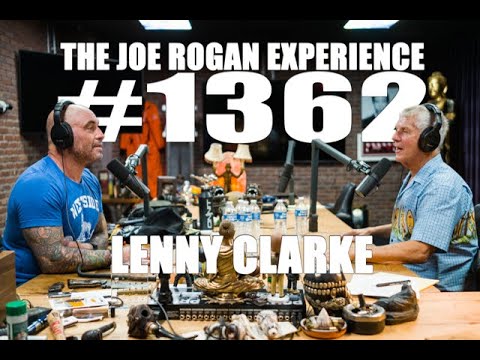
Joe Rogan Experience #1362 - Lenny Clarke
Joe Rogan (host), Lenny Clarke (guest), Narrator, Narrator
In this episode of The Joe Rogan Experience, featuring Joe Rogan and Lenny Clarke, Joe Rogan Experience #1362 - Lenny Clarke explores cocaine, Comedy, and Comebacks: Lenny Clarke’s Wild Ride Uncensored Joe Rogan and veteran comic Lenny Clarke swap stories about the wild, drug-fueled early days of Boston stand-up, from legendary clubs and comics to near-death binges and insane road adventures.
Cocaine, Comedy, and Comebacks: Lenny Clarke’s Wild Ride Uncensored
Joe Rogan and veteran comic Lenny Clarke swap stories about the wild, drug-fueled early days of Boston stand-up, from legendary clubs and comics to near-death binges and insane road adventures.
They explore how fame, bad business deals, and addiction nearly derailed Lenny’s career, and how health scares, weight loss, and sobriety changed his trajectory.
The conversation drifts into modern stand-up challenges—hecklers, political correctness, and joke-crafting—alongside digressions on hunting, guns, sharks, skunks, and bizarre local Boston lore.
Throughout, they circle back to aging, letting go of grudges, focusing bandwidth on what matters, and the strange mix of luck, resilience, and regret that shapes a long life in comedy.
Key Takeaways
Relentless partying in early comedy carried a massive long-term cost.
Lenny describes mountains of cocaine, freebase, and alcohol as normal in the ‘80s scene; he later developed serious heart issues and was nearly 400 pounds, illustrating how lifestyle excess eventually comes due.
Get the full analysis with uListen AI
Hecklers don’t add to the show; they derail creative work.
Despite a reputation for handling hecklers, Lenny stresses he hates them because they break momentum, force mean responses, and can lead to unhinged confrontations that spill into real life.
Get the full analysis with uListen AI
Bandwidth is finite—spending it on grudges and enemies is self-sabotage.
Rogan explains his ‘100 points of bandwidth’ idea: he reserves mental energy for people and pursuits he loves, viewing resentment and obsession with enemies as wasted capacity that harms creativity and success.
Get the full analysis with uListen AI
Political correctness has upsides but also fatigues audiences and comics.
They acknowledge it’s good not to ‘punch down,’ but argue that over-policing language and offense has gone too far and is beginning to cycle back as people get tired of constant constraint.
Get the full analysis with uListen AI
Some jokes require long, painful refinement—or need to be abandoned.
Using examples like Chris Rock’s infamous bit that bombed for a year versus Rogan’s failed “Second Coming” Jesus-cloning bit, they highlight the craft tension between persevering with a tough premise and knowing when to shelve it.
Get the full analysis with uListen AI
Health turnarounds are possible but demand ruthless honesty about habits.
Lenny’s transformation—losing around 200 pounds, quitting soda with the ‘Mad Russian,’ and managing heart damage from cocaine—shows that diet, movement, and tools like CBD can radically shift an older body’s trajectory.
Get the full analysis with uListen AI
Show business success can vanish quickly when business is mishandled.
Lenny’s highly rated CBS sitcom ‘Lenny’ collapsed amid scheduling changes, the Gulf War, and a crooked agent, illustrating how even a hit show can be destroyed by factors outside pure talent.
Get the full analysis with uListen AI
Notable Quotes
“Holding a grudge is like drinking poison and wanting the other person to die.”
— Lenny Clarke (via maxim he’s adopted)
“I have 100 points of bandwidth. I don’t have any points for anybody I don’t care about.”
— Joe Rogan
“I don’t think I’m funny. I’m insane, and I’ve made my money being insane.”
— Lenny Clarke
“People say, ‘You’re so good with hecklers.’ You know why? Because I hate them.”
— Lenny Clarke
“If you and me have a dispute, I’d like you to get over it. I’m not into having enemies for life.”
— Joe Rogan
Questions Answered in This Episode
How much of the Boston comedy mythology—coke payments, nonstop brawling, and chaos—is representative of that era versus selective war stories?
Joe Rogan and veteran comic Lenny Clarke swap stories about the wild, drug-fueled early days of Boston stand-up, from legendary clubs and comics to near-death binges and insane road adventures.
Get the full analysis with uListen AI
What specific business mistakes around Lenny’s sitcom and agent relationship could younger comics learn from and avoid today?
They explore how fame, bad business deals, and addiction nearly derailed Lenny’s career, and how health scares, weight loss, and sobriety changed his trajectory.
Get the full analysis with uListen AI
Where should comedians personally draw the line between acceptable offense and irresponsible ‘punching down’ in their own material?
The conversation drifts into modern stand-up challenges—hecklers, political correctness, and joke-crafting—alongside digressions on hunting, guns, sharks, skunks, and bizarre local Boston lore.
Get the full analysis with uListen AI
How do you decide whether a controversial bit should be relentlessly reworked, like Chris Rock did, versus abandoned as Rogan did with his ‘Second Coming’ joke?
Throughout, they circle back to aging, letting go of grudges, focusing bandwidth on what matters, and the strange mix of luck, resilience, and regret that shapes a long life in comedy.
Get the full analysis with uListen AI
In what ways did surviving addiction, health crises, and career collapses actually improve Lenny’s comedy and perspective on stage?
Get the full analysis with uListen AI
Transcript Preview
(singing) Lenny Clarke!
That's right.
How are you, brother?
Now, y- Joe, I got to tell you. Let me start by saying thank you.
My pleasure.
I, I, I can't believe the amount of people that stopped me since I did your podcast. Because you asked me a couple of years ago. I didn't even know what a podcast was. So I did that from the moment I left here, I went down to Venice Beach, guys were watching the podcast in their car.
(laughs)
They came out, "Yeah," so I, so then everywhere I go from captains of industry to the homeless guy the other day at Harvard Square. He goes, "Lenny Clarke! I saw you on the Rogan podcast. You were awesome!" And I'm going, "Yo-"
Homeless guys have phones now.
... a home- a homeless guy and I'm going, "How did you see it?" He goes, "Oh, I seen it. Seen it on the YouTube." And I'm going- (laughs)
(laughs)
... yeah.
That's how you know the progress of technology. Homeless guys have phones and they watch YouTube.
Oh, oh, oh, so I'm doing Matty Ziegler, he's trying to rush me out of the studio the other day. And I said, "Well, you know, I'm, I'm, I'm not gonna mention you on Rogan." He goes, "Oh my God!" He goes, "You, you talked about me on Rogan. Everyone called in." He was all excited, so he said to say hello.
Hello, Matty Ziegler.
He said, he said-
Matty in the Morning on, in, in Boston.
Yeah, yeah, yeah.
He, ever since back in the day when I was, uh, delivering newspapers, Matty in the Morning was on the radio.
Yeah.
I used to listen to him on the radio when I was on my paper route. Him and Charles Laquidara.
Oh!
The, the mattress, Morning Mattress.
The Morning Mattress, yeah, yeah.
(laughs)
And then, and then Mark Parenteau.
Yeah.
Who, who-
Did Mark pass away?
Yes, he did, and I went to see him a week before. He was at the Mass General and I went up to him and he, you know, I had him laughing. And then I said, "Do you have the AIDS?" He goes, "No." So I said, "I'll kiss you goodbye." (laughs)
(laughs)
He goes, he go, "You, you want to kiss me off AIDS?" I said, "Well, I love you, man, but I'm not here for the trip with you," you know?
(laughs)
Uh, he, he was so, he did the Five A- After Five Funnies.
Yeah.
And blew up comedy. I mean, every time I did that show-
A lot of comics owe him a lot.
... which, oh, oh, I owe them a... He was a great, great guy. Yeah.
And then they also had the Comedy Riot. The WBC and Comedy Riot.
Install uListen to search the full transcript and get AI-powered insights
Get Full TranscriptGet more from every podcast
AI summaries, searchable transcripts, and fact-checking. Free forever.
Add to Chrome