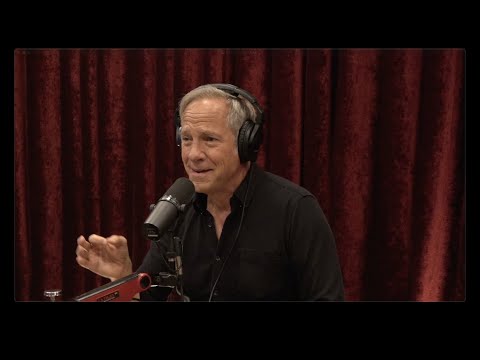
Joe Rogan Experience #2235 - Mike Rowe
Mike Rowe (guest), Narrator, Joe Rogan (host), Narrator
In this episode of The Joe Rogan Experience, featuring Mike Rowe and Narrator, Joe Rogan Experience #2235 - Mike Rowe explores mike Rowe, Dirty Jobs, and America’s Obsession With Safety, Work, Truth Joe Rogan and Mike Rowe range across topics from strange biology and risk psychology to the cult of college, the dignity of trades, and how media has lost authenticity. They dig into Rowe’s winding career path through opera, QVC, and Dirty Jobs, showing how deliberate ‘unprofessionalism’ and curiosity built trust with viewers. The conversation also critiques modern safety culture, overproduced media, and elite credentialism, arguing that real value lies in uncomfortable, hands-on work and unpolished truth. Throughout, they tie personal stories to broader cultural shifts in work, fitness, media trust, and how Americans now learn what’s real.
Mike Rowe, Dirty Jobs, and America’s Obsession With Safety, Work, Truth
Joe Rogan and Mike Rowe range across topics from strange biology and risk psychology to the cult of college, the dignity of trades, and how media has lost authenticity. They dig into Rowe’s winding career path through opera, QVC, and Dirty Jobs, showing how deliberate ‘unprofessionalism’ and curiosity built trust with viewers. The conversation also critiques modern safety culture, overproduced media, and elite credentialism, arguing that real value lies in uncomfortable, hands-on work and unpolished truth. Throughout, they tie personal stories to broader cultural shifts in work, fitness, media trust, and how Americans now learn what’s real.
Key Takeaways
Safety measures can backfire by encouraging riskier behavior.
Rowe describes ‘homeostatic risk’ and Berlin taxi studies where better brakes led drivers to take more chances; he argues that overemphasizing external safety (gear, rules, officers) can create complacency and more accidents, inspiring his ‘Safety Third’ philosophy: personal responsibility stays primary.
Get the full analysis with uListen AI
Authenticity in media often requires embracing imperfection and showing the seams.
From QVC cat sacks to Dirty Jobs’ ‘truth cam’ and Bourdain exposing fake spearfishing, both Rowe and Rogan argue that audiences increasingly distrust polished, teleprompter-driven presentation; raw, unscripted moments now build more credibility than traditional ‘expert’ formats.
Get the full analysis with uListen AI
Curiosity plus opportunism can create unconventional but powerful careers.
Rowe leveraged barbershop singing, a faked opera audition, unscripted QVC riffing, and a disastrous sewer segment into Dirty Jobs, showing how saying yes to odd opportunities—and reframing himself from ‘host’ to ‘guest/apprentice’—opened doors in ways traditional career planning wouldn’t.
Get the full analysis with uListen AI
The cultural devaluation of trades has created both labor shortages and missed opportunities.
They argue that ‘higher ed’ marketing stigmatized vocational work as second-class, despite trades offering high incomes, entrepreneurship, and concrete impact; Rowe’s mikeroweWORKS scholarship program tries to reverse this narrative by funding skills training without four-year degrees.
Get the full analysis with uListen AI
Voluntary discomfort is a critical muscle for resilience and mental health.
Rogan cites cold plunges, hard training, and martial arts; Rowe talks about rucking and misogi-style challenges—both frame deliberate hardship as exercise for the brain’s ‘difficulty’ circuits, making everyday stressors easier to handle and counteracting modern comfort-induced fragility.
Get the full analysis with uListen AI
The trust collapse in legacy media is driving people to decentralized, community-checked sources.
Rogan highlights X (Twitter) community notes and Substack as new arbiters of truth, contrasting them with fact-checks and narrative enforcement by traditional outlets; both suggest audiences now prefer many informed voices cross-checking claims over a single credentialed ‘authority.’
Get the full analysis with uListen AI
Storytelling about real work quietly reshapes how a culture sees value and status.
Dirty Jobs, This Old House, Bourdain’s shows, and even Rowe’s upcoming auction of a custom Power Wagon all reframe welders, sewer inspectors, chefs, and fabricators as artists and essential contributors, subtly challenging status hierarchies that favor white-collar and scripted ‘heroes.’
Get the full analysis with uListen AI
Notable Quotes
““We were in compliance, but we were not out of danger.””
— Mike Rowe (on safety protocols and complacency on Dirty Jobs)
““You don’t have to be outrageous to stand out. You just have to be relatively outrageous.””
— Mike Rowe (on how he differentiated himself on QVC)
““Production is, by definition, the enemy of authenticity.””
— Mike Rowe (on overproduced non-fiction TV and news)
““If you didn’t go to a school and get a degree, you must be a dumb person. It’s weird—and it’s not smart.””
— Joe Rogan (on stigma against trades and non-college paths)
““Whatever it is you love, you must be willing to give it away for a time at least.””
— Mike Rowe (on doing UFC work and Dirty Jobs-type projects without chasing money first)
Questions Answered in This Episode
How much should institutions and employers lean into ‘Safety Third’ without encouraging negligence or liability risks?
Joe Rogan and Mike Rowe range across topics from strange biology and risk psychology to the cult of college, the dignity of trades, and how media has lost authenticity. ...
Get the full analysis with uListen AI
What concrete steps could schools and parents take to put trades and four-year colleges on genuinely equal cultural footing?
Get the full analysis with uListen AI
Where is the line between useful production (editing, structure) and authenticity-destroying overproduction in documentaries and news?
Get the full analysis with uListen AI
How can individuals design their own ‘misogi’ or voluntary discomfort practices in a way that’s sustainable rather than performative?
Get the full analysis with uListen AI
Given the rise of X, community notes, and podcasts, what role—if any—should legacy media play in future information ecosystems?
Get the full analysis with uListen AI
Transcript Preview
(drumming music) Joe Rogan podcast, check it out.
The Joe Rogan Experience.
Train by day, Joe Rogan podcast by night, all day. (rock music) We got cigars. We got coffee. We got Mike Rowe.
Cigars.
We got Carl, Carl's over there snoring. (laughs) So what were you doing on QVC? What were you selling?
That was the greatest line from Blazing Saddles, by the way, when Gene Hackman-
Which line?
He says, "Cigars?" Remember? Peter Boyle is coming... He had just left and Gene Hackman is there after getting the soup spilled in his lap and he's basically saying, "I had cigars," as the creature stomps off in Frankenstein.
I don't remember that.
Hmm. Tiny little moment.
It's been too long since I've seen that movie.
Best, uh...
He's a little bit of a fucking distraction. Can he, uh, calm down?
I don't hear him on the audio.
Trank him.
I don't hear him at all.
Oh, we hear him-
Geez.
... because we don't have our headphones on. Maybe we should put our headphones on.
I thought you were talking about me.
No, Carl.
For an awful moment-
He's-
... I'm like, "God."
We wore him out. Jamie was throwing the toy for Carl and now he's like (imitates Carl's snorting) .
He's such a great dog. He's got, I mean...
He's adorable.
I mean, it's such a personality thing at that... For me, with dogs and pets in general, you know? Like you know right away if this thing has a personality.
Oh, he's got a lot of... Carl's got a lot of personality.
Yeah.
There's no doubt about that.
Yeah, and, and-
He's like a little kid.
And a person name, which I think is super interesting. Mine's Freddy. He's a terrier, but I love him.
I like a dog with a person name.
Yeah, me too.
Like Fido. What the fuck is a Fido?
No one knows.
Unless... Well, actually, oh no, that's Philo. I was thinking of Clint Eastwood in Every Which Way But Loose. He was Philo Beddoe.
Could also be Philo Farnsworth-
Mm, who's that?
... who created the television.
For real?
Yeah.
Did only one guy do it or was it one of those, like, light bulb type deals where, like, a bunch of people are scrambling for it and...
What do they call that?
Thomas Edison kind of...
Like a, like a hive mentality.
Hmm. Yeah.
Right?
Right, right.
Like that happened with the integrated circuit.
Mm-hmm.
Right? When, uh, Kilby at Radio Shack was doing the same basic work, I think, that Robert Noyce was doing for Intel.
Mm-hmm.
And one was here in Texas and the other was in California. And they had never met, and they had never compared notes, but the work on the circuitry was so close that they wound up sharing the Nobel Prize.
Install uListen to search the full transcript and get AI-powered insights
Get Full TranscriptGet more from every podcast
AI summaries, searchable transcripts, and fact-checking. Free forever.
Add to Chrome