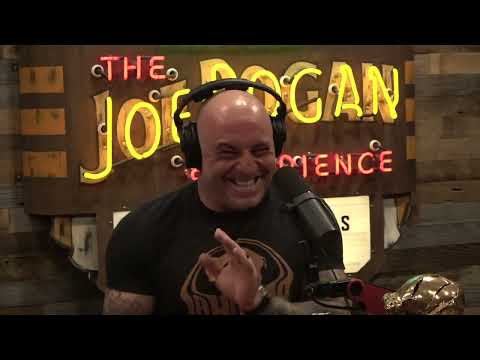
Joe Rogan Experience #1909 - Stavros Halkias
Narrator, Joe Rogan (host), Stavros Halkias (guest), Narrator, Narrator, Narrator, Narrator, Narrator, Narrator, Narrator
In this episode of The Joe Rogan Experience, featuring Narrator and Joe Rogan, Joe Rogan Experience #1909 - Stavros Halkias explores stavros Halkias, social media addiction, sex, fighting, and history collide Joe Rogan and comedian Stavros Halkias have a long, free‑wheeling conversation that jumps from fame, podcasting, and social media addiction to sex, relationships, porn, and body image. They dig into TikTok algorithms, fetishes, muscular women, and elaborate sexual fantasies in a deliberately over‑the‑top, comedic way.
Stavros Halkias, social media addiction, sex, fighting, and history collide
Joe Rogan and comedian Stavros Halkias have a long, free‑wheeling conversation that jumps from fame, podcasting, and social media addiction to sex, relationships, porn, and body image. They dig into TikTok algorithms, fetishes, muscular women, and elaborate sexual fantasies in a deliberately over‑the‑top, comedic way.
The discussion also covers combat sports, warrior culture, and the psychology of greatness, with detours into Mike Tyson, BJ Penn, Achilles versus a long life, and how sports function as controlled war. They move into darker territory with Catholic Church abuse scandals, institutional hypocrisy, and how long‑standing institutions normalize the unacceptable.
Later, they talk about history (Greek mythology, medieval peasants, eunuchs), modern religion, cults, and the Vatican, before swinging back to college debt, Ivy League endowments, tech, military tech, and geopolitical fears about China.
The episode closes on comedy itself: the grind of touring, health and weight loss, podcasting as an extension of stand‑up, and how modern comics build careers through YouTube, podcasts, and social media while trying to stay sane and healthy.
Key Takeaways
Social media is engineered to hijack attention and amplify division.
They describe how platforms like TikTok and Twitter precisely learn users’ desires—whether weight‑loss content or niche fetishes—and keep people hooked while also feeding conflict and cynicism toward institutions and news media.
Get the full analysis with uListen AI
Stepping away from phones and social media dramatically improves mental and physical health.
Stavros recounts a summer in Baltimore where he lost weight, ate well, worked out, and felt great while barely using his phone—only to relapse into constant scrolling as soon as he returned to New York, underscoring how hard it is to maintain boundaries.
Get the full analysis with uListen AI
Greatness in combat and sports often clashes with a healthy, balanced life.
Through examples like Mike Tyson and BJ Penn, they explore how “all‑in” obsession can create legendary moments but also destroy personal lives, and compare it to Achilles’ choice between brief fame and long obscurity versus a stable, quieter existence.
Get the full analysis with uListen AI
Sports and competitions function as socially acceptable outlets for primal urges for war and dominance.
Rogan frames combat sports, football, and events like the World Cup as ritualized, rule‑bound forms of intergroup competition that let people channel violent, tribal impulses into symbolic victories instead of actual warfare.
Get the full analysis with uListen AI
Long‑standing institutions can normalize systemic abuse when reputation matters more than accountability.
Their deep dive into Catholic priest scandals shows how large organizations prioritized avoiding “embarrassment” over protecting children, moving abusive clergy around and framing it as a PR problem rather than a moral emergency.
Get the full analysis with uListen AI
Elite universities often operate more like financial machines than educational charities.
Citing Malcolm Gladwell via Sagar Enjeti, they note that Princeton’s endowment returns alone could cover the entire operating budget, implying that extraordinarily high tuition is not strictly necessary but persists as part of a prestige‑and‑profit system.
Get the full analysis with uListen AI
Modern comedians must be multi‑platform creators to build and sustain careers.
Stavros explains how YouTube, podcasting, and social clips transformed his touring business more than traditional TV ever could, and how podcasts both connect with fans and sharpen a comic’s voice—while also adding to workload and burnout risk.
Get the full analysis with uListen AI
Notable Quotes
“You don't know what you like until you see it. The algorithm tells you.”
— Stavros Halkias
“Combat sports are a way to light up that same instinct to conquer, but in an agreed‑upon manner instead of war.”
— Joe Rogan
“If you say Catholic priest, people think abuse. A couple of them are putting up some real numbers.”
— Stavros Halkias
“Imagine if every time you got your house built your kids got fucked—we’d abolish carpenters. But we just accept it with the church.”
— Joe Rogan
“This is probably the last generation with air conditioning, so I’m gonna crank it.”
— Stavros Halkias
Questions Answered in This Episode
How much responsibility do individuals versus platforms bear for managing social media addiction and algorithmic manipulation?
Joe Rogan and comedian Stavros Halkias have a long, free‑wheeling conversation that jumps from fame, podcasting, and social media addiction to sex, relationships, porn, and body image. ...
Get the full analysis with uListen AI
Can someone achieve Tyson‑ or Achilles‑level greatness without sacrificing mental health and personal life, or are those trade‑offs unavoidable?
The discussion also covers combat sports, warrior culture, and the psychology of greatness, with detours into Mike Tyson, BJ Penn, Achilles versus a long life, and how sports function as controlled war. ...
Get the full analysis with uListen AI
What structural changes would be required for institutions like the Catholic Church or Ivy League universities to prioritize ethics over reputation and profit?
Later, they talk about history (Greek mythology, medieval peasants, eunuchs), modern religion, cults, and the Vatican, before swinging back to college debt, Ivy League endowments, tech, military tech, and geopolitical fears about China.
Get the full analysis with uListen AI
In a world with podcasts, YouTube, and direct fan support, what is the real value of traditional fame and legacy media exposure for comedians?
The episode closes on comedy itself: the grind of touring, health and weight loss, podcasting as an extension of stand‑up, and how modern comics build careers through YouTube, podcasts, and social media while trying to stay sane and healthy.
Get the full analysis with uListen AI
How should comedians and audiences navigate the line between exploring taboo subjects for humor and reinforcing harmful norms or desensitization?
Get the full analysis with uListen AI
Transcript Preview
(drumming music) Joe Rogan podcast, check it out. The Joe Rogan Experience.
Train by day, Joe Rogan podcast by night, all day. (rock music) It's kind of a weird thing that we're here, in Austin, you know?
Yeah.
It's weird here.
Yeah, 'cause LA it's like famous people are everywhere.
They're everywhere.
They know how to act. People know how to act. Here, it's just starting a little bit.
This is like Matthew McConaughey-
(laughs) Yeah.
Elon, but Elon never goes anywhere.
Yeah.
'Cause he's always working on five different companies.
Right. Who else? Who else is in Austin?
Uh, Zach Levy, but he's, uh, he lives out, a little bit further out in the country.
Yeah, just McConaughey.
Dawson moved here, James Van Der Beek.
Ooh.
Oh.
There you go.
That's right, he's here.
(laughs)
And then the other, uh, there's a few guys.
Well, it's also I think-
Sandra Bullock.
... podcast fame-
Sandra Bullock, but she's never here either. She's always working.
Yeah. 'Cause I think podcast fame and internet fame, it's like people... You're much more approachable too.
Yeah.
You know? 'Cause it's like you're in their ears, they-
Well, they 100% know you.
100% know you.
Yeah.
They know all, the most embarrassing stories you told-
Yeah.
... seven years ago when you were like, "Podcasting isn't gonna catch on."
(laughs)
And you talked about, you know, things you put in your ass and-
(laughs)
... in middle school. They're like, "Oh, da, da."
Bro, 12 years ago for me.
Yeah (laughs) . Yeah, yeah.
Yeah. We started off with a fucking laptop-
Yeah.
... using a webcam.
(laughs)
High as fuck and we-
Just recording directly to the, the webcam, like the laptop audio?
Yes.
(laughs)
Well, we had like some sort of a USB microphone-
Yeah, yeah.
... but we also did like everything completely obliterated. We were, uh-
Right (laughs) .
... doing volcano bits.
Oh, dude. The volcano. That's a beautiful thing.
You didn't know what you were saying, and why you were saying it.
Yeah.
Like while you were saying it, you're like, "What am I saying?"
Of course. Well, no one's gonna listen.
Yeah.
Who gives a fuck?
Well, they-
I'm just having fun and then they did.
Back then it was like, uh, you know, a good episode would have like 2,000 people.
(laughs) Right.
For real.
Now, a tweet that gets 2,000, I'm like, "Bombed."
I know. "What happened?"
You know? Yeah, yeah, yeah.
"What went wrong?"
(laughs)
Yeah, it's, it's fucking fascinating to see the difference in tweets now.
Install uListen to search the full transcript and get AI-powered insights
Get Full TranscriptGet more from every podcast
AI summaries, searchable transcripts, and fact-checking. Free forever.
Add to Chrome