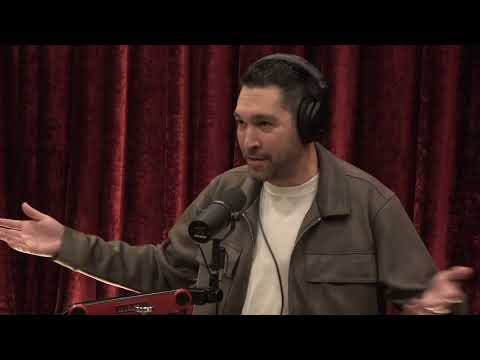
Joe Rogan Experience #2067 - Dave Smith
Narrator, Narrator, Joe Rogan (host), Dave Smith (guest), Joe Rogan (host), Joe Rogan (host), Narrator, Joe Rogan (host), Joe Rogan (host), Joe Rogan (host)
In this episode of The Joe Rogan Experience, featuring Narrator and Narrator, Joe Rogan Experience #2067 - Dave Smith explores dave Smith Dissects Israel, Ukraine, Propaganda, and America’s War Machine Dave Smith joins Joe Rogan for a long-form breakdown of the Israel-Palestine conflict, tracing its roots from early Zionism and British imperial maneuvering through the 1948 and 1967 wars to today’s Gaza war and October 7th. He argues that Western narratives omit crucial history about displacement, occupation, and U.S.–Israeli policies (including Netanyahu’s past support for Hamas) that shaped the current crisis.
Dave Smith Dissects Israel, Ukraine, Propaganda, and America’s War Machine
Dave Smith joins Joe Rogan for a long-form breakdown of the Israel-Palestine conflict, tracing its roots from early Zionism and British imperial maneuvering through the 1948 and 1967 wars to today’s Gaza war and October 7th. He argues that Western narratives omit crucial history about displacement, occupation, and U.S.–Israeli policies (including Netanyahu’s past support for Hamas) that shaped the current crisis.
They parallel this with the Ukraine war, contending that U.S. and NATO policies helped provoke and prolong the conflict, and that war propaganda and binary thinking have again overridden nuance and diplomacy. Smith repeatedly stresses the human cost of war, the cycle of revenge, and how “terrorism” often aims to provoke an overreaction that becomes its best recruiting tool.
Beyond geopolitics, they dive into U.S. domestic issues: the power of the federal government, central banking and inflation, financial corruption, COVID-era propaganda, Big Pharma, mass shootings and psychiatric meds, gun control, and the erosion of civil liberties. Throughout, Smith champions a libertarian lens: oppose aggressive war, question state narratives, and judge policies by whether they involve caging peaceful people.
They close by reflecting on the rise of alternative media, arguing that podcasts and independent outlets now challenge legacy corporate media’s monopoly on information and propaganda, creating a unique opportunity to push back against establishment-driven wars and authoritarian overreach.
Key Takeaways
You can’t understand Israel-Gaza without the history of displacement and occupation.
Smith argues that omitting the Nakba (750,000 Palestinians displaced in 1947–48), Israel’s territorial gains in 1948 and 1967, and decades of military control over West Bank and Gaza makes any discussion of October 7th and Hamas intellectually dishonest and propagandistic.
Get the full analysis with uListen AI
Netanyahu’s long-term strategy helped empower Hamas to block a Palestinian state.
He cites Israeli and antiwar sources noting Netanyahu explicitly favored supporting Hamas over more moderate Palestinian factions so the West would never accept them as a negotiating partner, a policy that backfired catastrophically on October 7th.
Get the full analysis with uListen AI
Collective punishment breeds more extremism and perpetuates cycles of terror.
They emphasize that bombing civilians and flattening Gaza in response to Hamas attacks will create more future militants, just as U. ...
Get the full analysis with uListen AI
U.S. policy helped set the stage for the Ukraine war and prolonged its bloodshed.
Smith maintains that NATO expansion, the 2014 coup, and U. ...
Get the full analysis with uListen AI
War propaganda depends on binary morality and erasing context.
They argue that framing conflicts as pure good vs. ...
Get the full analysis with uListen AI
Government power, central banking, and crony capitalism quietly extract wealth.
Smith criticizes fiat money, the Federal Reserve, bailouts, and the Washington–Wall Street–military complex as mechanisms that devalue savings, socialize losses, enrich connected elites, and fuel both foreign wars and the domestic carceral state.
Get the full analysis with uListen AI
Alternative media now rival or surpass legacy outlets in shaping opinion.
They note that major podcasts and independent shows can reach larger audiences than cable news, enabling counter-narratives on war, COVID, and civil liberties—but also provoking state and corporate efforts to regulate speech and deplatform dissenters.
Get the full analysis with uListen AI
Notable Quotes
“War makes people so stupid; they talk like it’s pure good guys versus pure bad guys, like a seven-year-old boy playing with action figures.”
— Dave Smith
“If you’re going to ignore that Israel’s creation involved kicking 750,000 Palestinians out of their homes, you’re not really having a conversation about what’s going on.”
— Dave Smith
“Terrorism is almost always about trying to provoke a reaction.”
— Dave Smith
“The real question with laws shouldn’t be, ‘Do you like this behavior?’ It should be, ‘Are you willing to throw a human being in a cage for it?’”
— Dave Smith
“They used to be the mainstream and you were the alternative; now that doesn’t make any sense anymore.”
— Dave Smith
Questions Answered in This Episode
How would U.S. public opinion change if the full historical context of Israel-Palestine and Ukraine was presented as clearly and critically as Smith attempts to do here?
Dave Smith joins Joe Rogan for a long-form breakdown of the Israel-Palestine conflict, tracing its roots from early Zionism and British imperial maneuvering through the 1948 and 1967 wars to today’s Gaza war and October 7th. ...
Get the full analysis with uListen AI
Is a two‑state solution still realistically achievable after decades of settlement expansion, violence, and mutual distrust—and if so, what would a credible path to 1967‑based borders actually look like?
They parallel this with the Ukraine war, contending that U. ...
Get the full analysis with uListen AI
At what point does supporting an ally’s military response (Israel or Ukraine) become complicity in unnecessary civilian deaths, and how should voters draw that line in a democracy?
Beyond geopolitics, they dive into U. ...
Get the full analysis with uListen AI
Given the incentives of central banking, defense contracting, and corporate media, what concrete reforms—if any—could realistically reduce America’s propensity for foreign wars?
They close by reflecting on the rise of alternative media, arguing that podcasts and independent outlets now challenge legacy corporate media’s monopoly on information and propaganda, creating a unique opportunity to push back against establishment-driven wars and authoritarian overreach.
Get the full analysis with uListen AI
How should we balance free speech, open platforms, and the need to combat genuinely dangerous propaganda when alternative media can both expose and amplify extreme narratives?
Get the full analysis with uListen AI
Transcript Preview
(drumbeats) Joe Rogan podcast, check it out.
The Joe Rogan Experience. (drumbeats)
Train by day, Joe Rogan podcast by night. All day. (rock music)
Hello, Dave Smith.
Hello, Joe Rogan.
Good to see you, my friend.
You too. Always good to be here.
(laughs) You have an air of seriousness about you, like you pre- prepared yourself for this conversation.
(laughs)
We've been fucking around all night last night.
(laughs)
Having a good time.
Now I have to transition.
Now, you, you, like, you, there was an immediate shift. I can see, you're like...
(sighs) All right.
Here it is.
Well, you know.
There's a lot of shit going on.
Well, we got a, a brand-new war to end, so, uh...
Yeah.
It's, you know, gotta be a... So, what, uh, when, when I first started coming on your podcast, what was, I, I just measure it in how many wars ago that was? Like then, what was that? How many wars ago was that?
We were still in Afghanistan back then.
Uh-huh.
So we did get out of one.
We did get out of one.
Sorta.
We did it in flawless fashion. Um, but, uh, that's, uh... But yeah, no, that is true, we did end one. And then I think we took, like, a two-week break before we, uh, got into Ukraine. And then, uh... (exhales) And now, now there's thi- this one is pretty serious. And, uh, the, there's a, a big possibility of, like, a wider war, uh, being started. So, pretty bad. Not great.
No. Not great. It scares the shit out of me. I've brought it up many times, but when, when I really get, uh, anxiety is, like, late at night when I'm alone and I think about the world like that, at any moment, it could just go haywire. Like, think about October 7th, right? It happens out of nowhere. M- in one, one day, everything changes, right? That can happen anywhere. That can happen right here. And people thinking that it can't, and then, people that are just not even inquisitive about anything that interferes with their narrative, not even thinking, "Okay, what, what is the big picture here? What is actually going on? I know this side says one thing, and the other side says another thing. So, someone's gotta be wrong. So what is happening? Either Israel is evil, or Hamas is totally evil." You can't be, "There's a lot going on," right?
For sure.
"There's a lot going on."
Yeah.
But, but this binary thinking that everybody has in our culture today, where people, we automatically subscribe to whatever one side thinks. Like if you're on the right, you automatically subscribe to whatever the right-wing people think. And if you're on the left, you automatically subscribe to whatever the left-wing people... Which wars are we supporting? And they're different, different sides are-
Install uListen to search the full transcript and get AI-powered insights
Get Full TranscriptGet more from every podcast
AI summaries, searchable transcripts, and fact-checking. Free forever.
Add to Chrome