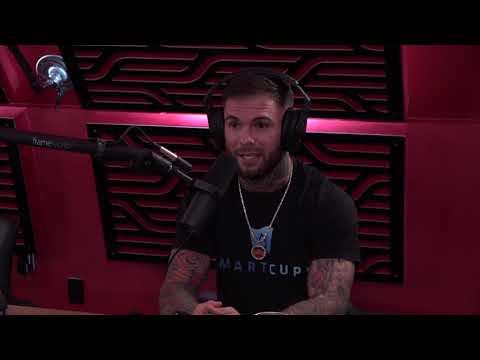
JRE MMA Show #100 with Cody Garbrandt
Joe Rogan (host), Cody Garbrandt (guest), Narrator, Narrator, Narrator, Narrator
In this episode of The Joe Rogan Experience, featuring Joe Rogan and Cody Garbrandt, JRE MMA Show #100 with Cody Garbrandt explores cody Garbrandt Details Comeback, Health Ordeal, And Evolving Fight IQ Cody Garbrandt joins Joe Rogan to walk through his journey from UFC bantamweight champion, through a three-fight skid, to his dramatic knockout comeback against Raphael Assunção.
Cody Garbrandt Details Comeback, Health Ordeal, And Evolving Fight IQ
Cody Garbrandt joins Joe Rogan to walk through his journey from UFC bantamweight champion, through a three-fight skid, to his dramatic knockout comeback against Raphael Assunção.
He explains how changing coaches, emphasizing defense, visualization, and smarter training transformed his mindset and style, shifting him from an angry brawler to a more calculated, defensively sound striker.
Garbrandt also reveals a brutal year of health crises—severe kidney infection, long-haul COVID, blood clots, vertigo—and how he trained and fought through extensive antibiotics and physical compromise.
They close by discussing future matchups at 135 and 125 pounds, the evolution of MMA tactics like calf kicks and stance switching, and Cody’s plans for the next five years of his career.
Key Takeaways
Defense must be prioritized as much as offense to extend a fighter’s career.
Working with Mark Henry shifted Cody’s focus to head movement, hand position, and exiting safely after combinations, with the explicit goal of getting him home to his family healthy instead of relying only on power and speed.
Get the full analysis with uListen AI
Training in bad positions builds real fight confidence and composure.
Cody and Chris Holdsworth regularly start rounds in terrible grappling positions or when completely exhausted, mirroring Danaher’s philosophy, so that discomfort in fights feels familiar rather than panicky.
Get the full analysis with uListen AI
Overhauling mindset—visualization, clear goals, and purpose—can reverse a slump.
He returned to writing specific goals (3 months to 5 years) and visualizing success like he did as a kid wrestler; tying his “why” to his son and future family gave him renewed drive after losing passion as champion.
Get the full analysis with uListen AI
Overtraining while sick can turn manageable illness into a career-threatening crisis.
Garbrandt pushed through a hidden staph/cellulitis infection, then COVID, while in hard camp; combined with months of heavy antibiotics, this led to kidney failure, pneumonia, vertigo, and blood clots that sidelined him for months.
Get the full analysis with uListen AI
Smart sparring and objective recovery data reduce unnecessary brain and body damage.
He moved away from hard wars in the gym, uses more technical/light sparring and pad work, and relies on tools like the WHOOP strap and regular blood panels to manage load and avoid overtraining.
Get the full analysis with uListen AI
Stepping out of your comfort zone can reignite growth and hunger.
Leaving Sacramento to train in cold New Jersey with unfamiliar partners, and subjecting himself to Mark Henry’s demanding, code-based camps, forced Cody to evolve rather than rely on raw speed and power.
Get the full analysis with uListen AI
Modern MMA success increasingly demands stance switching, calf kicks, and layered tactics.
They discuss calf kicks destroying opponents’ mobility, effective use of both stances, feint patterns, and boxing concepts adapted to MMA (like inside shots and stance-switch finishing) as the sport’s next tactical level.
Get the full analysis with uListen AI
Notable Quotes
““My coach’s job is to get me back to my family safe.””
— Cody Garbrandt (on Mark Henry’s philosophy)
““The internet is a horrible place to get knocked out on.””
— Cody Garbrandt
““Sometimes my speed is a blessing and a curse.””
— Cody Garbrandt
““If I hit him as many times as Moreno hit him, he’s gonna be face down, ass up.””
— Cody Garbrandt (on Deiveson Figueiredo)
““Fatigue makes cowards of men… I knew what a coward was, I didn’t know what fatigue was—but I wasn’t gonna be tired.””
— Cody Garbrandt
Questions Answered in This Episode
How much of Cody’s resurgence is technical versus purely mental, and could similar mindset shifts rescue other slumping fighters?
Cody Garbrandt joins Joe Rogan to walk through his journey from UFC bantamweight champion, through a three-fight skid, to his dramatic knockout comeback against Raphael Assunção.
Get the full analysis with uListen AI
What safeguards should fighters and camps put in place to prevent training through serious infections or illnesses like Cody did?
He explains how changing coaches, emphasizing defense, visualization, and smarter training transformed his mindset and style, shifting him from an angry brawler to a more calculated, defensively sound striker.
Get the full analysis with uListen AI
How will the rise of calf kicks and stance switching reshape which archetypes succeed in future MMA championship fights?
Garbrandt also reveals a brutal year of health crises—severe kidney infection, long-haul COVID, blood clots, vertigo—and how he trained and fought through extensive antibiotics and physical compromise.
Get the full analysis with uListen AI
Given Cody’s experience, should organizations rethink bonus structures and fighter pay so athletes don’t feel pressured to fight while compromised?
They close by discussing future matchups at 135 and 125 pounds, the evolution of MMA tactics like calf kicks and stance switching, and Cody’s plans for the next five years of his career.
Get the full analysis with uListen AI
What does Cody’s story reveal about the long-term risks of traditional hard sparring, and is the Max Holloway no-sparring model the future for elite strikers?
Get the full analysis with uListen AI
Transcript Preview
(drumming music plays) Joe Rogan podcast. Check it out. The Joe Rogan Experience. Train by day, Joe Rogan podcast by night. All day. (rock music plays) Hello, Cody.
What's going on, bro?
Good to see you, brother. What's happening, man?
You too. Enjoying Austin.
Yeah. So you're coming here?
Possibly.
Are you letting ... Do people know? About-
Not yet.
Did I blow the ... ?
Not yet, but I'll let 'em know. They're gonna know now.
(laughs)
I think so. I mean, it's probably the, you know, move we spoke about earlier.
Yeah.
But, uh, I've always loved Texas, like we spoke earlier. I, I got signed here to the UFC. Was on it for so many years. Came out here during fight, fight camps for a week, and kinda just unplugged but focused on training and had a good time out here. It was always, always a pleasure.
Yeah, it's a beautiful place. Uh, I'm enjoying the shit out of it. Dude, first of all, congratulations on your comeback. Uh, that ... (sighs) You know, you're a great guy, and when there's someone I like who loses a bunch of fights in a row, and you get into this skid, it's ha- it's hard to watch. I can't imagine what it was like being you.
Mm-hmm.
You know, to have a, a young child and to be dealing with all of this going o- ... I mean, it's like y- ... Losing your to- ... But then to come back the way you did, against a really fucking tough guy in Assuncao and get, arguably, the KO of the year. I mean, you gotta be feeling pretty fucking good.
I feel great, you know? Um-
Back from the brink.
Back from the brinks. I mean, that time in my life, that timeframe and period and, and going through that f- ... You know, from on top of the world, world champion, uh, to three-fight skid, honestly it feels like a, a lifetime ago. I feel like I'm just a different person, um, where I, where I was at from there. You know, removed, and the things I'm just doing differently, thinking differently, you know, how I was able to approach the game, picking myself back up time and time again. I mean, (laughs) it's ... Internet is a horrible place to get, get knocked out on, you know? Especially-
The internet's fucked. (laughs)
You got the trolls, this and that, you know? It's-
Yeah.
But besides that point, you know, um, just coming back to that and having a love for it. A lot of the times I got to the fight and, um, not to make excuses, I was just ... I didn't feel myself. I didn't feel like, um ... In the training and leading up, I felt physically I'm always ready to fight. Like flip the switch, I'm always physically ready to fight. I think mentally, going into those fights, I was just, um, out of body. I wasn't ... Uh, I felt like I was going through the motions. You know, my passion wasn't there. I wasn't waking up every day like, "What's your reason why?" Like I was just trying to find that, and I think the reason why I w- had so many people, um, infiltrated in how I should train or how I should live or what I should do to get back there, and really it wasn't nothing that I needed to learn new. I didn't have to reinvent the wheel. It was just doing the Slight Edge Theory, like getting out of your comfort zone. Like you're doing your sauna sessions, like you're pushing yourself to go in there and, and just be uncomfortable. Um, you know? So I had to go out there and with that comeback, you know, I moved to Jersey, did training camp out there, and I split time between-
Install uListen to search the full transcript and get AI-powered insights
Get Full TranscriptGet more from every podcast
AI summaries, searchable transcripts, and fact-checking. Free forever.
Add to Chrome