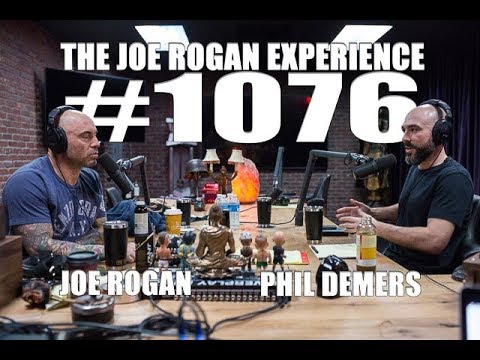
Joe Rogan Experience #1076 - Phil Demers
Joe Rogan (host), Phil Demers (guest)
In this episode of The Joe Rogan Experience, featuring Joe Rogan and Phil Demers, Joe Rogan Experience #1076 - Phil Demers explores whistleblower Trainer Exposes Marineland’s Cruel Reality And Legal Retaliation Former Marineland trainer Phil Demers recounts his years working with marine mammals—particularly a walrus named Smooshi—and why he quit after witnessing severe animal welfare violations, including over-chlorinated water, mass drugging, and violent handling practices.
Whistleblower Trainer Exposes Marineland’s Cruel Reality And Legal Retaliation
Former Marineland trainer Phil Demers recounts his years working with marine mammals—particularly a walrus named Smooshi—and why he quit after witnessing severe animal welfare violations, including over-chlorinated water, mass drugging, and violent handling practices.
He details Marineland’s extensive use of lawsuits to silence critics, including a five‑year, ongoing legal battle against him for allegedly plotting to steal a walrus, which has forced him to turn over nearly all his personal communications.
Demers and Rogan broaden the discussion to the ethics of keeping highly intelligent cetaceans in captivity, the routine use of Valium-like drugs at major marine parks, and the global expansion of dolphin and orca shows—especially in China.
They also highlight emerging solutions such as the Whale Sanctuary Project and Canadian legislation (Bill S‑203) aiming to end whale and dolphin captivity, while calling for public support to counter powerful corporate and political interests.
Key Takeaways
Captive cetaceans are routinely drugged to cope with stress and to keep shows running.
Demers describes widespread use of Valium-like benzodiazepines at Marineland and SeaWorld as appetite stimulants and behavioral dampeners, meaning the animals audiences see performing are often sedated and far from their natural state.
Get the full analysis with uListen AI
Marineland allegedly uses outdated, brutal procedures that cause serious injury and death.
He recounts dropping water to trap belugas on pool grates, leading to bloody injuries, tail destruction (e. ...
Get the full analysis with uListen AI
Strategic lawsuits are being used to intimidate and silence critics of marine parks.
Marineland has sued Demers, journalists, filmmakers, activists, and even an 18‑year‑old American student, forcing expensive legal defenses and broad disclosure of private communications, regardless of whether the claims ultimately hold up.
Get the full analysis with uListen AI
Legal reforms exist but are often blunted or sidestepped in practice.
Ontario’s anti‑SLAPP law was passed without retroactive effect, so Demers’ older case doesn’t qualify, and animal cruelty charges against Marineland were dropped partly on technicalities about proving specific perpetrators.
Get the full analysis with uListen AI
Despite public backlash, the captivity industry is shifting rather than shrinking.
While SeaWorld’s U. ...
Get the full analysis with uListen AI
Sanctuaries offer a realistic transition path away from performance tanks.
The Whale Sanctuary Project plans large, netted ocean enclosures where former show animals can live in natural seawater, experience tides and space, and gradually re-learn more natural behaviors while remaining under human care.
Get the full analysis with uListen AI
Public pressure and cross‑ideological support are crucial levers for change.
Demers notes support from hunters, vegans, left‑ and right‑leaning public figures, and stresses that consumer choices (boycotting parks, supporting legal funds, backing bills like Canada’s S‑203) directly affect attendance, revenues, and political will.
Get the full analysis with uListen AI
Notable Quotes
““The only way to get them to work effectively and efficiently is to keep ‘em hungry. Drug ‘em and keep ‘em hungry.””
— Phil Demers
““You ruin their lives. It’s over… Their raison d’être, the reason they live.””
— Phil Demers, on separating orcas from their families
““We used to call that the Caesar water because it was blood red by the time we were done with these procedures.””
— Phil Demers, describing beluga handling at Marineland
““We know that they have a really complex language. We can’t decipher it though because it’s so alien… and then we put them in concrete pools.””
— Joe Rogan
““It seems to me like almost a form of slavery… The slavery of killer whales is, like, really close.””
— Joe Rogan
Questions Answered in This Episode
If highly intelligent marine mammals are so stressed in captivity that they require psychoactive drugs, can any version of public display be ethically justified?
Former Marineland trainer Phil Demers recounts his years working with marine mammals—particularly a walrus named Smooshi—and why he quit after witnessing severe animal welfare violations, including over-chlorinated water, mass drugging, and violent handling practices.
Get the full analysis with uListen AI
What legal or regulatory changes would most effectively stop corporations from using SLAPP lawsuits to silence whistleblowers and journalists in animal welfare cases?
He details Marineland’s extensive use of lawsuits to silence critics, including a five‑year, ongoing legal battle against him for allegedly plotting to steal a walrus, which has forced him to turn over nearly all his personal communications.
Get the full analysis with uListen AI
How should society handle existing captive whales and dolphins that may not be releasable—what standards should govern sanctuaries, and who should pay for them?
Demers and Rogan broaden the discussion to the ethics of keeping highly intelligent cetaceans in captivity, the routine use of Valium-like drugs at major marine parks, and the global expansion of dolphin and orca shows—especially in China.
Get the full analysis with uListen AI
To what extent are governments and accrediting bodies complicit when they accept donations or political pressure from facilities accused of cruelty?
They also highlight emerging solutions such as the Whale Sanctuary Project and Canadian legislation (Bill S‑203) aiming to end whale and dolphin captivity, while calling for public support to counter powerful corporate and political interests.
Get the full analysis with uListen AI
How can global public opinion influence countries like China and Russia, where marine parks and wild captures are expanding, to adopt stricter animal welfare norms?
Get the full analysis with uListen AI
Transcript Preview
Nice.
Legit, legit.
Nice.
I don't sit on wallets. I don't, I don't play with wallets. Fuck no.
Well, I started, sorry. You ready? Yeah, yeah. Oh. (laughs)
Oh, whoops.
Now you're ready. (laughs) Get ready. I wasn't sure you got up to move cameras around. Phil show me his f- y- you have a, it's a mini fanny pack. It's very small.
It's, uh-
It's like you can carry cash-
I have everything I need.
... and a small phone.
I-
You can't carry a modern phone. That's like pre-modern phones.
Uh, the 6 fits in there.
The 6 Plus would-
Uh-
... be a problem.
Maybe.
Bang against your dick.
(laughs) I gotta tighten her up.
So what's going on, man? So for everybody who hasn't seen you on the podcast before, let's give them a brief synopsis. You were a trainer at one time at Marineland and-
(laughs)
... you, uh, you're known as the Walrus Whisperer. That's your handle on, uh, Twitter.
Which I didn't select, by the way.
You didn't?
No.
How'd you get it?
I was on a TV show called Wipeout!, and it was grassroots as hell in Canada.
Mm-hmm.
So basically what they do is they fly you out to Argentina. They, they, they sort of, uh, you rent the, the course. So, and then they, instead of it being, you know, Wipeout whatever country, this time it's Canada. So it was really grassrootsy. And so they told us, "If you guys can, like, help advertise. So get on your Twitters, get on your this, get on your that." They called me Walrus Whisperer. It just made sense to put it. Otherwise-
Oh, I see.
... (laughs) I don't particularly love it.
Okay. So it was, like, for a show.
It was for a show.
But let's explain w- you worked for Marineland, you got fired, you were, you were taking care of this walrus, and it, it became, like, a, a big cause because a lot of people were concerned about the animals' safety there, and since then they've been cited. Like, what has happened with Marineland?
Okay, well, so I'll give you a quick rundown. So, um, I worked at Marineland, I was a, uh, killer whale trainer. I was the guy jumping off the killer whales, doing the-
Right.
... flips off dolphins, everything else. Um, I wasn't fired. I quit amidst a, some duress, a difficult period where, and, and I'll elaborate, but basically a water disinfection unit broke down and the resolve wasn't so much to fix it, it was to pump it with more and more chlorine. Basically, it, uh, the way water is disinfected at Marineland, they use, uh, an ozone generator, so they use ozone in conjunction with the chlorine, sort of mitigate the chlorine use. They elected instead, or rather the sole controlling mind elected to put off actually fixing it and let's just, at night they're pumping it with chlorine. Well, you can just imagine the effects. And I'm not talking about a little bit of chlorine. So this was, this was a tough time. So I, so I actually quit. And I actually quit on this-
Install uListen to search the full transcript and get AI-powered insights
Get Full TranscriptGet more from every podcast
AI summaries, searchable transcripts, and fact-checking. Free forever.
Add to Chrome