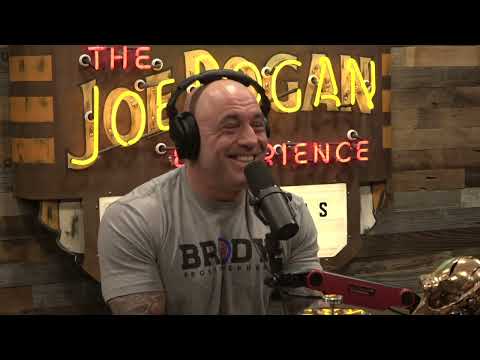
Joe Rogan Experience #1969 - Sam Tallent
Narrator, Joe Rogan (host), Sam Tallent (guest), Narrator, Narrator, Narrator, Narrator, Narrator
In this episode of The Joe Rogan Experience, featuring Narrator and Joe Rogan, Joe Rogan Experience #1969 - Sam Tallent explores joe Rogan and Sam Tallent Dive Into Comedy, Culture, And Chaos Joe Rogan and comedian Sam Tallent spend three hours riffing on stand-up comedy, self-critique, and the grind of life on the road. They veer into religion, cults, atheism, UFOs, conspiracy rabbit holes, and the Dalai Lama controversy, mixing dark humor with genuine philosophical questions. The conversation also touches on cancel culture, online extremism, and how media and corporations fuel polarization. Throughout, they return to the power of comedy communities, the value of struggle for comics, and what it means to chase a creative dream in a fractured culture.
Joe Rogan and Sam Tallent Dive Into Comedy, Culture, And Chaos
Joe Rogan and comedian Sam Tallent spend three hours riffing on stand-up comedy, self-critique, and the grind of life on the road. They veer into religion, cults, atheism, UFOs, conspiracy rabbit holes, and the Dalai Lama controversy, mixing dark humor with genuine philosophical questions. The conversation also touches on cancel culture, online extremism, and how media and corporations fuel polarization. Throughout, they return to the power of comedy communities, the value of struggle for comics, and what it means to chase a creative dream in a fractured culture.
Key Takeaways
Self-hatred is central to refining stand-up material.
Both Rogan and Tallent describe watching their own sets like haters, hunting for cringe-worthy ‘yuck’ moments to cut—arguing that discomfort with your own work is a feature, not a bug, in getting better.
Get the full analysis with uListen AI
Belief systems often function like interchangeable ‘cults’.
Rogan notes that whether it’s religion, atheism, politics, or wellness, humans gravitate toward totalizing idea-packages and charismatic authority, so the underlying psychological mechanism is similar even when the content changes.
Get the full analysis with uListen AI
Living ‘as if God exists’ can be pragmatically beneficial.
Citing Jordan Peterson, Rogan suggests that structuring life around a moral higher power—whether or not God is real—can lower anxiety, enhance purpose, and incline people to act more ethically.
Get the full analysis with uListen AI
The internet rewards extremity and erases context.
From Radiolab pulling an episode about 4chan’s Shia LaBeouf prank to TikTok paranoia and the RESTRICT Act, they argue institutions overreact to optics, while real structural issues (surveillance, central bank digital currency) get less attention.
Get the full analysis with uListen AI
Comedy ecosystems are crucial for developing great comics.
Rogan and Tallent emphasize that being surrounded by killers in strong club scenes (Denver, Austin, L. ...
Get the full analysis with uListen AI
The road grind can be brutal but romantically formative.
Tallent recounts sleeping on floors, eating from dumpsters, Greyhound trips, and humiliating one-nighters as experiences that built resilience and craft—echoing Bill Burr’s belief that you ‘never lose’ by chasing a dream.
Get the full analysis with uListen AI
Culture wars thrive by weaponizing fringe examples on both sides.
Rogan sketches a ‘conspiracy’ where the most ridiculous figures on the far left and far right are amplified so average people feel forced into tribal camps, ensuring ongoing division while larger power moves happen quietly.
Get the full analysis with uListen AI
Notable Quotes
“You gotta look at your act like you’re a hater.”
— Sam Tallent
“Nothing is worse than not going after it.”
— Bill Burr (clip Rogan plays and endorses)
“I don’t like when people do things because they’re trying to cash checks in heaven.”
— Sam Tallent
“There’s a program in our head where we wanna believe nonsense—whether that’s the Republican Party or being a Buddhist.”
— Joe Rogan
“If you wanted to keep everybody fighting and distracted, you’d put the loudest fringe people on both sides front and center.”
— Joe Rogan
Questions Answered in This Episode
How much self-critique is healthy for creative growth before it becomes paralyzing self-loathing?
Joe Rogan and comedian Sam Tallent spend three hours riffing on stand-up comedy, self-critique, and the grind of life on the road. ...
Get the full analysis with uListen AI
Are belief systems like religion, politics, and even atheism inherently cult-like, or is that an oversimplification?
Get the full analysis with uListen AI
Where should society draw the line between exposing harmful ideologies (like pedophilia) and normalizing them through euphemisms?
Get the full analysis with uListen AI
Does Rogan’s idea of living ‘as if God exists’ work for non-religious people, or does it inevitably reintroduce dogma?
Get the full analysis with uListen AI
Are social media-driven careers in comedy sustainable in the long run without the forge of tough club audiences?
Get the full analysis with uListen AI
Transcript Preview
(drumming music plays) Joe Rogan podcast. Check it out. The Joe Rogan Experience.
Train by day, Joe Rogan podcast by night, all day. (rock music plays) Oh, wow. You have been running some talent. Get them headphones and join the fucking party. Get the microphone up about, like, a fist from your face. Yeah.
Jamie, how's this? Do I sound powerful and elegant?
You are.
Thank you.
Bro, you are powerful and elegant.
Thanks, man.
You are enough.
(laughs) I appreciate that.
(laughs)
I'm good enough.
I had a friend of mine, and, uh, she was asking me something just about comedy. And I go, "I just... I... You know, no one li-... I don't like my stuff. Like, no one likes their stuff."
Mm-hmm.
"Like, you see it too much, it just, like, it gets in your head." And you're like, "Ugh." You're like, you gotta... I look at it like a hater, and she goes, "I just want you to know, no matter what, that you are enough." I go, "What?"
(laughs)
I go, "No, no, no. That's not what I'm saying." I'm not saying, like, like, I don't like my stuff, like I have a problem-
Yeah.
... like I'm a crazy per-... No, I'm just, like, that's just the process.
Yeah.
Like, I feel good.
Right.
Like, if... But that thing that people say to people, "You are enough. I just want you to know that you are enough."
Look, I don't need validation from you, lady. (laughs)
(laughs) She's a nice lady.
I'm sure she's a nice lady.
She's a very nice lady. She's not-
But I don't think you're going to her to be like, "Can you hold my hand through this difficult period?"
I think some people do do that to people, and they go fishing for that kind of response.
Yeah.
That, "You are enough." I'm like, "No, no, I'm, I'm okay."
It's like, look, I know, all right?
(laughs)
Look, look around, lady. (laughs)
(laughs)
I kind of, uh, made Austin a thing. Yeah, I know I'm okay. I mean, it's sweet of her, but...
No, she's awesome.
I also hate watching my shit, dude. It's-
You hate it?
That'd be my Guantanamo.
(sighs) Dude.
Them making me watch all my old specials? Yuck.
Oh, goddammit.
Or, like, a YouTube clip from, like, 2007?
That's the thing that you have to do, too, like, um, uh, when working on new material.
Yeah.
I either watch it or listen to it.
Yeah.
Have to listen to it. Just have to. I gotta know, like, what makes me groan? What makes me go, "Yuck"?
What's the cringe in there?
Yeah, what's the yuck?
Install uListen to search the full transcript and get AI-powered insights
Get Full TranscriptGet more from every podcast
AI summaries, searchable transcripts, and fact-checking. Free forever.
Add to Chrome