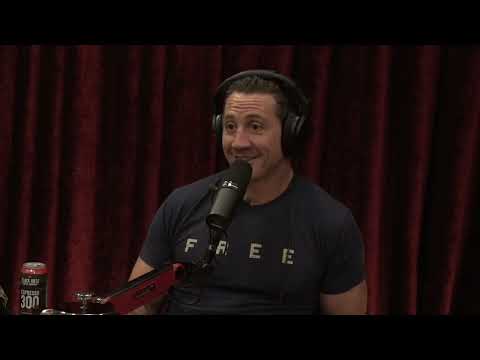
Joe Rogan Experience #1833 - Tim Kennedy
Tim Kennedy (guest), Narrator, Joe Rogan (host), Narrator, Narrator
In this episode of The Joe Rogan Experience, featuring Tim Kennedy and Narrator, Joe Rogan Experience #1833 - Tim Kennedy explores tim Kennedy and Joe Rogan Confront Collapse, Courage, and Masculinity Today Joe Rogan and Tim Kennedy cover a wide-ranging conversation spanning Austin’s growth, combat sports, law enforcement training, gun violence, and U.S. foreign policy failures.
Tim Kennedy and Joe Rogan Confront Collapse, Courage, and Masculinity Today
Joe Rogan and Tim Kennedy cover a wide-ranging conversation spanning Austin’s growth, combat sports, law enforcement training, gun violence, and U.S. foreign policy failures.
Kennedy details his work with Sheepdog Response, training civilians, teachers, and police to better protect themselves and others, emphasizing hard-target schools and situational awareness.
He gives a harrowing, ground-level account of the Afghanistan withdrawal and later rescue work in Ukraine, highlighting government failures, veteran trauma, and the role of private NGOs.
Threaded throughout are discussions on mental health, broken young men, soft American culture, social media echo chambers, and how martial arts and discipline can forge healthier, more resilient humans.
Key Takeaways
Hardening schools requires layered defensive design, not just armed responders.
Kennedy promotes the “four Ds”: detection, deterrence, denial of entry, and defend—arguing for controlled access, structural design (e. ...
Get the full analysis with uListen AI
The root of mass violence lies in broken young men and neglected mental health.
Both argue that blaming guns or games alone ignores consistent patterns: fatherless or fractured families, lack of healthy masculine role models, no discipline outlets, and social media echo chambers that feed grievance and rage.
Get the full analysis with uListen AI
Civilian and teacher training in shooting, fighting, and medical care is in high demand.
Sheepdog Response’s courses are sold out nationwide, reflecting a growing recognition that “no help is coming” quickly enough and individuals must learn situational awareness, basic trauma care, and defensive skills to protect themselves and others.
Get the full analysis with uListen AI
The Afghanistan withdrawal was chaotic, avoidable, and still exacting a human cost.
Kennedy describes Taliban-controlled checkpoints, people shot in crowds, babies thrown into concertina wire, and an improvised NGO operation that moved 12,000 people in 10 days—while tens of thousands of vetted allies were left behind in danger.
Get the full analysis with uListen AI
COVID policies and societal comfort have exacerbated a silent mental health crisis.
Lockdowns, gym closures, isolation, and anxiety piled onto an already medicated, sedentary population; Kennedy cites an ~80% increase in suicides among 18–35-year-old returning service members and warns of unprecedented veteran suicide projections.
Get the full analysis with uListen AI
Martial arts and rigorous training forge better, safer humans, not just fighters.
Both men credit martial arts with transforming anger and ego into discipline and humility, arguing that skills like jiu-jitsu are “superpowers” for police, civilians, and veterans that reduce unnecessary violence and build confidence.
Get the full analysis with uListen AI
Information bubbles and confirmation bias are driving dangerous distortions.
They criticize social media algorithms and partisan media for feeding people only views they already hold—whether about guns, politics, or public health—making it harder to course-correct, admit error, or have nuanced, good-faith debates.
Get the full analysis with uListen AI
Notable Quotes
“We train and equip people to preserve and protect human life.”
— Tim Kennedy (on Sheepdog Response’s mission)
“There is nothing more dangerous than a broken, not healthy masculine figure.”
— Tim Kennedy
“No help is coming. It’s all up to you.”
— Tim Kennedy
“You can’t attach yourself to ideas… you’ve got to be willing to abandon them.”
— Joe Rogan
“If somebody can touch your face while you’re doing jiu-jitsu, you’re doing jiu-jitsu wrong.”
— Tim Kennedy (quoting Royler Gracie about Helio Gracie)
Questions Answered in This Episode
How could Kennedy’s four-D framework for hardening schools be implemented at scale without turning campuses into prison-like environments?
Joe Rogan and Tim Kennedy cover a wide-ranging conversation spanning Austin’s growth, combat sports, law enforcement training, gun violence, and U. ...
Get the full analysis with uListen AI
What practical steps can parents and communities take to identify and support “broken young men” before they become dangerous?
Kennedy details his work with Sheepdog Response, training civilians, teachers, and police to better protect themselves and others, emphasizing hard-target schools and situational awareness.
Get the full analysis with uListen AI
Given the failures Kennedy describes in Afghanistan, what reforms are actually realistic for U.S. foreign policy and military withdrawals?
He gives a harrowing, ground-level account of the Afghanistan withdrawal and later rescue work in Ukraine, highlighting government failures, veteran trauma, and the role of private NGOs.
Get the full analysis with uListen AI
How can law enforcement agencies be incentivized—and culturally permitted—to adopt rigorous, ongoing training without triggering public backlash?
Threaded throughout are discussions on mental health, broken young men, soft American culture, social media echo chambers, and how martial arts and discipline can forge healthier, more resilient humans.
Get the full analysis with uListen AI
To what extent are individuals responsible for escaping social media echo chambers, and what responsibility should platforms bear in reducing algorithmic radicalization?
Get the full analysis with uListen AI
Transcript Preview
(drumming) Joe Rogan podcast, check it out.
The Joe Rogan Experience.
Train by day, Joe Rogan podcast by night, all day. (rock music) Your comedy, your, uh, standup was the first time that I... First one I've been to in probably 10 years.
Oh, at the, uh, Vulcan?
Yeah.
Yeah. That's a great place, isn't it?
It was rad.
Yeah, it's a fun little spot.
Yeah. The, uh, everybody was cool. It, it's weird that it's on 6th Street, but.
Yeah. Yeah, my place is too. We up?
Yeah.
Um, yeah. It's, uh, 6th Street is a unique spot.
Yeah.
It's, uh, they're gett- they're doing some stuff to try to, you know, clean it up a little bit. And they, they got rid of that homeless situation. There was like a crazy homeless encampment that was really close to that.
Yeah. (laughs)
They got rid of that, so. Austin's a unique place.
It is.
There's a lot of, a lot of wild shit in this town.
Yeah. Amazing stuff and really weird stuff.
Yeah.
Yeah.
It's a great combination though, and it's a great size. You know, you were one of the people that early on got me thinking about Austin, because you were always ranting about it.
Yeah.
About how great it is here.
I should've kept my mouth closed.
Should've kept your mouth shut.
(laughs)
'Cause I w-
When you came here, everybody I just... They're like, "Ah, where's Joe at?" "Oh, he just moved to, to Austin." I was like, "You shut your mouth."
(laughs)
We were on a, a flight last night coming back, and, uh, the Southwest person, who obviously lives in Austin, uh, they stopped in Austin then flew to San Diego. And he's like, "And everybody that, that is, uh, going home to visit in San Diego, please stay."
(laughs)
Like, he said that over the intercom on a South- Southwest flight, and I was like, "I, I like this guy."
Well-
"Please stay."
It's, it's like, it's like a, the secret's out, but the barrier to entry is high. It's hard to move to a new city.
Yeah.
It's a lot. And then o- on top of that, it's hard to find a fucking house here.
Yeah.
Everybody I know that finds a house here, they get outbid. Like, you gotta bid more than the house costs. It's like they're making this little sneaky move where, like, say, if the house, if it's listed for 500 grand, you gotta offer six.
Yeah.
'Cause if you don't, someone is gonna do that and then you're not gonna make it.
I've, I've been trying to buy land and I, I keep... I mean, and I'm, I'm coming in high, well over, and then s- you know.
Install uListen to search the full transcript and get AI-powered insights
Get Full TranscriptGet more from every podcast
AI summaries, searchable transcripts, and fact-checking. Free forever.
Add to Chrome