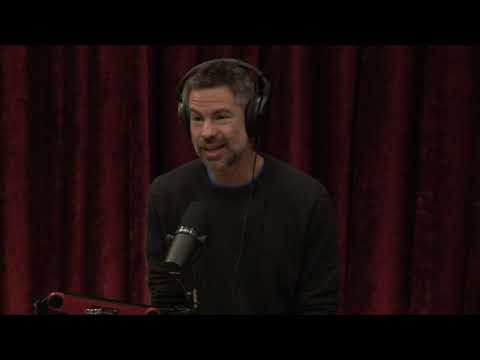
Joe Rogan Experience #1719 - Michael Shellenberger
Michael Shellenberger (guest), Joe Rogan (host)
In this episode of The Joe Rogan Experience, featuring Michael Shellenberger and Joe Rogan, Joe Rogan Experience #1719 - Michael Shellenberger explores san Fransicko: How Progressive Policies Fueled Homelessness, Drugs, Chaos Joe Rogan and Michael Shellenberger dissect how San Francisco and other progressive cities became overwhelmed by homelessness, open-air drug scenes, and rising crime despite record social spending.
San Fransicko: How Progressive Policies Fueled Homelessness, Drugs, Chaos
Joe Rogan and Michael Shellenberger dissect how San Francisco and other progressive cities became overwhelmed by homelessness, open-air drug scenes, and rising crime despite record social spending.
Shellenberger argues that a mix of "victim ideology," decriminalization without mandated treatment, and fragmented services removed consequences for destructive behavior while enriching a nonprofit and advocacy industry.
Drawing on European models, especially the Netherlands and Portugal, he proposes a centralized, state-level psychiatric and addiction system (“Cal Psych”) that combines shelters, mandatory treatment options, and earned housing with consistent law enforcement.
They broaden the conversation to cultural coddling, ideological capture of institutions, media-driven panic, censorship, and the need for a pragmatic, disciplined yet compassionate politics beyond the current left–right frame.
Key Takeaways
Homelessness in West Coast cities is primarily an addiction and mental illness crisis, not simply a housing-affordability problem.
Shellenberger cites outreach workers, international research, and on-the-ground interviews showing that in places like Skid Row and the Tenderloin, nearly everyone on the street is using hard drugs (often meth and fentanyl), and many have serious psychiatric disorders; the familiar narrative of fully functional workers priced out of rent and choosing tents is largely unsupported.
Get the full analysis with uListen AI
Removing consequences for destructive behavior has created de facto “open drug scenes” that are deadly and abusive.
Policies like California’s Prop 47 (decriminalizing possession of up to three grams of hard drugs and theft under $950), tolerance of public camping, and reluctance to arrest or mandate treatment have turned encampments into violent, exploitative zones where overdoses, rapes, machete-enforced drug debts, and disease are common—and where recovery is nearly impossible.
Get the full analysis with uListen AI
European liberal models succeed by pairing generous services with clear sticks: mandated treatment, enforced shelter, and real limits.
In Amsterdam and Lisbon, public hard-drug use leads to arrest and either prosecution or appearance before a coercive “dissuasion” panel; shelters are expected, not optional; housing is earned through compliance with treatment, work, or medication—not granted as an unconditional right on prime real estate.
Get the full analysis with uListen AI
Fragmented, duplicative U.S. service systems waste money while failing clients, incentivizing a “homelessness industry.”
California spends more per capita on mental health and homelessness than any other state yet has the worst outcomes; individuals often juggle multiple caseworkers and even multiple publicly funded apartments, while hundreds of nonprofits chase contracts in a patchwork system that lacks single-point accountability.
Get the full analysis with uListen AI
A centralized state agency like “Cal Psych” could align compassion with discipline and accountability.
Shellenberger’s proposal envisions a single, governor-reporting entity with regional directors and empowered caseworkers, responsible for triaging people into shelters, psych beds, drug treatment, adult foster care, or halfway houses; housing is earned after following a personal plan, and camping bans are matched with coordinated psychiatric and addiction care.
Get the full analysis with uListen AI
“Victim ideology” and coddling culture can be deeply dehumanizing and counterproductive to recovery.
Treating addicts, the homeless, and people of color as permanent victims for whom nothing can be demanded—while opposing tools like involuntary psychiatric care, ankle monitors, or mandated treatment—often leaves them in more dangerous, degrading conditions and denies them the structure many recovering addicts say they desperately needed.
Get the full analysis with uListen AI
Ideological capture and performative outrage distort public debate on everything from homelessness to climate and pandemics.
The conversation links activist-driven DA races, ACLU legal strategies, woke policing of language, and media sensationalism (on crime, climate, COVID, and Rogan himself) as examples where institutions favor moral grandstanding, narrative conformity, and censorship over slow, evidence-based problem-solving and open debate.
Get the full analysis with uListen AI
Notable Quotes
“We don’t have to choose between mass homelessness and mass incarceration. There is a better way.”
— Michael Shellenberger
“Soft doctors make wounds stink.”
— Michael Shellenberger (quoting a Dutch expression about excessive leniency)
“The right medical treatment for those people is for them to be arrested.”
— Michael Shellenberger, on severely addicted fentanyl users in open-air drug scenes
“You can’t be married to ideas. Ideas are just a thing that you examine.”
— Joe Rogan
“The Beatles were wrong. Love is not all you need.”
— Michael Shellenberger
Questions Answered in This Episode
How can cities practically transition from a “housing first, no conditions” model to a “shelter first, treatment first, housing earned” approach without triggering massive political and legal backlash?
Joe Rogan and Michael Shellenberger dissect how San Francisco and other progressive cities became overwhelmed by homelessness, open-air drug scenes, and rising crime despite record social spending.
Get the full analysis with uListen AI
Where should the line be drawn between civil liberties and involuntary treatment for people whose psychosis or addiction leads to public danger and self-destruction?
Shellenberger argues that a mix of "victim ideology," decriminalization without mandated treatment, and fragmented services removed consequences for destructive behavior while enriching a nonprofit and advocacy industry.
Get the full analysis with uListen AI
What specific governance, funding, and accountability mechanisms would ensure a Cal Psych-style agency doesn’t become just another bloated bureaucracy?
Drawing on European models, especially the Netherlands and Portugal, he proposes a centralized, state-level psychiatric and addiction system (“Cal Psych”) that combines shelters, mandatory treatment options, and earned housing with consistent law enforcement.
Get the full analysis with uListen AI
How can media, universities, and advocacy groups be incentivized to adopt more reality-based narratives about homelessness and addiction instead of reinforcing comforting but inaccurate stories about poverty and rents?
They broaden the conversation to cultural coddling, ideological capture of institutions, media-driven panic, censorship, and the need for a pragmatic, disciplined yet compassionate politics beyond the current left–right frame.
Get the full analysis with uListen AI
If nuclear power is as comparatively safe and low-waste as argued, what concrete steps would be needed—politically and culturally—to revive nuclear build-out as a serious climate and energy strategy in the U.S. and Europe?
Get the full analysis with uListen AI
Transcript Preview
(drumbeats) Joe Rogan podcast, check it out. The Joe Rogan Experience.
Train by day, Joe Rogan podcast by night. All day. (instrumental music) We're up. Mike... San Fransicko. I went... As soon as I got the proposal for this, I was like, "Yes. Please, somebody tell me what the fuck went wrong." I love San Francisco. I used to live there when I was a kid. I lived there from, uh, age seven to 11. It was great, but it's one of the best examples of, uh, what... I mean, I guess, like, progressive government completely allowing chaos to run rampant through a city. And now when you go back there it's just tense and there's a- an app where you can find human shit all th- Have you seen that app?
Oh, sure.
Yeah. It's-
Yeah.
What happened?
(laughs) How long do we have?
We have a lot of time. (laughs)
(laughs)
First of all-
Y-
... tell me why you wrote this.
Well, I wrote it for the same reason you're interested in having me on, which is, like, what happened?
Yeah.
And how do you un- how do you l- peel that onion and go, how far back does it go? How deep d- how deep is it? So, I've been working on progressive causes since the mid-'90s. I moved to San Francisco to work on radical left causes, environment mostly, but also criminal justice. I worked for a bunch of George Soros charities, uh, including for his foundation. Um, some of that work I'm still very proud of, and some of it I have questions about. I helped, uh, you know, I helped Maxine Waters organize civil rights leaders for needle exchange. I still believe in needle exchange. That's the distribution of clean needles to prevent the spread of HIV/AIDS. I still support the decriminalization, medicalization first, but then the decriminalization of marijuana. But when I got out of that work on criminal justice er- in the early 2000s, my understanding was that we were going to try to move away from mass incarceration towards a drug treatment model, so that if you arrested addicts on the street for public defecation, public drug use, camping, whatever law, and theft, the laws that addicts tend to break, that they would be mandated drug treatment. That was my understanding. Well, we didn't do that. (laughs) You know, we just, you know, we just stopped enforcing laws. And basically, the question I wanted to ask is, how did we go from this place of "We need to help addicts get into recovery" so that you deal with the root cause of the problem, to basically viewing addicts, people with mental illness, the homeless, as victims who are sacred and who have to be pre- protected from the consequences of their own behavior?
Hmm.
So, that's where it's all ended up, is it's sort of... This is about victim lo- This is about a real-world impacts of- of victim ideology.
Install uListen to search the full transcript and get AI-powered insights
Get Full TranscriptGet more from every podcast
AI summaries, searchable transcripts, and fact-checking. Free forever.
Add to Chrome