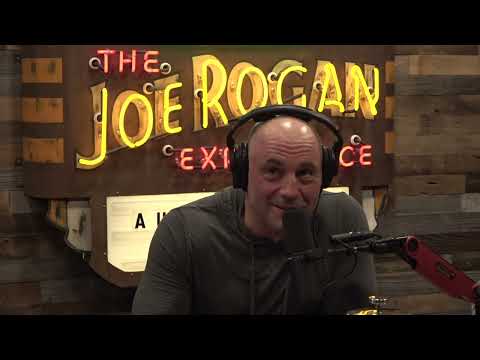
Joe Rogan Experience #1825 - Ali Siddiq
Narrator, Narrator, Ali Siddiq (guest), Joe Rogan (host), Narrator, Narrator, Narrator
In this episode of The Joe Rogan Experience, featuring Narrator and Narrator, Joe Rogan Experience #1825 - Ali Siddiq explores ali Siddiq, Comedy Craft, and Candid Takes on Culture and Care Joe Rogan and Ali Siddiq spend a long-form conversation weaving between light topics like cigars, sneakers, pedicures, live sports, and Carnival in Rio, and heavier subjects such as school shootings, homelessness, drug policy, and education reform.
Ali Siddiq, Comedy Craft, and Candid Takes on Culture and Care
Joe Rogan and Ali Siddiq spend a long-form conversation weaving between light topics like cigars, sneakers, pedicures, live sports, and Carnival in Rio, and heavier subjects such as school shootings, homelessness, drug policy, and education reform.
A major through‑line is Ali’s philosophy of stand‑up: the value of bombing, following killers, honing long-form storytelling, and building a generous, non‑competitive comedy community that still enforces high standards.
They also dissect the backlash Ali received over comments on Joe’s podcast that led HBO to pull his special, using that as a springboard to talk about speech, “manufactured consent,” and who’s allowed to say what about controversial topics.
Underlying everything is Ali’s belief in investing in people—from homeless recovery systems to kids’ schooling to comics helping comics—and his pride in Houston’s cultural output across rap, sports, and comedy.
Key Takeaways
Exclusivity often rests on perception more than intrinsic value.
From fake ultra‑premium wines to counterfeit Rolexes and sneaker hype, they argue people mostly pay for stories and status signals; if you like how something feels or tastes, that matters more than provenance.
Get the full analysis with uListen AI
Men benefit from embracing self‑care despite cultural stigma.
Ali’s story of dragging a ‘tough’ friend to a deluxe pedicure shows how male reluctance to do “non‑manly” things denies them real physical and mental health benefits once they actually try them.
Get the full analysis with uListen AI
Systemic problems like shootings and homelessness require investment in people, not just punishment.
On school shootings, they criticize misplaced national spending and argue money used abroad could instead harden schools and fix high‑crime communities; Ali outlines a tiered, skills‑building recovery model for the homeless that pairs treatment with savings and reinvestment.
Get the full analysis with uListen AI
Great stand‑up comes from pressure: follow killers, bomb, and ruthlessly edit.
Stories of following Martin Lawrence, Joey Diaz, Tony Roberts, and Damon Wayans reinforce that being forced to survive after a monster set hardens your act, cuts fluff, and teaches you to ride a hot room instead of fearing it.
Get the full analysis with uListen AI
Local success can trap comics if material doesn’t travel.
Rogan highlights Boston comics whose hyper‑local references destroyed at home but died on the road; Ali stresses that specials should feel universal—even if filmed in a hometown like Houston—so audiences anywhere can connect.
Get the full analysis with uListen AI
Healthy comedy communities are collaborative, not zero‑sum.
They praise figures like Rodney Dangerfield and Bill Burr for using their platforms to elevate others, and argue that calling peers to say “your special is amazing” builds a culture where everyone’s excellence raises the bar.
Get the full analysis with uListen AI
Public discourse punishes some opinions while tolerating others, creating selective speech taboos.
Using Ali’s HBO situation and Mario Lopez’s comments about child transition as examples, they argue that certain views—especially on LGBTQ issues and vaccines—are treated as unsayable, while others (even critical ones from different messengers) are allowed, leading to confusion about who may voice dissent.
Get the full analysis with uListen AI
Notable Quotes
“If you invest in the human being, and the human being does the good works that he’s supposed to do with that investment, and they invest in more human beings, you create this utopia of helping.”
— Ali Siddiq
“Aspire always to greatness, ’cause even if you don’t get there, you get pretty fucking excellent.”
— Joe Rogan
“A special is supposed to be special. It’s supposed to be a piece of the person.”
— Ali Siddiq
“Helping people feels good. It’s good for you, too.”
— Joe Rogan
“I’m not playing the game for riches and all that. I’m playing for that yellow jacket.”
— Ali Siddiq
Questions Answered in This Episode
How much responsibility should comedians have to self‑censor on sensitive topics if their intent is honest exploration rather than advocacy?
Joe Rogan and Ali Siddiq spend a long-form conversation weaving between light topics like cigars, sneakers, pedicures, live sports, and Carnival in Rio, and heavier subjects such as school shootings, homelessness, drug policy, and education reform.
Get the full analysis with uListen AI
Could Ali’s proposed tiered recovery centers for the homeless realistically be scaled nationally, and what political or economic interests would resist that?
A major through‑line is Ali’s philosophy of stand‑up: the value of bombing, following killers, honing long-form storytelling, and building a generous, non‑competitive comedy community that still enforces high standards.
Get the full analysis with uListen AI
Where is the line between healthy social accountability and coercive ‘manufactured consent’ in media and entertainment?
They also dissect the backlash Ali received over comments on Joe’s podcast that led HBO to pull his special, using that as a springboard to talk about speech, “manufactured consent,” and who’s allowed to say what about controversial topics.
Get the full analysis with uListen AI
In what ways does following a ‘killer’ comic practically change how a comedian structures and delivers their material over time?
Underlying everything is Ali’s belief in investing in people—from homeless recovery systems to kids’ schooling to comics helping comics—and his pride in Houston’s cultural output across rap, sports, and comedy.
Get the full analysis with uListen AI
How can cities like Houston better recognize and leverage their homegrown artistic communities (comedy, music, sports) without diluting their authenticity?
Get the full analysis with uListen AI
Transcript Preview
(drumming music plays) Joe Rogan podcast. Check it out.
The Joe Rogan Experience. Train by day, Joe Rogan podcast by night. All day. (rock music plays)
Uh, Padrons are the cigar of choice on A Short Storie. (swallows) And smoking cigars with DL so much, I know a good cigar. Oliver-
Mm.
... is a good cigar.
Yeah, this is solid. I've had Cuban cigars and I know they're supposed to be better, and I believe they're good, but I do not know if they're better. I can't tell. You could lie to me and give me a-
(laughs)
... you know, you could give me a good Dominican cigar-
Yeah.
... and I'd be like, "Damn, Cuban, nice." I don't know.
You know what you like when you like it, you know?
Yeah.
Like, I like ... I drink Cabernet and you know how they come to the table and they tell you, "This valley and this and this is from this."
Yeah.
And I just say, "Eh, nine ounce." And then- (laughs)
(laughs)
And if I like it, I like it, you know?
Yeah.
But, you know, other than that...
Uh, there was a documentary of ... Talked about this before, but there's a documentary called Sour Grapes and, uh, it's all about wine connoisseurs getting hustled by this dude who figured out how to mix wine to make it taste like old wine, and he put fake labels on them and he sold them for hundreds of thousands of dollars. Millions of dollars worth of wine, this guy sold. Like bottles for a couple $100,000. And, uh, unfortunately he sold a fake bottle to the Koch brothers.
Oh.
And one of the Koch brothers ... Someone was, like, going through their collection going, "What the fuck is this?" And he's like, "Oh, that's a ruh ruh ruh." And like, they're like, "No it's not," and then the next thing you know it, he gets his, uh, uh, wine examined and they're like, "Bro, you're, you, you have a bunch of fake wine in here." And then they find out this one dude had been making these fake labels and, and blending these cheaper wines together to try to create a taste that's similar-
Mm.
... to real expensive wine.
That's ridiculous that, that ... Everything that he went through, he could've just made a wine.
You'd think so, but he made millions. Millions and millions and millions of dollars.
To hustle people.
But he's, he come from a criminal family.
Mm.
Like, when they, they went into the whole family of it, like, the family ... One of the brothers had, uh, stolen a bunch of money out of a bank and like, uh, like hundreds of millions of dollars, right? Wasn't it like some insane amount of money? Do you remember that part? And, you know, he's on the run. He's hiding somewhere and like, the ... So it's like the whole family's been con artists their whole life.
Install uListen to search the full transcript and get AI-powered insights
Get Full TranscriptGet more from every podcast
AI summaries, searchable transcripts, and fact-checking. Free forever.
Add to Chrome