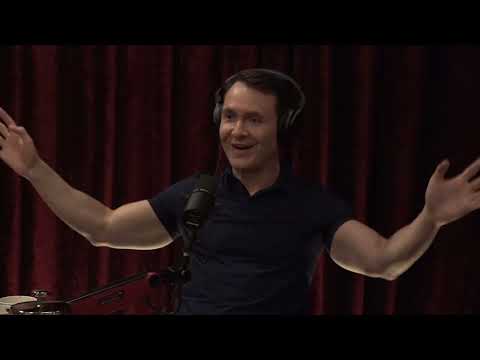
Joe Rogan Experience #1807 - Douglas Murray
Narrator, Joe Rogan (host), Douglas Murray (guest), Narrator, Narrator, Narrator
In this episode of The Joe Rogan Experience, featuring Narrator and Joe Rogan, Joe Rogan Experience #1807 - Douglas Murray explores douglas Murray and Joe Rogan dissect media, race, and Western decline Joe Rogan and Douglas Murray spend the conversation examining how COVID policies, media behavior, and elite institutions have damaged public trust and accelerated cultural fragmentation in the West, particularly in America and the UK.
Douglas Murray and Joe Rogan dissect media, race, and Western decline
Joe Rogan and Douglas Murray spend the conversation examining how COVID policies, media behavior, and elite institutions have damaged public trust and accelerated cultural fragmentation in the West, particularly in America and the UK.
They argue that 24‑hour news and partisan outlets like CNN amplify fear and distortion, while social media and censorship around issues like Hunter Biden’s laptop and COVID dissent have shattered any shared sense of facts.
Murray outlines themes from his book *The War on the West*: race essentialism, white guilt, hereditary blame, and institutional “anti-racism” that he believes are destabilizing societies and provoking inevitable backlash.
Both conclude that rising atomization, resentment, and competing “micro‑realities” are pushing Western societies into a perilous phase, where only independent voices, honesty about ignorance, and a renewed sense of shared civic pride offer a path back.
Key Takeaways
Lockdowns and mandates revealed both authoritarian tendencies and social fragility.
Murray describes draconian UK rules, neighbor ‘informants,’ and New York’s theater security culture; Rogan adds absurd mask rituals and inconsistent COVID rules as examples of how quickly people embraced control and moral policing.
Get the full analysis with uListen AI
24‑hour news and politicized media create a distorted, permanently negative world picture.
They argue that CNN and similar outlets frame nearly everything as crisis, use inflammatory coverage, and reduce complex issues to three‑minute panel fights, driving fear, polarization, and a wildly inaccurate sense of reality.
Get the full analysis with uListen AI
Attempts to ‘cancel’ prominent independents often backfire and expose legacy media’s weakness.
Rogan notes major backlash campaigns actually grew his audience; Murray stresses that long‑form work and a large body of content (as with Rogan or Jordan Peterson) make misrepresentation harder and give them resilience.
Get the full analysis with uListen AI
Contemporary ‘anti‑racism’ often reintroduces race essentialism and hereditary guilt in reverse.
Citing Robin DiAngelo and Ibram X. ...
Get the full analysis with uListen AI
Institutional capture and censorship—especially by tech and intel agencies—erode democratic legitimacy.
They highlight Twitter/Facebook suppressing the New York Post’s Hunter Biden story and ex‑intel officials falsely branding it Russian disinformation, arguing this was election interference and that such actors have faced no real consequences.
Get the full analysis with uListen AI
Society is fragmenting into incompatible realities with no shared facts or reference points.
Murray describes ‘atomization’ where people hold irreconcilable beliefs about COVID, BLM, elections, Afghanistan, Ukraine, etc. ...
Get the full analysis with uListen AI
Resentment is a powerful, destructive driver that can only be countered by gratitude and ownership.
They argue many people channel life disappointments into envy and political rage, when the harder but necessary move is to accept personal responsibility, cultivate gratitude for what works, and use others’ success as inspiration rather than fuel for grievance.
Get the full analysis with uListen AI
Notable Quotes
“You cannot war on the foundations of an entire society and think you’re going to get away with it without any repercussions.”
— Douglas Murray
“I don’t have any guilt about anything that I didn’t do. I have guilt for things I did do, for sure—but I don’t have any guilt for things that people did before me.”
— Douglas Murray
“When a civilization is in a downward spiral, when it’s the end of the civilization, they become obsessed with gender.”
— Joe Rogan, attributing the insight to Camille Paglia via Murray
“If I can’t tell you that you’re wrong, you’re not my equal.”
— Douglas Murray, citing Eric Weinstein
“Luck is the residue of design.”
— Douglas Murray, quoting Branch Rickey
Questions Answered in This Episode
To what extent is today’s ‘anti‑racist’ training in corporations and schools actually reducing prejudice versus entrenching new forms of race essentialism?
Joe Rogan and Douglas Murray spend the conversation examining how COVID policies, media behavior, and elite institutions have damaged public trust and accelerated cultural fragmentation in the West, particularly in America and the UK.
Get the full analysis with uListen AI
How should democratic societies set boundaries on tech platforms and intelligence agencies to prevent them from becoming undeclared political actors?
They argue that 24‑hour news and partisan outlets like CNN amplify fear and distortion, while social media and censorship around issues like Hunter Biden’s laptop and COVID dissent have shattered any shared sense of facts.
Get the full analysis with uListen AI
In a world where everyone has ‘their own facts,’ what practical mechanisms could rebuild a minimum shared reality without reverting to centralized propaganda?
Murray outlines themes from his book *The War on the West*: race essentialism, white guilt, hereditary blame, and institutional “anti-racism” that he believes are destabilizing societies and provoking inevitable backlash.
Get the full analysis with uListen AI
Where is the line between legitimate public‑health authority and authoritarian overreach, and who should decide when that line has been crossed in a crisis?
Both conclude that rising atomization, resentment, and competing “micro‑realities” are pushing Western societies into a perilous phase, where only independent voices, honesty about ignorance, and a renewed sense of shared civic pride offer a path back.
Get the full analysis with uListen AI
Can Western societies meaningfully revive a shared sense of pride and purpose without returning to traditional religion, or is some kind of new ‘civil religion’ inevitable?
Get the full analysis with uListen AI
Transcript Preview
(drumming) Joe Rogan podcast, check it out. The Joe Rogan Experience.
Train by day, Joe Rogan podcast by night. All day. (instrumental music) Oh. Well, I guess we are going there. (laughs)
(laughs)
We're up and running.
(laughs)
First of all, you look fucking great. You look like you've been working out. What's going on?
I have been.
You have been.
And I'm also not wearing suits.
Dude, you look jacked.
Well, that's very kind. So do you.
You do.
(laughs)
But you look like, uh, like- like the pandemic's been... There's two different types of people during the pandemic, the people that gained weight and the people that got fit, and you look like a- a fit man.
I tr- I certainly tried not to gain weight during the pandemic.
Yeah, you look good.
Uh, very kind.
Congratulations on that.
Thank you, you too.
On holding it down. What does it feel like to be wandering the world now?
Uh, yeah, I mean, I sort of was a bit during the pandemic. Joe Rogan: Oh, you're a risk taker. Well, I- I- I don't like to say exactly, uh, what I did, but I did decide that after lockdown one in my native country of the UK, I wasn't going through that again.
Mm-hmm.
I mean, uh, lockdowns are bad everywhere, but in the UK they just kept doing them.
Yeah.
And they started one of them in late December one year, and it was just like, like... You don't wanna spend January locked in your house and, you know, it's bad enough in the UK anyway.
How did the UK handle lockdowns in terms of the restrictions? Like, what did they do?
It was really strict.
Yeah.
Really strict. I mean, just terrible. Uh, and you, things like, you were only allowed out f- once a day from your house for one bit of physical exercise. One friend of mine called me one day and she said, uh, "Do you have, um, spies in your neighborhood?"
(laughs)
I said, I- I- (laughs) I s- I said, "What do you mean?" She said, "I- in my village we have people who, who inform." And I said, "Well, what does that look like?" She said, for instance, "Somebody, uh, leaned over the garden wall the other day and said to me, 'You are aware this is your second walk of the day?'"
Wow!
I know. And I said, I s- and she said, "The embarrassing thing is I know him." People were doing really crazy stuff like that. I thought it was horribly revealing and I- I- I loathed it and I got out. (laughs)
That's just a character issue that pops up whenever people have any kind of control. You know, that's the Stanford prison experiments where they- they found it like, like-
Install uListen to search the full transcript and get AI-powered insights
Get Full TranscriptGet more from every podcast
AI summaries, searchable transcripts, and fact-checking. Free forever.
Add to Chrome