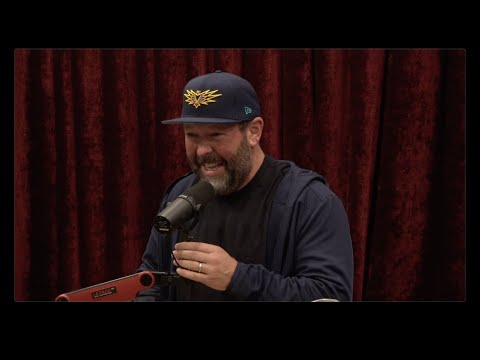
Joe Rogan Experience #2445 - Bert Kreischer
Joe Rogan (host), Bert Kreischer (guest), Joe Rogan (host), Joe Rogan (host), Bert Kreischer (guest)
In this episode of The Joe Rogan Experience, featuring Joe Rogan and Bert Kreischer, Joe Rogan Experience #2445 - Bert Kreischer explores rogan and Kreischer riff on health, fame, media distrust, dreams Joe Rogan and Bert Kreischer open with practical (and anecdotal) health talk—red light therapy, sleep, supplements—then pivot into how online narratives, clips, and outrage mobs distort reality and affect comedians’ mental health.
Rogan and Kreischer riff on health, fame, media distrust, dreams
Joe Rogan and Bert Kreischer open with practical (and anecdotal) health talk—red light therapy, sleep, supplements—then pivot into how online narratives, clips, and outrage mobs distort reality and affect comedians’ mental health.
They discuss comedy culture: prank-call era nostalgia, how viral moments can make or break careers, and how modern podcasting and awards can become corporate and performative rather than merit-based.
The middle of the episode turns toward dream research and lucid dreaming, including a claim of dream-to-dream communication and Rogan’s unusually vivid “non-human beings” dream that felt like an encounter.
The back half leans into distrust of mainstream media (Watergate framing/deep state claims, advertiser influence, doctored images), COVID-era controversies, and the idea that hard physical work and community are antidotes to anxiety and online toxicity.
Key Takeaways
Anecdotes drive their health beliefs more than formal evidence.
They repeatedly cite personal experience (red light therapy improving vision, mouth taping improving sleep, IV vitamin drips helping friends) as decisive proof, while acknowledging that formal research or replication is often unclear.
Get the full analysis with uListen AI
AI tools are replacing traditional search—and shaping how they “vet” claims.
Rogan describes using Perplexity to rapidly get pros/cons and disagreement around a topic, treating it as a default research assistant rather than reading multiple sources manually.
Get the full analysis with uListen AI
Viral moments are accelerants, not substitutes for real craft.
They argue that Burr’s Philly rant, Rogan’s Mencia confrontation video, and Gillis’s SNL controversy worked because audiences then found a strong body of work; without quality, viral attention fades fast.
Get the full analysis with uListen AI
Not correcting false narratives in interviews can create permanent myths.
Kreischer admits he went along with Shannon Sharpe’s claim that he ‘lost everything’ because he was caught off guard and non-confrontational—highlighting how easily public storylines can be fabricated and reinforced.
Get the full analysis with uListen AI
Online outrage is less about truth and more about punishment dynamics.
Discussing Whitney Cummings’ “Miss Rachel” post, Rogan argues apologies don’t satisfy mobs; engagement fuels escalation, and critics often aren’t seeking clarification or resolution.
Get the full analysis with uListen AI
Dreams and lucid dreaming remain a ‘frontier’ they treat as semi-mystical.
They explore a startup’s claim of two-way dream communication via earbuds and REM detection, while sharing personal lucid dreaming experiences (sex/flying themes) and Rogan’s hyper-real “beings” dream that disrupted his sleep.
Get the full analysis with uListen AI
They frame mainstream media as structurally incapable of objectivity.
Rogan attributes narrative control to corporate advertisers (especially pharma), citing examples like alleged photo “beautification,” lack of coverage of vaccine injuries, and a Tucker Carlson segment alleging Watergate was a deep-state coup.
Get the full analysis with uListen AI
Physical hardship is presented as the antidote to modern anxiety.
Both link mental clarity to brutal workouts, cold plunges, and tangible effort (even backyard chickens), arguing that idleness plus social media produces resentment and compulsive criticism.
Get the full analysis with uListen AI
Awards and institutional recognition matter less than trusted peer feedback.
Rogan says he didn’t submit for Golden Globe podcast consideration; Kreischer emphasizes texts from people he respects (Ron White, Luke Combs) as more meaningful validation than trophies.
Get the full analysis with uListen AI
Kreischer’s health scare is forcing a lifestyle reset—imperfectly.
He describes blood clots, being unable to smoke cigars, six months of sobriety (with a countdown timer), weight loss, and reflection on durability masking long-term risk—while still openly romanticizing drinking’s return.
Get the full analysis with uListen AI
Notable Quotes
““Dude, it changed my vision.””
— Joe Rogan
““Someone must have Googled… It was probably some Reddit thread.””
— Joe Rogan
““Why would you allow someone to dictate your memory of an event?””
— Bert Kreischer (quoting his daughter Georgia)
““You can’t apologize to the mob.””
— Joe Rogan
““I don’t have to put a condom on. This is great… I’m in control.””
— Bert Kreischer
Questions Answered in This Episode
Red light therapy: what specific device/power level are you using, and how are you measuring the vision change (distance chart, optometrist, or just subjective clarity)?
Joe Rogan and Bert Kreischer open with practical (and anecdotal) health talk—red light therapy, sleep, supplements—then pivot into how online narratives, clips, and outrage mobs distort reality and affect comedians’ mental health.
Get the full analysis with uListen AI
On the dream-communication story: what’s the exact mechanism for detecting lucid dreaming remotely, and what would “independent replication” look like to convince you it’s real?
They discuss comedy culture: prank-call era nostalgia, how viral moments can make or break careers, and how modern podcasting and awards can become corporate and performative rather than merit-based.
Get the full analysis with uListen AI
Rogan, about the ‘beings’ dream: what were you doing differently in the days leading up to it (sleep deprivation, supplements, sauna/cold exposure, travel) that might explain the unusual realism?
The middle of the episode turns toward dream research and lucid dreaming, including a claim of dream-to-dream communication and Rogan’s unusually vivid “non-human beings” dream that felt like an encounter.
Get the full analysis with uListen AI
Bert, on Shannon Sharpe’s show: what did you say after ‘losing everything,’ and do you worry that clip now becomes a permanent part of your public biography?
The back half leans into distrust of mainstream media (Watergate framing/deep state claims, advertiser influence, doctored images), COVID-era controversies, and the idea that hard physical work and community are antidotes to anxiety and online toxicity.
Get the full analysis with uListen AI
You both say controversy often helps good comics—where’s the line where backlash actually harms someone’s long-term career or mental health?
Get the full analysis with uListen AI
Transcript Preview
[upbeat music] Joe Rogan Podcast, check it out!
The Joe Rogan Experience.
Train by day, Joe Rogan Podcast by night, all day. [upbeat music]
Hey, dude, hey, does the red light therapy really help your fucking eyes?
100%.
I'm doing it. I'm-
Are we rolling? Yeah.
My eyes are so fucked.
Yeah.
I can't see, Joe. I'm-
Get one of them Gary Brecka beds for your house. Well, there's a bunch of companies that sell them-
Yeah
... but you want, like, a really powerful red light bed. I did it this morning. Dude, it, it changed my vision.
I can't... When I'm in the shower, I can't read "shampoo," "bath gel."
Whoa!
Like, I'm like, "Dude, why do they need to be small? Can't you just make it big as fuck, so everyone can see it?"
They're not that small.
They're, I- well, they're... I, I can't see them.
I know.
And then I'm getting out naked, putting on readers to see what I'm fucking- [laughing] I've washed my hair with conditioner so many times. [laughing]
[laughing] Yeah, mine was getting bad. Mine was getting where I needed these fucking things, which I haven't picked up in months.
I heard you say that, and I was like-
Yeah
... dude, I was-
Changed my life.
I did, uh, went to Oasis Well the other day, and I did the red light bed every day-
Mm
... every day, until I googled how much it cost. The thing's fucking expensive.
It's expensive-
Yeah
... the real one. But Whitney got one that's not that expensive, and it's fixed her eyes. She got one that she just sits in front of every day for, like, 20 minutes or something like that.
[exhaling]
Yeah.
I love that.
Oh, dude, it's amazing. But the big ones, the beds, they help your wh- your whole body recover. They're... Like, we could... Let's, let's pu- put that, put that into Perplexity, and say, "What is the benefits of powerful red light therapy?" I fucking, I use AI so much now. I was... In the beginning, I was resisting it so much.
Mm-hmm.
Then Perplexity came on as a sponsor, and now, instead of searching things online, I just ask the phone. I just pull up the a- the app and ask it a question. I don't have to type anything, and then it gives me an answer, and then I can say, "Well, what's the benefits of it?" And then it'll get- list out the benefits. And then I'll say, "What are the cons?" Then it'll list out the cons. Like, is there, you know, are there, are there any people that disagree with this?
Perplexity?
Yeah.
So I got, I got one. My questions are always, like, they're always more, like, about me. So I- [laughing]
[laughing]
[laughing] They're, they're very-
Why do you look yourself up?
No, no, no, not about me, but-
That's so bad for your mental health
... no, but it, no, no, I don't look myself up. It's about, like-
Install uListen to search the full transcript and get AI-powered insights
Get Full TranscriptGet more from every podcast
AI summaries, searchable transcripts, and fact-checking. Free forever.
Add to Chrome