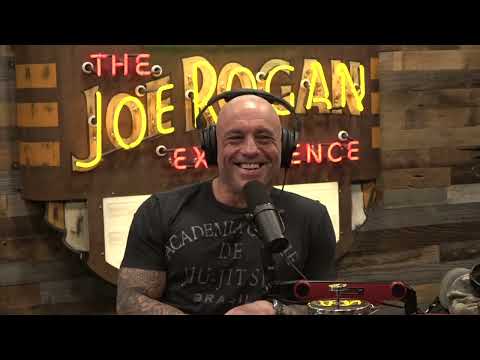
Joe Rogan Experience #2006 - Brian Simpson
Narrator, Narrator, Narrator, Joe Rogan (host), Brian Simpson (guest), Narrator, Joe Rogan (host), Brian Simpson (guest), Narrator, Narrator, Narrator, Narrator, Narrator
In this episode of The Joe Rogan Experience, featuring Narrator and Narrator, Joe Rogan Experience #2006 - Brian Simpson explores joe Rogan And Brian Simpson Dive Deep On Risk, Money, Madness Joe Rogan and Brian Simpson jump from dark current events—the OceanGate Titanic sub disaster, shark attacks, gambling addiction, and rabies—to lighter but still revealing discussions about comedy, money, fame, and human nature.
Joe Rogan And Brian Simpson Dive Deep On Risk, Money, Madness
Joe Rogan and Brian Simpson jump from dark current events—the OceanGate Titanic sub disaster, shark attacks, gambling addiction, and rabies—to lighter but still revealing discussions about comedy, money, fame, and human nature.
They unpack how greed and hubris drove the unsafe sub expedition, why some people are compelled to risk death (climbing, surfing, extreme exploration), and how modern systems—finance, social media, politics—reward manipulation and spectacle.
The two comedians also talk shop about stand‑up, podcasting as a “premise factory,” the Austin Mothership scene, and how paying comics fairly and nurturing open mics creates a healthier comedy ecosystem.
Threaded through is a recurring theme: technology and culture (AI deepfakes, Marvel universes, memes, esports, prepper culture) are evolving faster than our ethics and institutions, leaving truth, trust, and respect increasingly fragile.
Key Takeaways
Extreme experiences are often sold to the rich without adequate safety, driven by money and ego.
The OceanGate sub tragedy is framed as a textbook case of ignored whistleblowers, skipped certifications, and wealthy thrill‑seekers paying to stare at the Titanic on screens in an unproven vessel with no robust Plan B.
Get the full analysis with uListen AI
For most people, “enough money” is about freedom from worry, not infinite accumulation.
They argue that once you can go to dinner without checking prices, more money rarely increases happiness, yet many corporate actors (like those behind risky ventures or political influence buying) seem unable to stop chasing more.
Get the full analysis with uListen AI
Solo podcasts are powerful tools for comedians to develop material and think in public.
Both note that rant‑style, one‑person podcasts (like Bill Burr’s or Tim Dillon’s) force comics to generate energy, explore takes, and refine bits weekly, turning the mic into a pressure‑tested “premise factory” outside traditional stage time.
Get the full analysis with uListen AI
Respect and restraint still matter in a culture trained by the internet to be reckless and cruel.
They contrast real‑world consequences—where disrespect can get you seriously hurt—with online behavior, where anonymous users fire off vicious comments they’d never say face‑to‑face, chasing public “clapbacks” over understanding.
Get the full analysis with uListen AI
Addictions aren’t just to substances; they’re to action, data, and digital loops.
From gamblers who need to be “in action” to players sunk into Diablo IV or esports, the pair highlight how reward loops (lights, dings, level‑ups, small wins) are engineered—much like casinos—to keep people chasing the next hit.
Get the full analysis with uListen AI
Nature remains far more lethal than most people accept—and often in mundane situations.
Stories of shark attacks, bears killing campers, rabies from a tiny bat nick, coyotes eating pets, and fungal/parasite threats underline how fragile humans are outside controlled environments, especially when they downplay real risk.
Get the full analysis with uListen AI
Healthy creative ecosystems require fair pay and real development paths, not extraction.
They contrast old showcase models where producers made thousands while comics got $50 with the Mothership’s approach—robust open mics, paid stage time, door‑guy programs—arguing that empowering artists raises the bar for everyone.
Get the full analysis with uListen AI
Notable Quotes
“The universe is trying to kill us. Being on land is one of the handful of advantages you have as a human being.”
— Brian Simpson
“You have a box with a microphone in it. If we don’t go, you have nothing.”
— Joe Rogan
“I’d rather just lie about going to the bottom of the ocean than actually get on that sub.”
— Brian Simpson
“Some people pretend to not give a fuck. Mike Perry doesn’t give a fuck.”
— Joe Rogan
“The current generation’s amazing becomes the next generation’s basics.”
— Brian Simpson
Questions Answered in This Episode
What level of personal risk is rational when it comes to extreme exploration or adventure tourism, and who should be responsible for enforcing those limits?
Joe Rogan and Brian Simpson jump from dark current events—the OceanGate Titanic sub disaster, shark attacks, gambling addiction, and rabies—to lighter but still revealing discussions about comedy, money, fame, and human nature.
Get the full analysis with uListen AI
How much of modern addiction—whether to gambling, social media, or gaming—is individual weakness versus intentional design by industries optimizing for engagement?
They unpack how greed and hubris drove the unsafe sub expedition, why some people are compelled to risk death (climbing, surfing, extreme exploration), and how modern systems—finance, social media, politics—reward manipulation and spectacle.
Get the full analysis with uListen AI
In an age of AI deepfakes, corporate influence, and partisan media, how can an average person realistically assess what’s true and who to trust?
The two comedians also talk shop about stand‑up, podcasting as a “premise factory,” the Austin Mothership scene, and how paying comics fairly and nurturing open mics creates a healthier comedy ecosystem.
Get the full analysis with uListen AI
Is it possible to build entertainment and creative industries that fairly reward artists without inevitably recreating exploitative, winner‑take‑most systems?
Threaded through is a recurring theme: technology and culture (AI deepfakes, Marvel universes, memes, esports, prepper culture) are evolving faster than our ethics and institutions, leaving truth, trust, and respect increasingly fragile.
Get the full analysis with uListen AI
Are thrill‑seekers like free solo climbers and big‑wave surfers pathological outliers, or necessary explorers for the next phase of human progress (like space travel)?
Get the full analysis with uListen AI
Transcript Preview
(drumbeats) Joe Rogan podcast, check it out.
The Joe Rogan Experience.
Train by day, Joe Rogan podcast by night. All day. (rock music)
... Simpson, what's happening?
Hell yeah, what's up, Joe?
Good to see you, bro.
Glad to be back. Can I plug my dates real quick-
Yeah.
... before I forget? Yeah, I'm gonna, I'm gonna be in, uh, Denver at Comedy Works on July 13th through the 15th. And Levity Live in West Nyack, New York, on July 20th through the 22nd. Get those tickets on the, uh, briansimpsoncomedy.com.
Nice.
Listen to the podcast, BS with Brian Simpson, it's pretty good.
Yeah, it's very good.
Yeah.
You enjoy doing it?
I love it, man. I love it. I feel like you, you need something outside of comedy, like when you start doing it for money.
Mm-hmm.
You know, you have to do something else so you don't, so you're not just doing com... You know?
Yeah. It also helps your brain just 'cause you're talking about stuff and thinking about stuff.
Yeah, yeah.
'Cause the subjects.
Yeah. And I'm, and I'm getting better at it too. Just, just having to find your own energy every week...
Yeah.
... or whatever. I like, I like, I just like having something to do.
Yeah. No, it's great. It's fun. It's a... I think the best tool for comics is the one-person podcast, which you, you do too.
Yeah.
It's like where one person gets to rant about things.
Oh, yeah.
Like you have guests on, but sometimes you just rant about things.
Right, yeah.
I think that is like where, where Burr comes up with a lot of his material, that's where Tim Dillon comes up with a lot of his material.
Oh, yeah. I-
It's like his extra superpower.
And a lot of mine from regre- like I'll say something j- wha- 'cause what I do is I have my, my producer finds these articles and I don't re- I've never read them.
Oh.
And he just... And he gives me the gist of it and I just react. And sometimes I'm like, "Oh, why did you say that?" You know?
Right.
When I heard about the submarine people, I was...
(laughs)
The first thing I said was, "What kind of stupid..." You know?
Yeah.
But I forget like I do, I st- I got empathy for the people still.
I do too.
You know, they're dumb as fuck, but being trapped in a box is...
(sighs)
That's one of the worst ways to go.
And they, they haven't found them yet, but they're hearing banging now.
Yeah. And the, and, and...
What does that mean? I mean, how... They have 30 hours, less than 30 hours now just to, before they run out of air.
Install uListen to search the full transcript and get AI-powered insights
Get Full TranscriptGet more from every podcast
AI summaries, searchable transcripts, and fact-checking. Free forever.
Add to Chrome