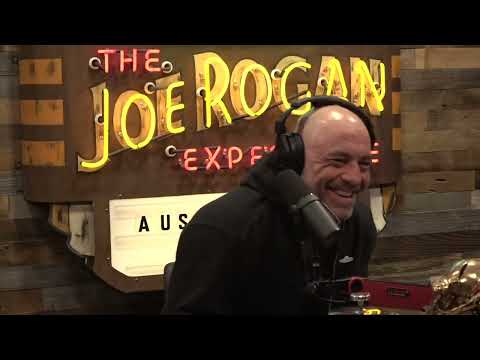
Joe Rogan Experience #1985 - Steven Wright
Joe Rogan (host), Steven Wright (guest), Narrator
In this episode of The Joe Rogan Experience, featuring Joe Rogan and Steven Wright, Joe Rogan Experience #1985 - Steven Wright explores joe Rogan and Steven Wright Deconstruct Comedy, Creativity, and Chaos Joe Rogan and Steven Wright spend three hours tracing their parallel journeys in standup—from Boston’s legendary 1980s scene to arena tours and Rogan’s new Austin club.
Joe Rogan and Steven Wright Deconstruct Comedy, Creativity, and Chaos
Joe Rogan and Steven Wright spend three hours tracing their parallel journeys in standup—from Boston’s legendary 1980s scene to arena tours and Rogan’s new Austin club.
They break down how jokes are actually created, why live audience feedback is indispensable, and how boredom, walking, driving, and exercise unlock ideas.
The conversation ranges from Boston comedy history and club culture to Texas eccentricities, wrongful convictions, Native American history, and the rise of Rogan’s podcast and comedy mothership.
Throughout, Wright reveals his quiet, methodical approach to writing absurdist one‑liners and his unexpected path to writing a novel that began as a Twitter experiment.
Key Takeaways
The audience is the real editor of standup material.
Both Rogan and Wright emphasize that you only discover what truly works by performing in front of crowds—laughs determine what survives, not what the comedian thinks is funny on paper.
Get the full analysis with uListen AI
Creativity needs boredom, silence, and unstructured time.
Wright describes driving with no radio and sitting alone as essential; Rogan recalls his newspaper delivery routes as prime idea time—constant stimulation actually blocks deeper thinking.
Get the full analysis with uListen AI
Physical movement and cardio dramatically sharpen performance.
Both say regular biking, walking, or cardio not only makes them feel better but reliably relaxes and sharpens their mind before shows, making them looser and more present on stage.
Get the full analysis with uListen AI
Great scenes arise when art is insulated from show business.
They credit Boston’s 1980s standup boom to a lack of agents and executives; comics only cared about killing on stage, which created unusually high standards and wildly distinct styles.
Get the full analysis with uListen AI
You can’t teach standup the way you teach other arts.
Rogan argues that, unlike music or acting, standup has no reliable curriculum—each comic must find their own method through relentless trial, error, and stage time.
Get the full analysis with uListen AI
Big life pivots often come from gut feelings, not career logic.
Wright moved back to the Boston woods after decades in L. ...
Get the full analysis with uListen AI
Side experiments can grow into major creative projects.
Wright’s novel "Harold" began as a whimsical Twitter story; once he realized he could pour everything he thinks about life into one child character, it evolved into a full book and audiobook.
Get the full analysis with uListen AI
Notable Quotes
“The audience is the editor. They’re in charge.”
— Steven Wright
“Creativity to me is playing. It’s like a child with finger paints.”
— Steven Wright
“Standup is like running across a lake of thin ice for 85 minutes—you hear it cracking behind you.”
— Steven Wright
“You’re your own teacher and student at the same time on stage.”
— Steven Wright
“I like to make it hard on myself—having five killers go on before me is like running with weights on.”
— Joe Rogan
Questions Answered in This Episode
How would the Boston comedy scene of the 1980s have been different if agents and executives had been heavily involved from the beginning?
Joe Rogan and Steven Wright spend three hours tracing their parallel journeys in standup—from Boston’s legendary 1980s scene to arena tours and Rogan’s new Austin club.
Get the full analysis with uListen AI
To what extent can comics deliberately design their creative process, versus simply discovering what works for their own brain over time?
They break down how jokes are actually created, why live audience feedback is indispensable, and how boredom, walking, driving, and exercise unlock ideas.
Get the full analysis with uListen AI
Are we underestimating the role of boredom and silence in all creative fields, not just standup—and how might modern phone culture be damaging that?
The conversation ranges from Boston comedy history and club culture to Texas eccentricities, wrongful convictions, Native American history, and the rise of Rogan’s podcast and comedy mothership.
Get the full analysis with uListen AI
If AI reaches the power levels Rogan’s guests describe, what happens to an inherently human, live art form like standup comedy?
Throughout, Wright reveals his quiet, methodical approach to writing absurdist one‑liners and his unexpected path to writing a novel that began as a Twitter experiment.
Get the full analysis with uListen AI
How much of any successful career in the arts is talent and work ethic versus pure randomness—being in the right room at the right time?
Get the full analysis with uListen AI
Transcript Preview
(drumming music plays) Joe Rogan podcast. Check it out.
The Joe Rogan Experience. (rock music plays)
Train by day, Joe Rogan podcast by night, all day. (rock music plays) (laughs) It was fun hanging out with you last night.
Yeah. Yeah, that was ... You know when you're in one of those rooms backstage, it's the same.
Yeah.
It's the same vibe. It's the same fun. Even if you don't r- you don't know the actual people, it's connection.
Yeah, in a good room, yeah. Yeah, we're all having fun.
(laughs)
Tell- telling jokes. It's a nice ... The setup is so nice too, because where the green room is, it's in between the two rooms. So you can go to one room and watch-
Oh.
... and then you can go to the other room, like because we have a balcony setup.
Oh, I didn't notice that.
Yeah, it's very nice. It's very, very convenient. And it- That actually was the projector room for the theater, so we converted the projector room for the theater into a green room.
Very cool.
It's in a perfect- It's a perfect position because it's in between the two rooms.
So you got people going, leaving, going-
Yeah.
... coming back from the set.
Yeah.
And then they can- you can see them doing it on the monitor.
You can see them on the monitor, or you could just step off-
Get off.
... into the balcony 'cause we have that comics balcony, so you could watch. Like if you're on stage, I could just sit up there and watch. I don't have to go downstairs. It's very nice. It's a fun vibe, right?
Absolutely.
(clicks tongue) It's great for me-
I- I-
... to watch someone like you appreciate it, like go and, and check it out and go, "Wow, oh."
Yeah. It's like, uh-
It sucks that-
You know, right from the beginning, the same, no matter where you go, I mean, if it's a good place. I would've stayed longer, but I didn't want to, uh ... Is this going now?
Yeah, we're going. (laughs)
I don't see a, uh ...
You don't hear yourself?
No. Maybe because I'm not-
Turn the volume up.
Maybe because I'm not listening.
Is that good? Do you hear it now?
No.
Not at all?
No.
Might have to bail on the headsets and go with real ones.
(laughs)
(laughs)
Oh, there it is.
You got it?
Okay. Yeah. (laughs)
(laughs)
Real ones.
(laughs)
I made these.
In your, in your wood shop?
Metals shop.
(laughs) When you, when you started out, uh-
(laughs)
... was it the dingho days? Was that, like, the first place where you started? Like, what was it like? What year did you start out, first of all?
Install uListen to search the full transcript and get AI-powered insights
Get Full TranscriptGet more from every podcast
AI summaries, searchable transcripts, and fact-checking. Free forever.
Add to Chrome