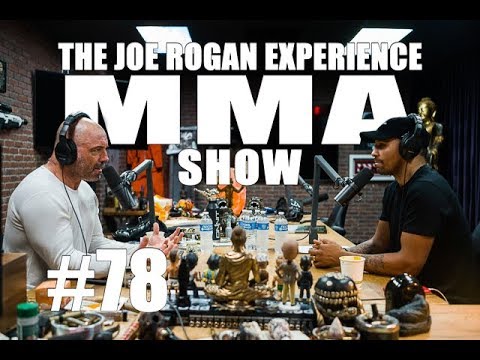
JRE MMA Show #78 with Andre Ward
Narrator, Joe Rogan (host), Andre Ward (guest), Guest (secondary) (guest), Guest (secondary) (guest)
In this episode of The Joe Rogan Experience, featuring Narrator and Joe Rogan, JRE MMA Show #78 with Andre Ward explores andre Ward On Greatness, Discipline, Retirement, And Protecting Fighters’ Minds Andre Ward discusses his rare journey as an undefeated Olympic gold medalist and two-division world champion who chose to retire at 33, while still in his prime, to preserve his health and legacy.
Andre Ward On Greatness, Discipline, Retirement, And Protecting Fighters’ Minds
Andre Ward discusses his rare journey as an undefeated Olympic gold medalist and two-division world champion who chose to retire at 33, while still in his prime, to preserve his health and legacy.
He and Joe Rogan dive deep into boxing history and styles, contrasting masters like Bernard Hopkins and Floyd Mayweather with explosive talents like Roy Jones Jr., and examining how discipline, fundamentals, and mindset shape careers.
Ward reveals the physical and psychological toll of his own career—including fighting one‑handed for years, major surgeries, lawsuits, and the emotional difficulty of retirement—and how faith, family, and a long‑term view guided his decision to walk away.
They also explore modern boxing politics, matchmaking, commentary ethics, and why Ward wants to be a blueprint for young fighters to get in, achieve greatness, get out healthy, and avoid the sport’s darkest outcomes.
Key Takeaways
Plan your exit as deliberately as your rise.
Ward grew up studying how great fighters often crashed late and made it a core career goal—equal to titles and Olympic gold—to leave the sport on top, healthy, and with people still asking why he was leaving.
Get the full analysis with uListen AI
Discipline and fundamentals outlast raw athleticism.
Contrasting Roy Jones Jr. ...
Get the full analysis with uListen AI
Mental toughness is quiet, composed, and trained—not loud and performative.
Ward describes being mentally ‘repped’ by his father and trainer from childhood, learning to stay composed under fouls, knockdowns, and trash talk, and seeing loud over-talking opponents as revealing their own weaknesses.
Get the full analysis with uListen AI
Fighters must protect both their health and their paychecks.
Because a single loss can literally halve a boxer’s minimum purse, Ward viewed every fight as ‘win or die’ economically, yet insists that long‑term brain and body health must trump short‑term paydays or pride.
Get the full analysis with uListen AI
Smart matchmaking should balance development, risk, and legacy.
Ward criticizes boxers who proclaim themselves ‘the best’ while avoiding top opposition, but also warns against rushing young talent (as sometimes happens in MMA), arguing that seasoning against varied styles is critical before truly elite tests.
Get the full analysis with uListen AI
Commentators shape fan understanding and fighter reputations.
He believes analysts should explain and celebrate mastery—hit-and-not-get-hit boxing—rather than dismiss it as ‘boring,’ avoid letting personal dislike bleed into calls, and remain fair, positive, and truthful to grow educated fans.
Get the full analysis with uListen AI
Retirement is a daily decision and a new kind of fight.
Ward describes retirement as his new ‘opponent,’ acknowledging the constant pull to come back, the emotional void after walking away, and his conscious commitment to model a different ending for future fighters.
Get the full analysis with uListen AI
Notable Quotes
“I wanted to leave on top when people were asking, ‘Why are you leaving?’”
— Andre Ward
“Most fighters like the idea of being champion; Bernard Hopkins chose to live like a Spartan.”
— Andre Ward
“My trainer always said, ‘My main focus is to get you home safe to your family, not just to win titles.’”
— Andre Ward
“Everybody wants to be a lion when there are no other lions around.”
— Andre Ward
“I’m looking at retirement like an opponent right now—and I like my chances.”
— Andre Ward
Questions Answered in This Episode
How would boxing change if more top fighters publicly committed to a planned, early retirement like Andre Ward?
Andre Ward discusses his rare journey as an undefeated Olympic gold medalist and two-division world champion who chose to retire at 33, while still in his prime, to preserve his health and legacy.
Get the full analysis with uListen AI
What responsibilities do promoters and networks have in preventing great fighters from fighting too long or in mismatched bouts?
He and Joe Rogan dive deep into boxing history and styles, contrasting masters like Bernard Hopkins and Floyd Mayweather with explosive talents like Roy Jones Jr. ...
Get the full analysis with uListen AI
Could MMA benefit from a more boxing‑style developmental system that protects and seasons prospects before elite matchups?
Ward reveals the physical and psychological toll of his own career—including fighting one‑handed for years, major surgeries, lawsuits, and the emotional difficulty of retirement—and how faith, family, and a long‑term view guided his decision to walk away.
Get the full analysis with uListen AI
How can commentators and media better educate casual fans to appreciate defensive masters and technical styles, rather than only brawlers?
They also explore modern boxing politics, matchmaking, commentary ethics, and why Ward wants to be a blueprint for young fighters to get in, achieve greatness, get out healthy, and avoid the sport’s darkest outcomes.
Get the full analysis with uListen AI
What practical steps can young fighters take—financially, medically, and psychologically—to avoid the tragic post‑career fates seen so often in combat sports history?
Get the full analysis with uListen AI
Transcript Preview
(music)
Two, one, boom. (book slams) Andre Ward, ladies and gentlemen. How are you, brother?
I'm good, man. How you doing?
Thank you very much for doing this, man. I'm a big fan, so I was very excited to do this.
Appreciate you having me.
You did it. In terms of, like, if you're a young fighter and you got aspirations, what do you wanna do? You wanna be an Olympic gold medalist, you wanna win multiple world titles, two division world champion-
Mm-hmm.
... and you retired undefeated. You, you're the w- one, you're like a unicorn, man.
(laughs)
You're a rare dude because-
Yeah.
... you retired at 35, right?
33.
33.
Yeah.
That's crazy. Like, you're in the peak of your athletic abilities and you go, "You know what? (smacks lips) Did enough."
I'm out.
Yeah.
I mean, it, it sound, it sounds all neat and buttoned up, uh, but it wasn't, it wasn't that easy. Like, I, I didn't know how things were gonna go throughout the course of my career. Um, but for whatever reason, like, I always, even as a young kid, and I'm talking 10 years old, like, I had this thought, like, you know, "I don't wanna end up like a lot of fighters end up." Like, they seem to go high, really high, and then all of a sudden they come crashing down. Like, they start well, but they don't end well.
Yeah.
And that's what, that's what drew me to Roy Jones Jr. Um, country boy, had swag, and he'd always talk about himself in the third person. He'd be like, "Man, you know, Roy Jones, I don't," you know-
(laughs)
"... I don't love the sport like that, man. I'ma get in and get out. I'm just special at it and I'ma be fishing on my farm one, you know, one day in Pensacola, Florida." And I was like, "Man, this dude is different. Fighters don't talk like that."
Hmm.
So he was the first one that gave me the thought of getting in and getting out. And then, again, I just, I just studied it throughout the course of my career. Even other athletes and entertainers, like I just, I was enamored by it. So that was always a goal. Just as much as I wanted to win a gold medal, world championship, I wanted to leave on top when people were asking, "Why are you leaving?"
Yeah. Well, it's so difficult to make that decision, though. For f- so, I mean, Roy Jones Jr didn't even make that decision.
He didn't.
He said he was gonna do it and then, I mean, he had some rough knockouts. It was-
Late in his career.
Yeah, hard to watch.
So-
That, uh, uh, some of them that people even, didn't even see.
Install uListen to search the full transcript and get AI-powered insights
Get Full TranscriptGet more from every podcast
AI summaries, searchable transcripts, and fact-checking. Free forever.
Add to Chrome